
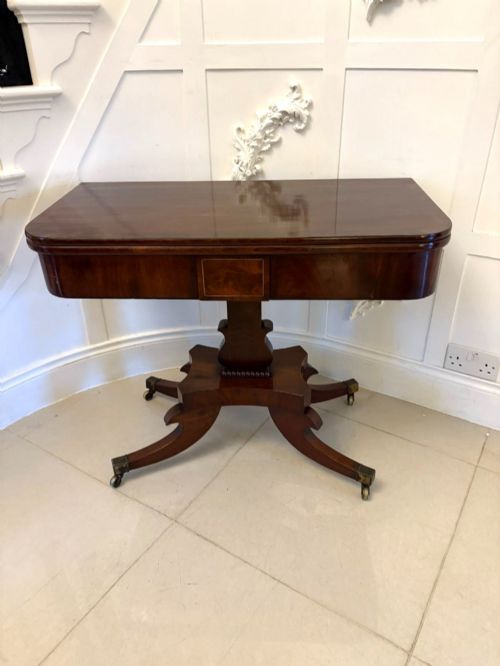
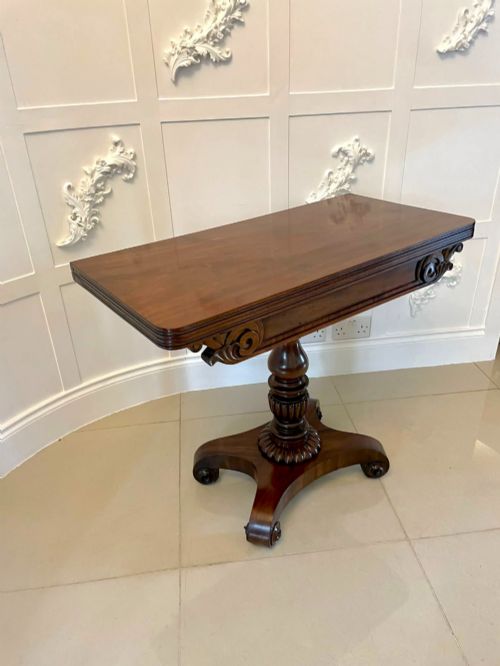
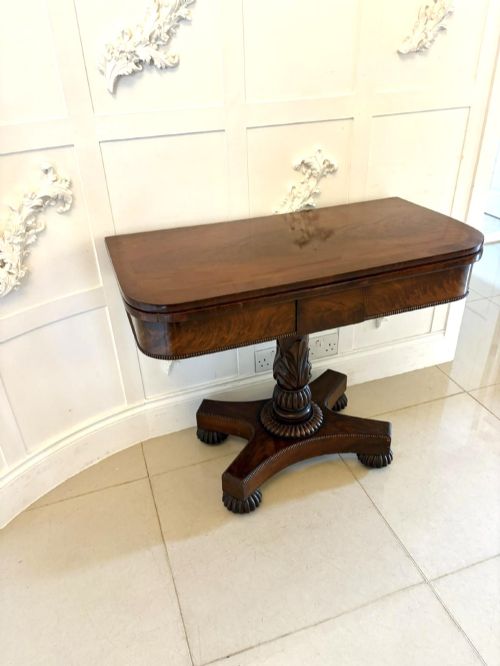
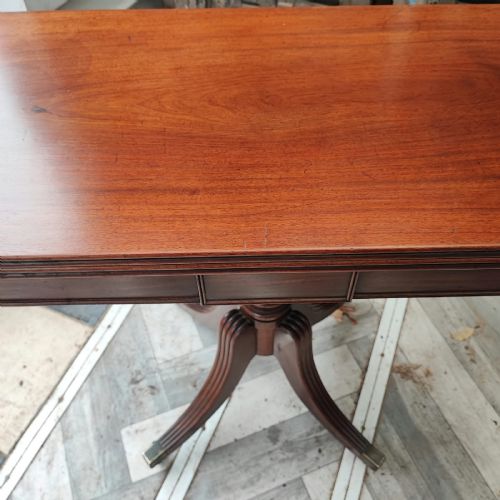
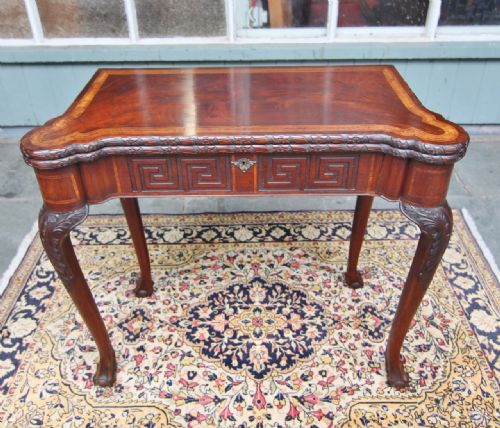
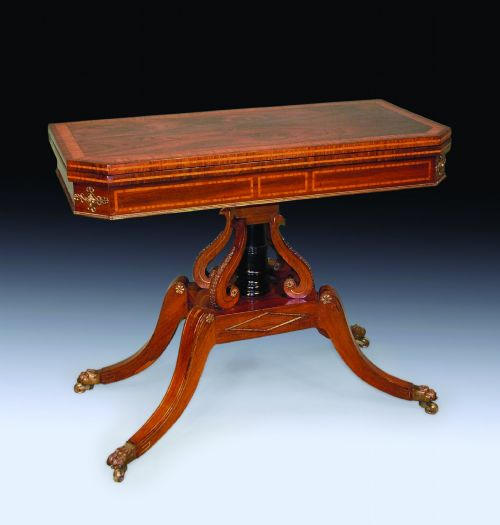
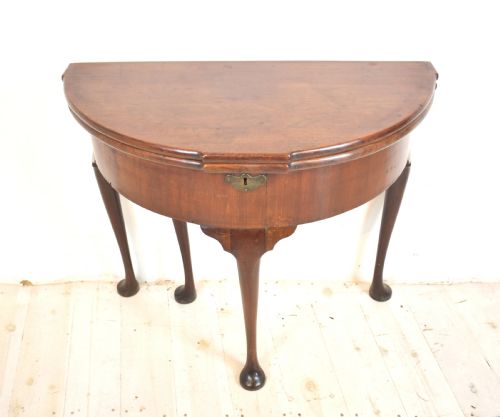
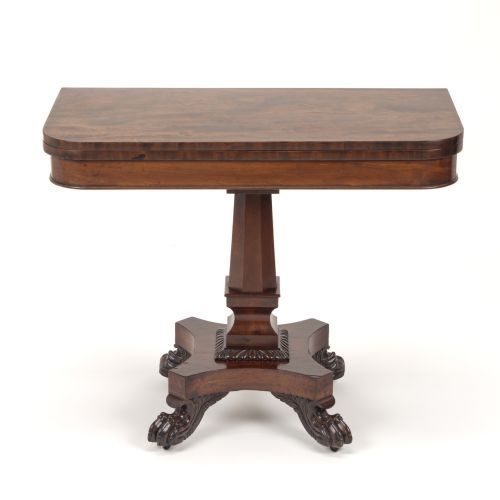
Flip Top Tea Table
A flip top tea table provides a versatile surface for entertaining, moving easily from a compact console to a generous folding top.
Flip Top Tea Table
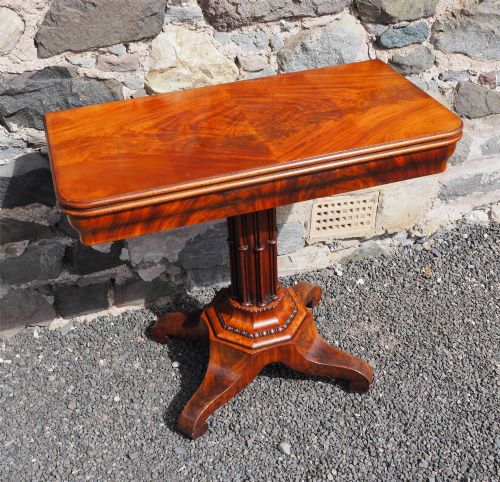
A flip top tea table serves multiple functions within period interiors, operating primarily as a side or console piece before opening to reveal a larger surface for social gatherings. The design bridges the gap between decorative furniture and practical utility, maintaining a discreet footprint against a wall when closed.
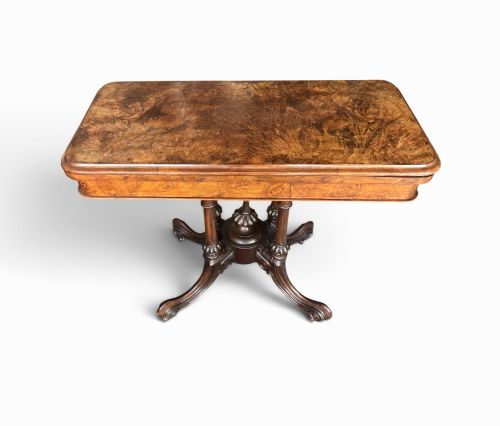
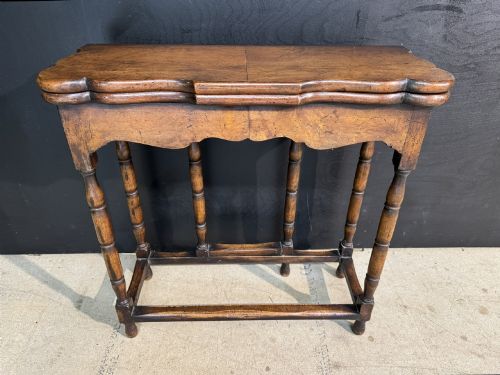
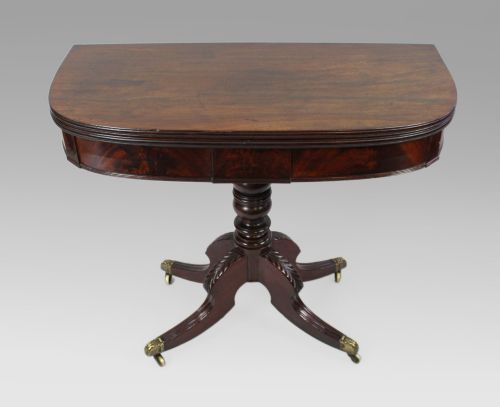
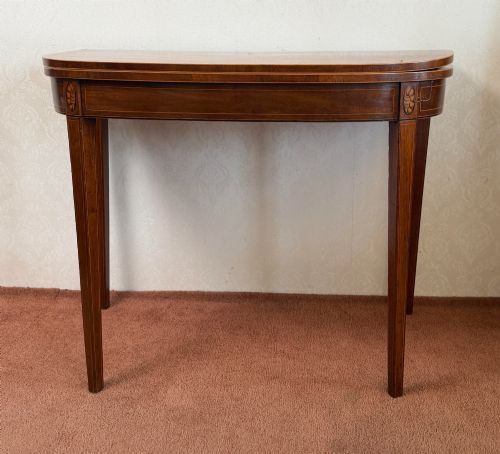
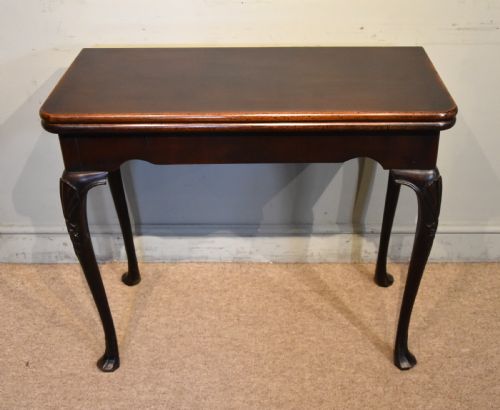
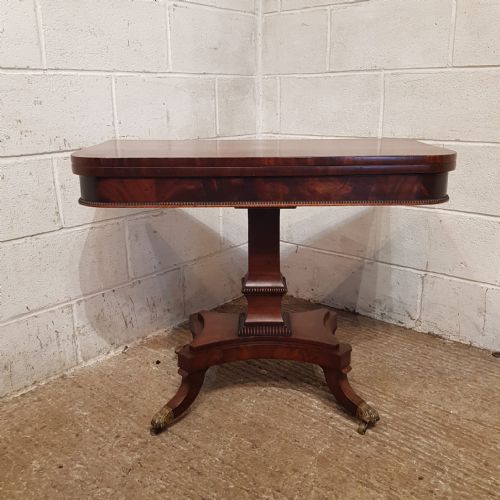
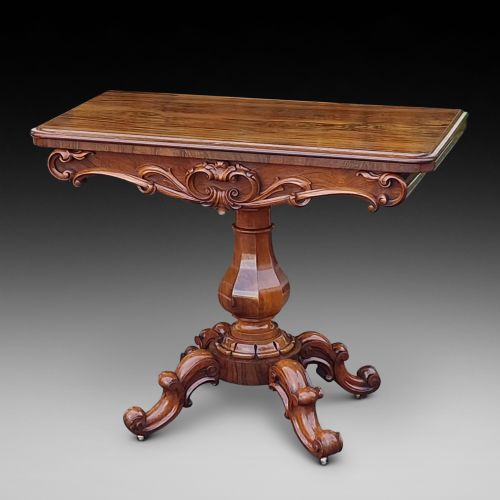
The pieces appearing on this page span the Georgian, Regency, William IV and Victorian eras, alongside 18th-century and 19th-century examples. Mahogany forms the backbone of these listings, accompanied by rosewood, walnut and occasional burr walnut or birds-eye maple.
Makers such as Epstein and Co also appear among the later 20th-century items, reflecting the enduring popularity of these folding designs. Buyers frequently encounter dual-action tables and concertina-action card tables that double as tea surfaces.
Markers of distinction
The refinement of the timber selection dictates the visual appeal, with heavily figured flame mahogany and crisp satinwood inlay sitting at the upper end of the scale. Plain secondary woods contrast with expertly matched primary veneers.
Carved details, such as paw feet and gilded brass mounts, separate standard workshop output from exceptional examples produced during the Regency and Georgian periods. The precision of the folding mechanism and the alignment of the leaves when closed reveal the original maker's competence.
Flip Top Tea Table Retail Price Guide 2026
Typical asking prices for flip top tea table among the pieces listed under this phrase on Sellingantiques today, from the lower quarter to the upper quarter. They describe what is for sale here now, not the wider market.
Listings span the 18th, 19th and 20th centuries, incorporating Georgian, Regency, William IV, Victorian and Biedermeier periods.
Epstein and Co
The Flip Top Tea Table Glossary
- Concertina action
- An expanding frame mechanism that allows a folding table to open evenly on all four sides while providing central support.
- Fold-over top
- A hinged surface design that doubles the available area when swung or flipped open from a vertical or console position.
- Satinwood inlay
- Contrasting blonde timber inserted into the primary dark wood surface to create geometric or floral borders.
- Flame mahogany
- Timber cut to expose a distinctive ripple pattern resembling flickering fire, prized for prominent display surfaces.
- Tilt-top table
- A design featuring a mechanism that allows the surface to pivot to a vertical orientation for storage against a wall.
Flip Top Tea Table: Frequently Asked Questions
How do I open a flip top tea table safely?
Most tables utilise a pivoting or folding hinge that swings the upper leaf outward on a pivot. Lift the top section carefully and guide it into its flat position, ensuring the underlying support gate swings out to bear the weight.
Avoid forcing any mechanism that resists movement, as period hinges and concertina frames require gentle alignment. Check the underside for wooden buttons or locking catches before attempting to close the top.
Were these tables used only for tea?
Georgian and Regency households utilised these folding surfaces for multiple domestic activities, including card games, writing and serving tea. Many examples function as dual-action tables designed to accommodate both social gaming and afternoon hospitality.
When closed, the pieces served as decorative console or side tables against the parlour wall. This multifunctionality made them essential items in prosperous period homes.
How do I distinguish a Georgian table from a Regency one?
Georgian examples, dating through the 18th century, often display restrained Chippendale or George II characteristics with straight legs or carved bracket feet. Mahogany remains the dominant timber, occasionally featuring needlework wells or concertina actions.
Regency pieces from the early 19th century introduce rosewood, brass mounts, sabre legs and scroll pedestal bases. The lines tend toward classical revival motifs inspired by Greek and Roman design.
Where should I place a fold over table in a modern room?
Position the closed table flat against a hallway or living room wall to function as a compact console surface. This highlights the figured mahogany or rosewood top without taking up excessive floor space.
Ensure sufficient clearance around the table if you intend to swing the top open for display or occasional use. Keeping the piece away from direct heat sources protects the vulnerable wood veneers and antique finishes.