
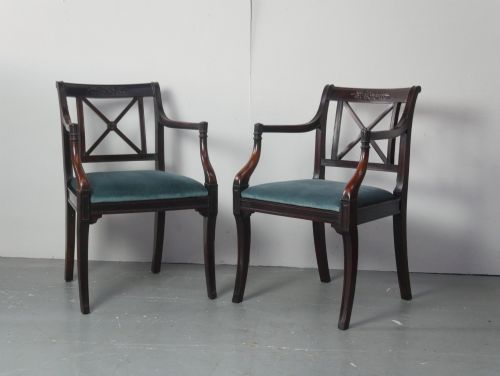
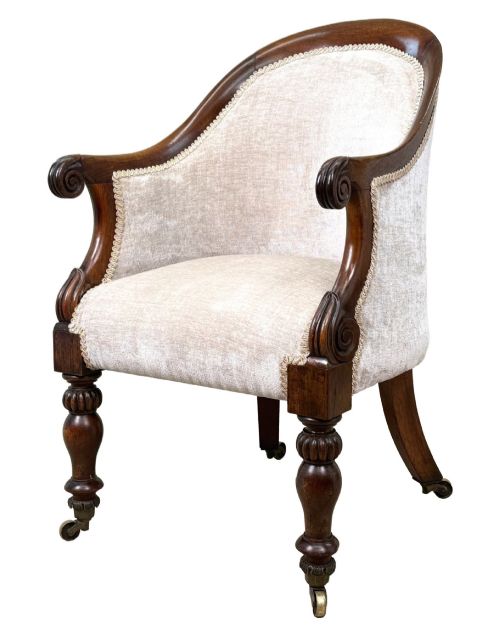
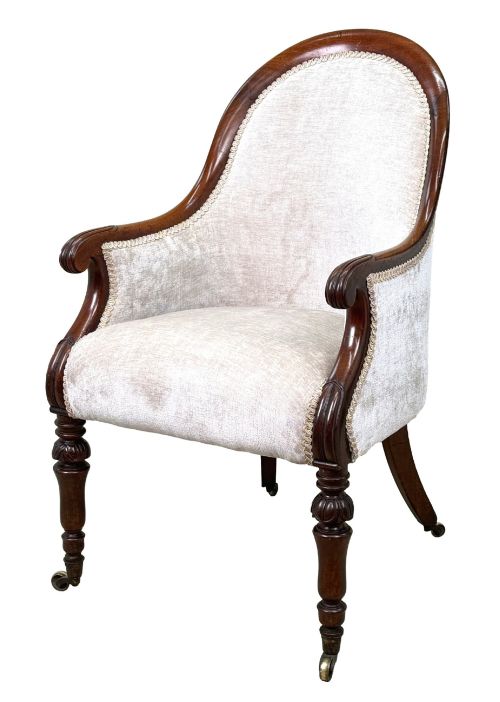
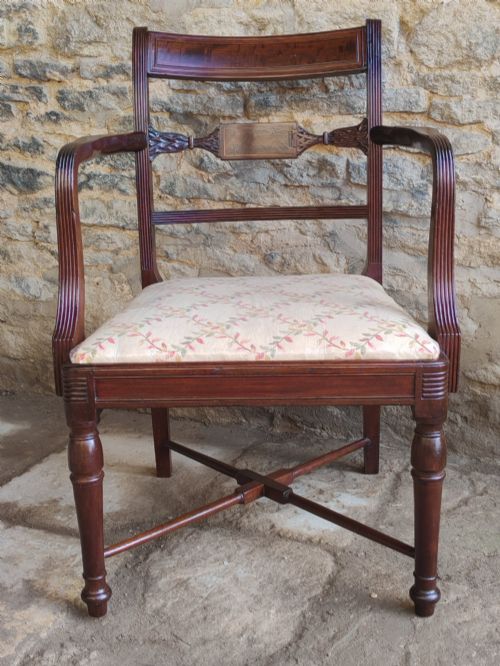

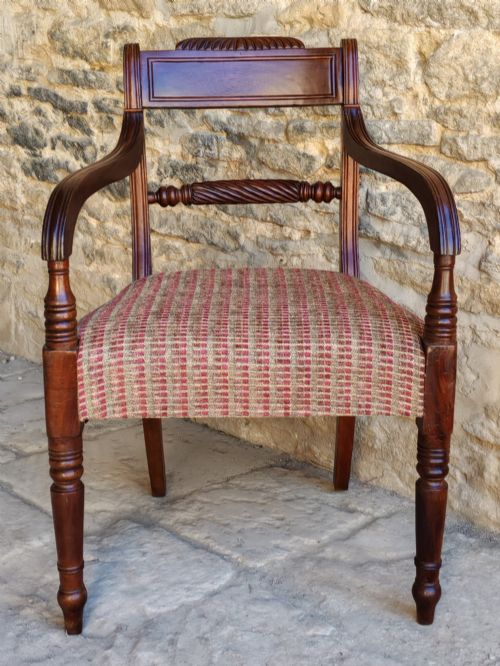
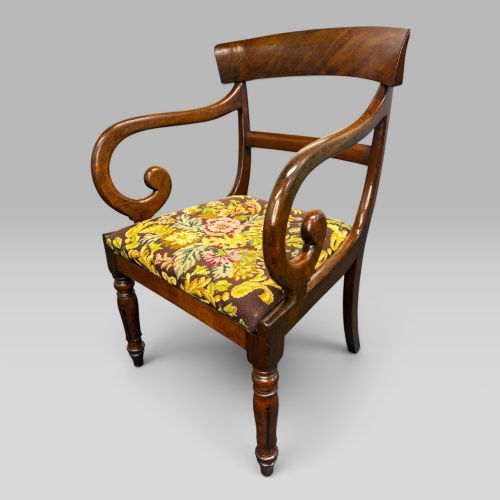
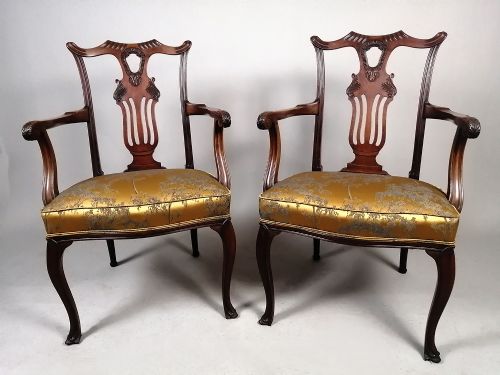
Regency Desk Armchair
A regency desk armchair provides sturdy support and period elegance for a home office, combining practical seating with classical design.
Regency Desk Armchair
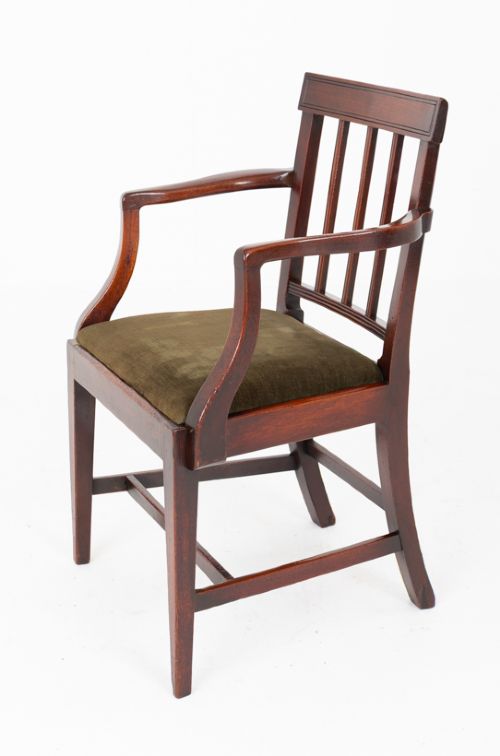
When buyers search for a regency desk armchair, they encounter sturdy seating designed for study and writing, predominantly dating from the early nineteenth century.
The selections span authentic Georgian and Regency periods alongside later revival pieces, maintaining classical proportions and wooden frames.
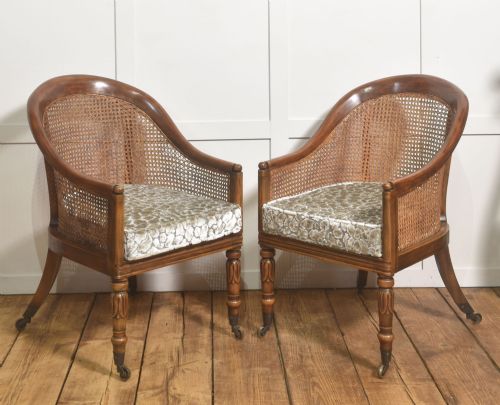
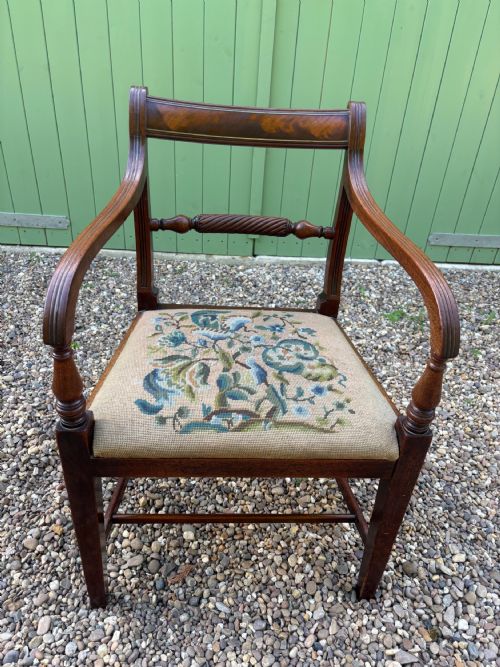
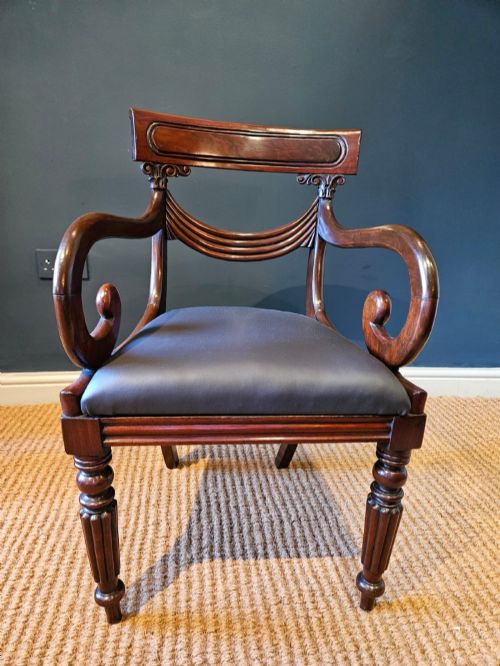
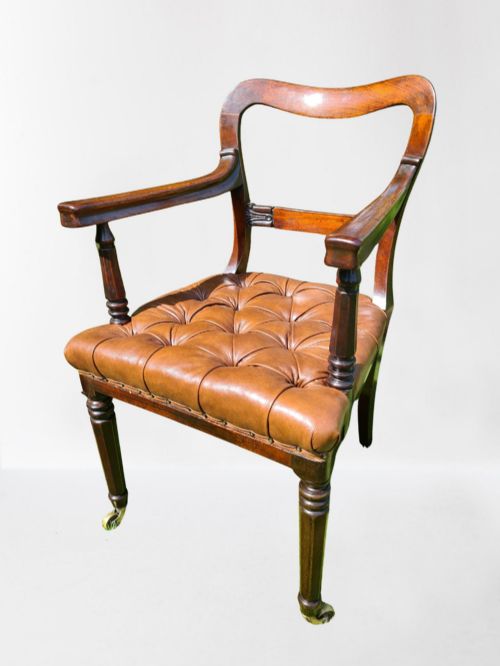
Most examples appear in mahogany, often featuring upholstered leather seats or cane panels suited for daily use at a desk.
How they were made
Joiners built these chairs primarily using solid mahogany, rosewood, and fruitwood, often incorporating bent timber for curved tub backs and arm rests.
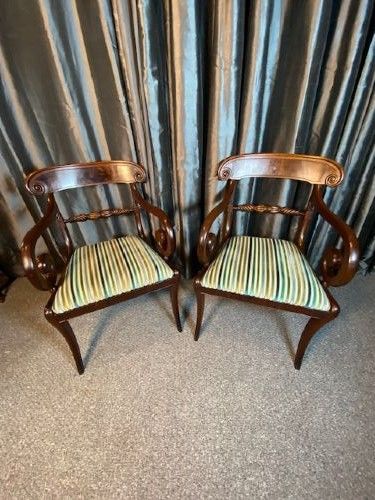
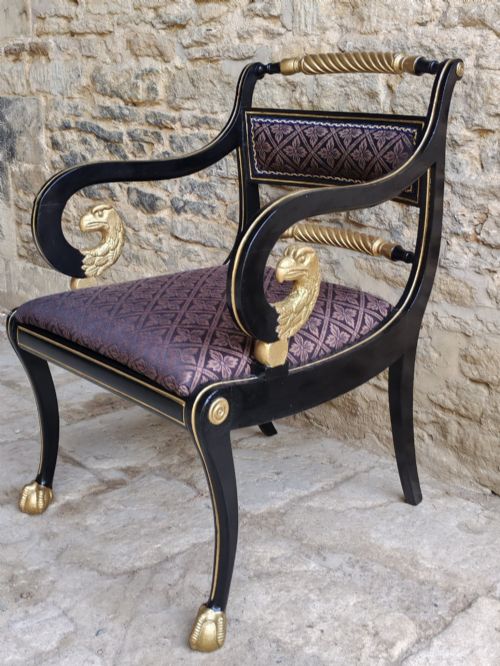
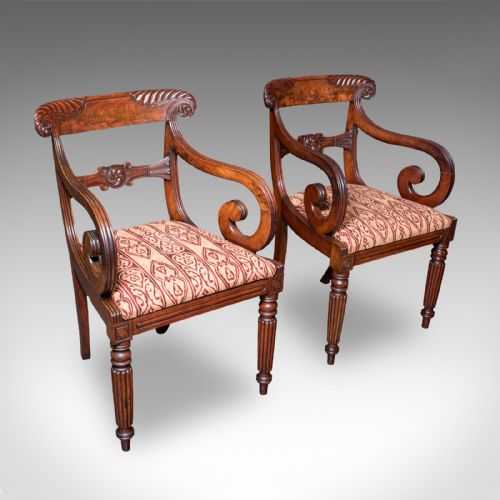
Detailing relied on brass inlay, subtle reeding, and carved elements like lyre backs or scroll arms to add visual texture to the wood.
Seating surfaces typically involved drop-in pads covered in leather, fabric, or velvet, alongside woven cane panels.
Some nineteenth-century writers clearly needed sturdy elbow rests, judging by the heavy scroll arms built to take a beating.
What varies in quality
The refinement of the timber selection and the crispness of the hand-carved details set superior examples apart from standard workshop production.
Durability depends on the integrity of the frame construction, particularly how securely the joints and sabre legs hold under weight.
The Regency Desk Armchair Glossary
- Carver
- An armchair, often matching a set of smaller dining chairs, featuring integrated elbow rests.
- Bergère
- An enclosed upholstered armchair with exposed wooden framing and cane panels on the sides or back.
- Sabre leg
- A concave, outward-curving furniture leg tapering toward the foot, typical of the Regency style.
- Reeding
- Parallel convex mouldings carved into wood to create a decorative striped surface effect.
- Tub chair
- An armchair with a continuous curved back and sides forming a single enclosed shape.
Regency Desk Armchair: Frequently Asked Questions
Are these chairs comfortable for daily desk work?
Many feature supportive curved backs and upholstered leather seats designed for extended sitting periods.
Their proportions suit traditional writing desks and modern workspaces alike.
What is the difference between a carver and a library chair?
A carver generally refers to an armchair that historically accompanied a set of dining or office chairs.
Library chairs are often broader, heavily padded, and built specifically for reading and study.
How should I care for the leather upholstery?
Leather seats benefit from occasional conditioning with specialist balms to prevent the material from drying out over time.
Keeping the chair away from direct heat sources preserves both the hide and the polished mahogany frame.