

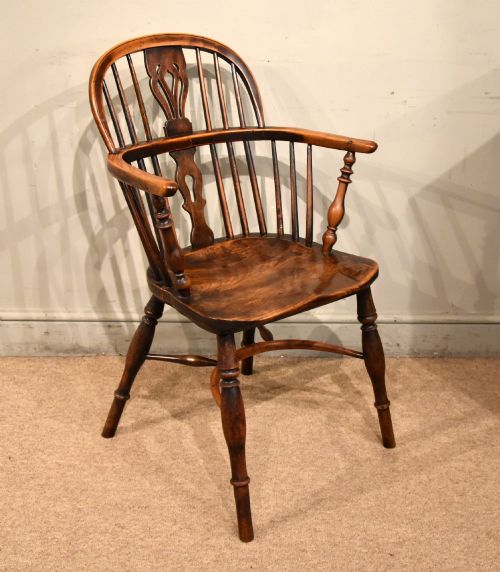
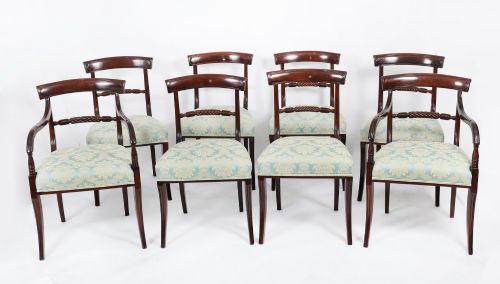
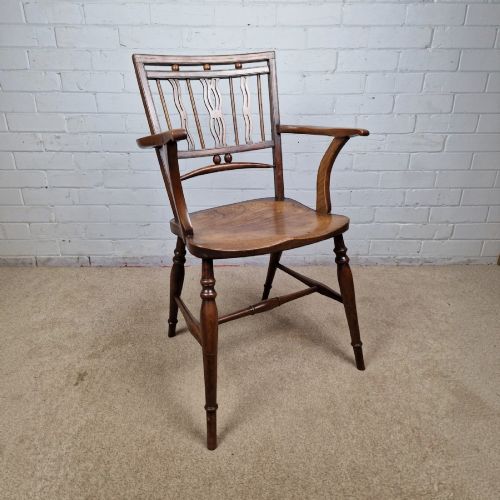
Regency Carver Armchair
When you search for a regency carver armchair, you enter a world of elegant dining seats and library chairs defined by classical restraint and fine timber.
Regency Carver Armchair
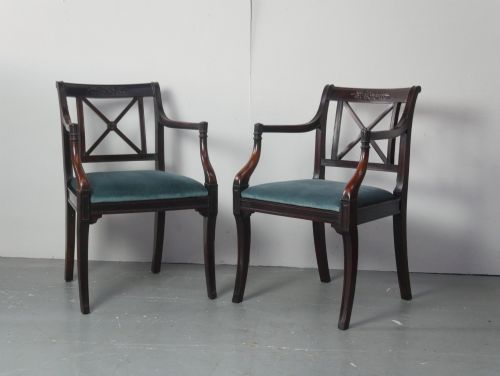
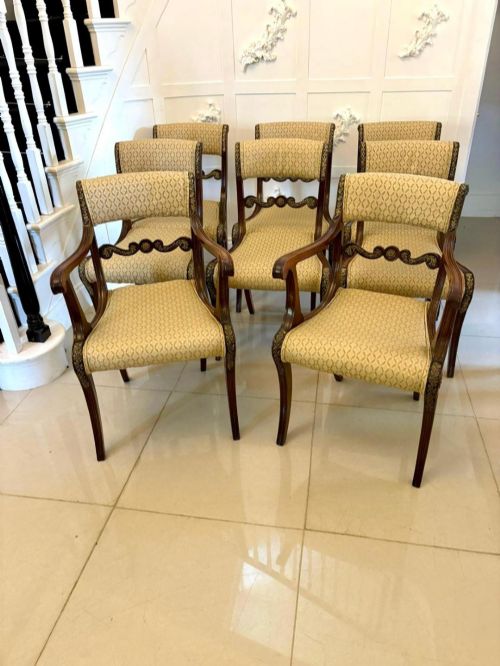
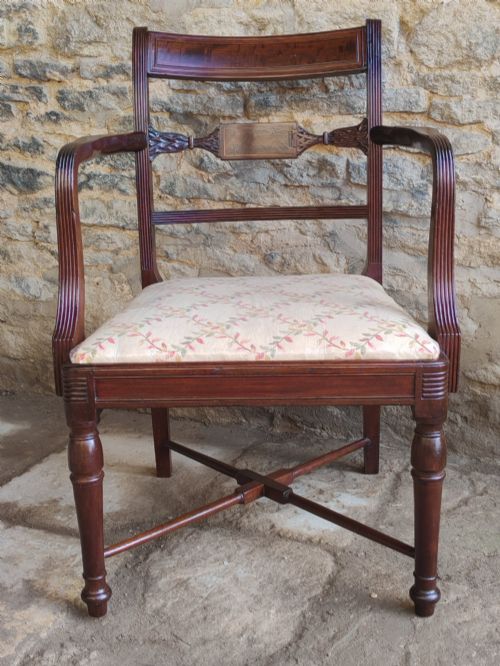
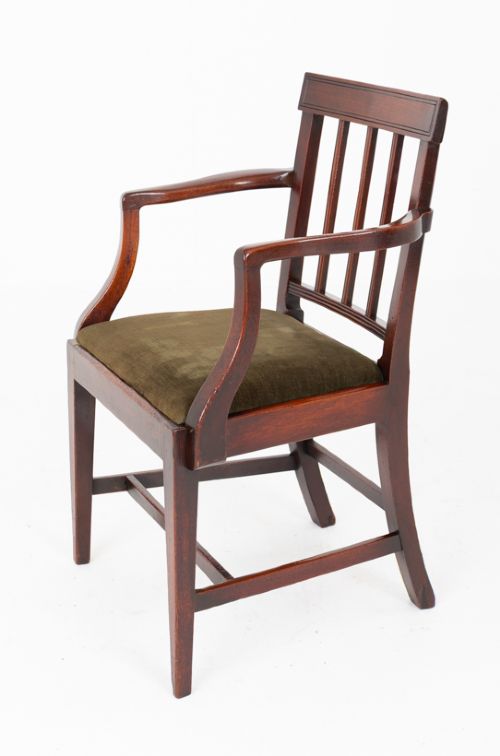
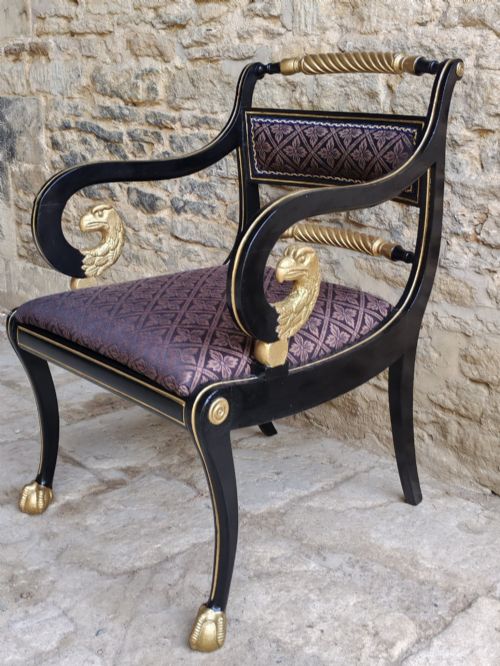
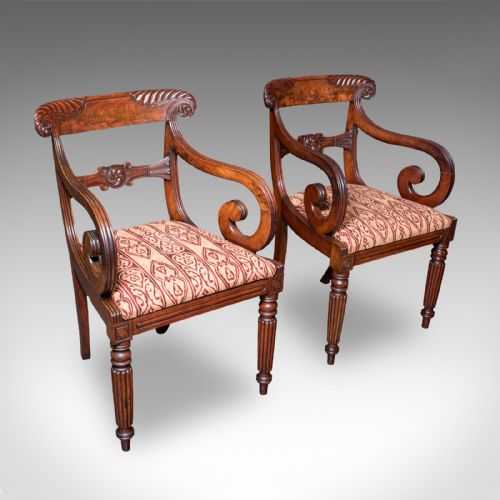
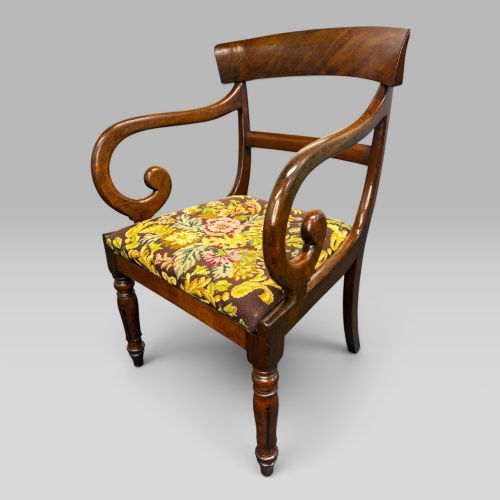
A regency carver armchair is a formal seating piece designed for the head of a dining table, a desk, or a library reading space during the early nineteenth century and its later revivals. These armchairs typically feature open arms, curved back rails, and sturdy timber frames that reflect the classical design influences of the period.
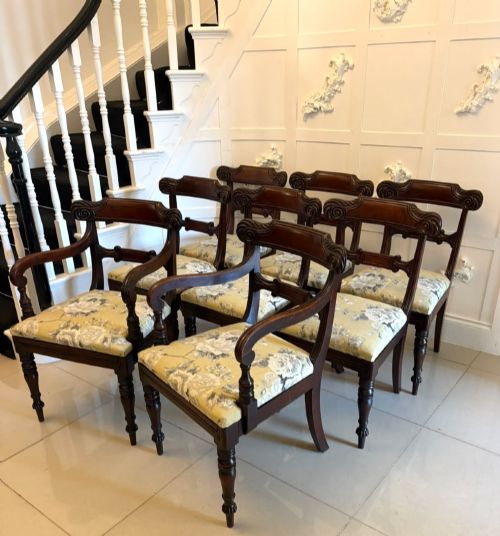
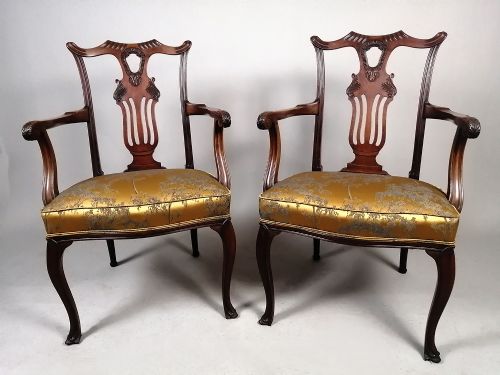
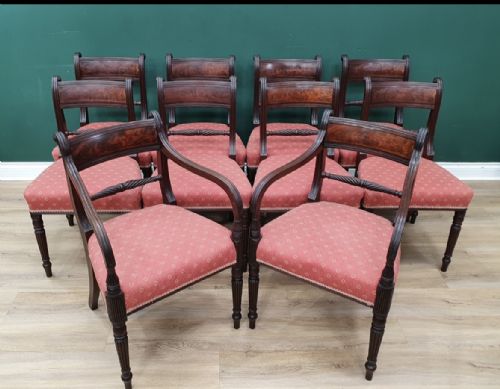
The versions most commonly met on this page span the late Georgian, Regency, and William IV periods, alongside later revival pieces from the late nineteenth and early twentieth centuries. They appear singly, in pairs, or as part of larger dining sets where the carvers match a set of single chairs.
How they were made
Cabinetmakers relied heavily on solid mahogany, complemented by secondary timbers like elm and yew in country chairs, shaping the frames with hand tools and traditional joinery. Elements such as curved splats and scrolled arms required precise steam bending or careful timber selection to follow the grain without snapping.
Surface treatments typically involved oiling, polishing, or ebonising the wood to achieve a deep, lustrous finish that highlighted the natural figure of the mahogany or fruitwood. Seats were finished with cane panels, drop-in frames, or traditional upholstery stuffed with horsehair and covered in fabric, velvet, or leather.
Regency Carver Armchair Retail Price Guide 2026
Typical asking prices for regency carver armchair among the pieces listed under this phrase on Sellingantiques today, from the lower quarter to the upper quarter. They describe what is for sale here now, not the wider market.
Some nineteenth-century carvers feature subtle hollows in the armrests, worn smooth by generations of resting elbows.
What varies in quality
Quality in a regency carver armchair rests primarily on the crispness of the timber carving, the choice of well-figured mahogany, and the structural integrity of the frame joints. Higher tier examples demonstrate refined proportions, carefully turned legs, and harmonious splat designs that show the hand of a skilled workshop rather than standard mass production.
The preservation of original timber surfaces and authentic secondary woods distinguishes superior pieces from heavily restored or later constructed examples. The integration of the arms into the uprights and the tightness of the joinery reveal the original standard of craftsmanship.
The Regency Carver Armchair Glossary
- Carver armchair
- An armchair designed with open sides to accommodate the fuller clothing of the period, traditionally placed at the ends of a dining table. These chairs often match a set of standard single dining chairs.
- Bar back
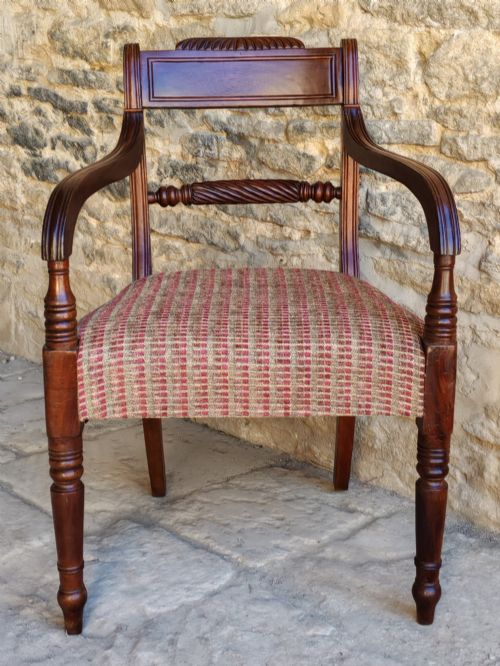
- A chair back featuring one or more horizontal wooden slats stretching across the uprights, frequently found in Regency dining seating. This style offers clean architectural lines.
- Rope back
- A chair back design where the carved wooden splat resembles a twisted rope, characteristic of early nineteenth-century cabinetmaking. This motif adds texture to the central splat.
- Elbow chair
- An alternative term for an armchair, describing a seat with low supports for the elbows rather than fully upholstered sides. These pieces served dual purposes in libraries and dining rooms.
- Cane seat
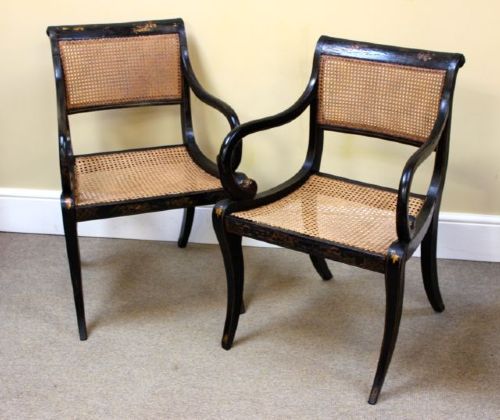
- A seating surface woven from rattan strips that provides lightweight durability and flexibility. Caned panels are frequently seen in light Regency reception and bedroom chairs.
Regency Carver Armchair: Frequently Asked Questions
What is a carver armchair?
A carver armchair is a dining chair fitted with arms, traditionally placed at the head and foot of a dining table. These chairs complemented sets of backless single chairs and offered comfortable seating for the host.
During the Regency period, these armchairs were also utilised as desk or library chairs due to their sturdy proportions and supportive open arms.
Can I use these chairs at a modern desk?
Many carver armchairs function effectively at modern desks because their proportions align well with standard desk heights. Their open arms allow the chair to slide in close to the desktop.
Buyers should check the seat height and arm clearance against their specific desk measurements before placement.
Are revival chairs as good as original ones?
Revival chairs from the late nineteenth and early twentieth centuries often display high standards of craftsmanship that emulate earlier Regency forms. Cabinetmakers of the revival eras utilised quality mahogany and traditional joinery techniques.
While they lack the exact age of early nineteenth-century pieces, well-made revival carvers offer robust construction and authentic period style.