

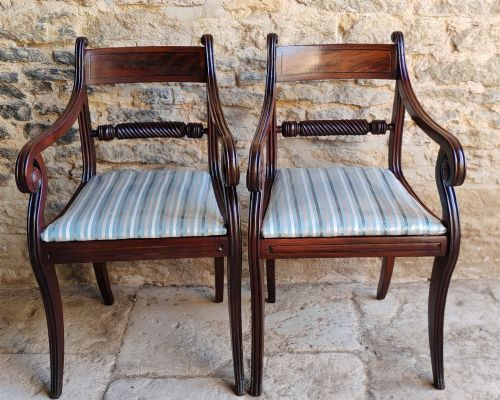


Rope Twist Back Chairs
Rope twist back chairs are classic seating options that bring architectural carving and elegance to a dining room.
What rope twist back chairs are
Rope twist back chairs are classic seating options that bring architectural carving and elegance to a dining room. Buyers searching this phrase will find dining chairs and carver chairs dating from the Georgian, Regency, and nineteenth century periods.
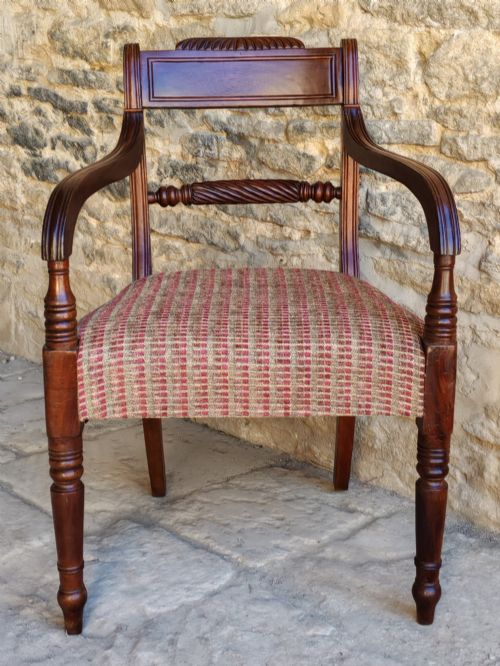
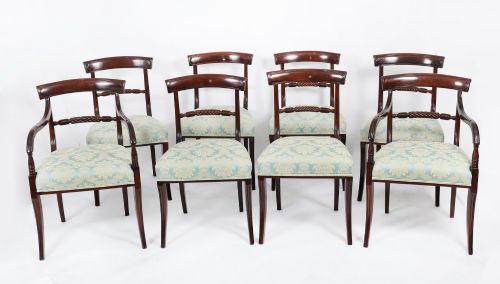
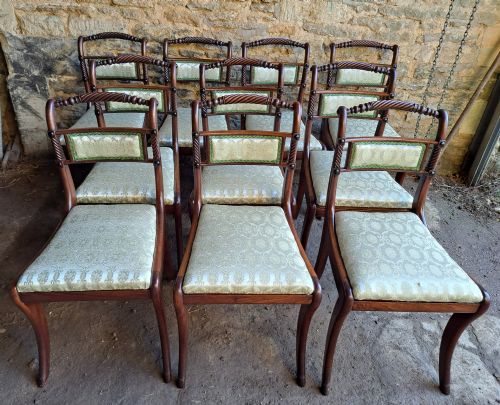
The versions most commonly met on this page are mahogany dining chairs featuring distinct carved rope patterns across the top rail or splat. Sets range from pairs up to matching groups of ten, often including a corresponding carver chair for the head of the table.
Originating in grand British houses, these pieces reflect the classical influences of the Regency and Georgian eras. Makers utilised rich timbers to create sculptural back rails that remain functional and decorative today.
How they were made
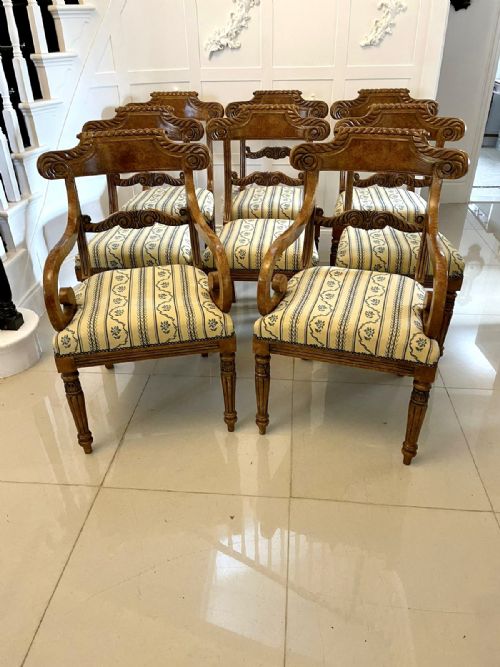
Cabinetmakers constructed these frames using solid timber, predominantly relying on mahogany and rosewood. Some examples incorporate faux birdseye maple or decorative surface finishes to alter the visual texture of the wood.
The defining rope twist element requires precise hand carving to achieve the continuous spiral effect along the back rail. Upholstery fabric and velvet appear on drop-in or padded seats, applied over traditional webbing and stuffing.
Retail Price Guide 2026
Typical UK retail prices for rope twist back chairs, calculated from the Sellingantiques database of over a million retail prices indexed since 2003. This retail price guide relies exclusively on Sellingantiques data; no external sources or auction records are used, so the figures do not describe the wider market.
Listings for rope twist back chairs feature pieces made from mahogany, rosewood, and faux birdseye maple.
What varies in quality
Quality in these seats rests upon the crispness of the hand carving along the rope twist and the selection of the timber. Dense, well-figured mahogany with deep natural grain separates standard production from finer cabinet work.
The integrity of the frame construction and the matching of timber across an entire set dictate the desirability of the group. Sets that retain their original proportions and cohesive wood selection hold greater aesthetic balance.
The Rope Twist Back Chairs Glossary
- Carver chair
- An armchair designed with scrolling or enclosed arms, typically placed at the head of a dining table. These match the smaller side chairs in a set.
- Regency
- A stylistic period spanning the early nineteenth century defined by classical Greco-Roman motifs. Furniture from this era often incorporates clean architectural lines alongside carved details.
- Splats
- The vertical wooden strip positioned in the centre of the chair back. In these pieces, the splat or top rail receives the distinctive rope twist carving.
- Mahogany
- A durable tropical hardwood valued for its rich reddish-brown colour and fine grain. It served as the primary material for high-end British dining furniture throughout the Georgian period.
Frequently Asked Questions
What are rope twist back chairs?
Rope twist back chairs are antique dining and carver seats featuring a carved wooden rail resembling a twisted rope. They date primarily from the Georgian and Regency periods.
Craftsmen shaped these items from timbers such as mahogany and rosewood to provide decorative seating for formal dining rooms.
How do I care for antique wood chairs?
Maintain these chairs by keeping them away from direct heat sources and sudden humidity changes to protect the timber. Regular dusting with a soft cloth preserves the finish.
Avoid harsh chemical polishes that can degrade the surface over time. Professional conservation helps maintain the stability of older frame joints.
What is a carver chair?
A carver chair is an armchair intended to match a set of dining chairs. These pieces usually sit at the head and foot of the table.
They feature supportive armrests integrated into the design, echoing the rope twist details found on the smaller side chairs.