
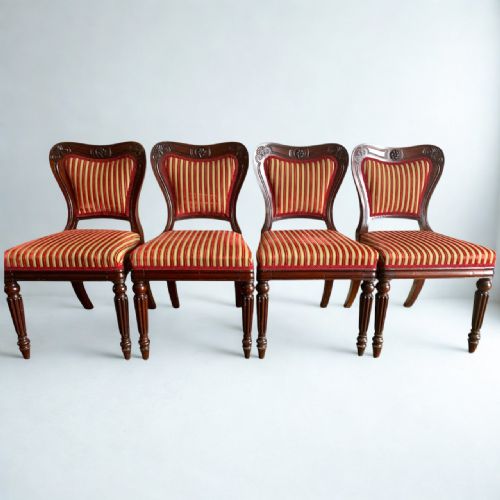


Early Victorian Dining Chairs
Early victorian dining chairs bring solid timber frames and substantial nineteenth-century seating to the table.
Early Victorian Dining Chairs
Early victorian dining chairs comprise solid timber seating forms produced during the nineteenth century, including the early victorian, regency and william iv periods. Buyers encounter sets numbering from pairs up to twelve pieces, alongside individual side chairs and farmhouse kitchen variants.
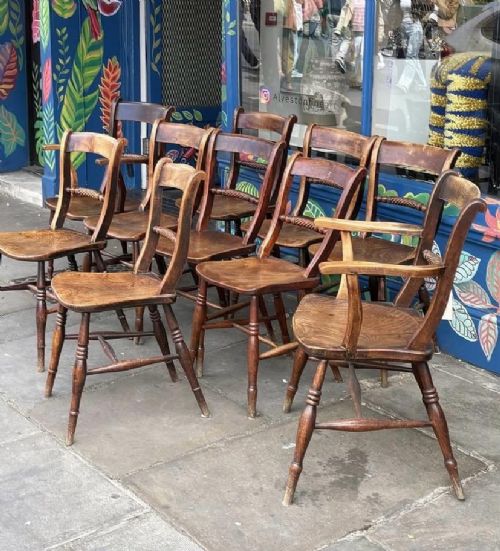
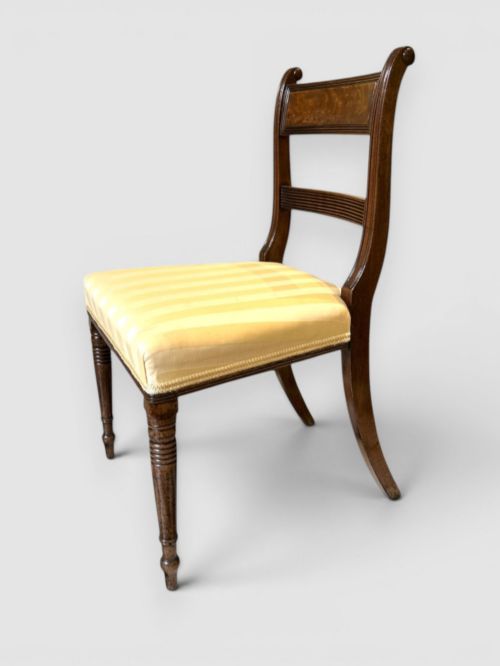
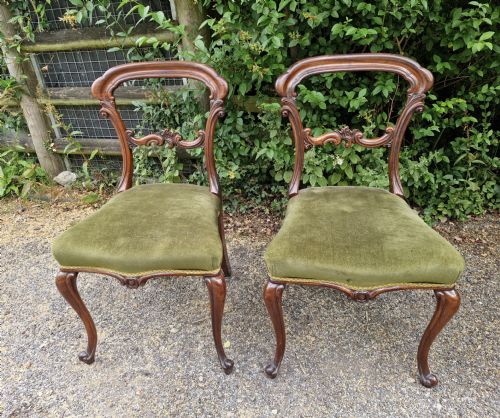
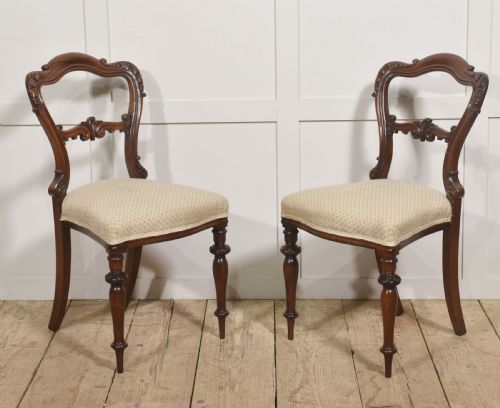
The inventory leans heavily towards mahogany and rosewood frames, frequently shaped into balloon backs, bar backs, kidney backs and carved crown designs. Oak, elm and beech appear in regional farmhouse styles and bentwood formats.
Sets dominate the selection, though pairs and single items such as children's chairs or bedroom chairs also occur. Formats span formal dining room suites with upholstered seats to simpler rush-seat country chairs.
How they were made
Cabinetmakers utilised dense hardwoods, predominantly mahogany and rosewood, alongside oak and elm for structural frames. Timber selection dictated the weight and durability of each chair.
Frames feature turned, carved and shaped components, joined using traditional cabinetmaking methods. Upholstered variants incorporate fabric, velvet, leather and buttoned leather over padding.
Early Victorian Dining Chairs Retail Price Guide 2026
Typical asking prices for early victorian dining chairs among the pieces listed under this phrase on Sellingantiques today, from the lower quarter to the upper quarter. They describe what is for sale here now, not the wider market.
The inventory records styles spanning the regency, william iv, early victorian, victorian farmhouse and gothic revival periods.
What varies in quality
Quality rests in the crispness of timber carving, the selection of figured mahogany or solid rosewood, and the harmony within a assembled set. Well-matched timber grain and refined turning elevate an entire suite.
Subtleties in structural joinery and the original proportions of balloon or bar backs separate standard utility seating from finer cabinet-made examples.
C Hindley And Sons·Gillows
The Early Victorian Dining Chairs Glossary
- Balloon-back
- A chair back shaped in a continuous curved oval resembling a balloon. This silhouette defined much nineteenth-century dining seating.
- Bar-back
- A horizontal wooden slat crossing the upper backrest. It provides structural support while displaying the grain of the mahogany.
- Rosewood
- A dense, heavily figured dark timber utilised for high-status early victorian furniture. Its rich colour and grain made it a preferred choice for formal dining sets.
- Mahogany
- A durable imported timber valued for its stability and deep reddish-brown tone. Cabinetmakers relied on it for the majority of formal nineteenth-century dining chairs.
- Gothic revival
- An architectural and decorative style drawing on medieval forms. Chairs in this manner feature pointed arches and ecclesiastical motifs.
Early Victorian Dining Chairs: Frequently Asked Questions
How do I spot a matched set?
Examine the timber grain, turning details and proportions across all chairs in the group. Variations in wood species or slight discrepancies in height indicate assembled sets rather than original matching productions.
Look closely at the joinery beneath the seats to confirm consistent construction methods used by the maker.
Are mahogany and rosewood chairs fragile?
Hardwood frames constructed in the nineteenth century offer substantial structural strength for daily use. Regular care and appropriate humidity levels keep the joints stable.
Avoid dragging chairs by their upper backs to prevent strain on the historical timber joints.
What is the difference between side chairs and dining chairs?
Dining chairs are typically designed to sit comfortably around a dining table during meals. Side chairs generally lack arms and serve multiple purposes in bedrooms or parlours.
Both forms share similar nineteenth-century construction techniques and timber choices.
How do I care for leather upholstery?
Keep leather surfaces clean using appropriate conditioning products designed for antique hides. Avoid placing chairs in direct sunlight to prevent the leather from drying out.
Check buttoning periodically to ensure the underlying padding remains secure.