
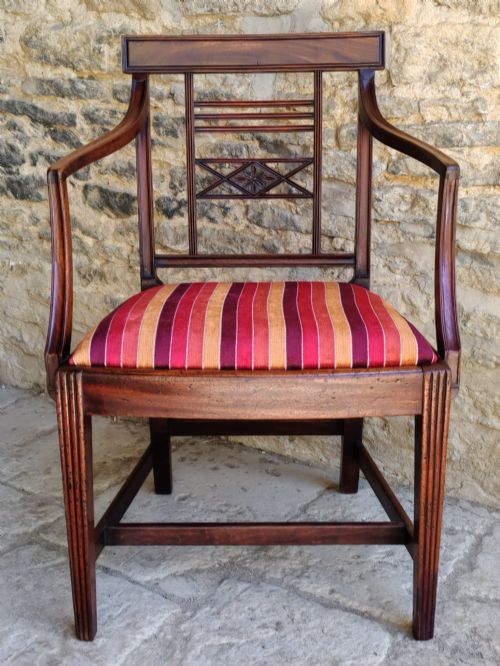
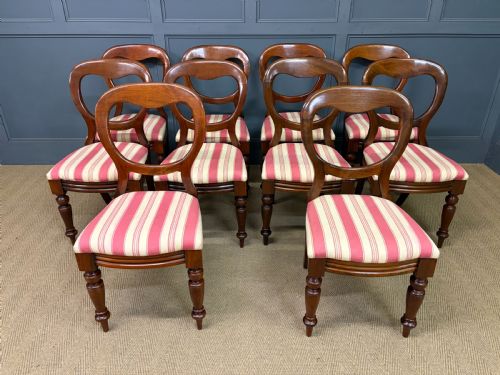

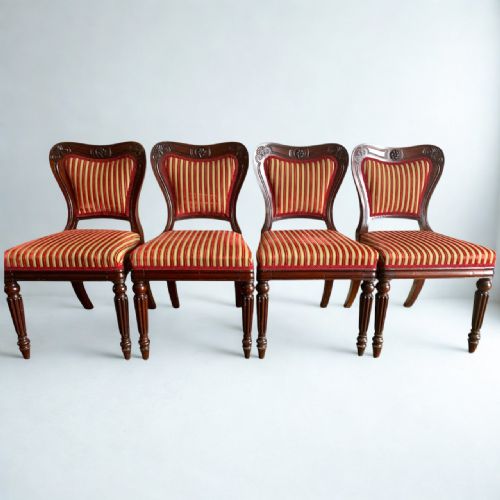


Red Striped Dining Chairs
Red striped dining chairs bring rich pattern and traditional timber into a room, offering robust seating shaped across centuries of British design.
What red striped dining chairs are
The timber frames are predominantly mahogany and oak, supporting upholstered seats finished in various fabrics. The forms span from classical Georgian proportions to later Victorian balloon-back designs with carved details.
Buyers seeking red striped dining chairs encounter pieces shaped by distinct historical styles, such as William IV and Victorian cabinet making. Each set demonstrates the prevailing aesthetic of its decade, uniting functional dining furniture with decorative textile patterns.
How they were made
Makers constructed the structural frames from solid hardwoods like mahogany and oak, shaping timber through traditional joinery techniques. Woodworkers added decorative elements such as scroll carving and cabriole legs to specific forms.
Upholstery fabrics were secured over internal padding to create the distinctive seats recorded in the listings. These materials combine sturdy wooden skeletons with textile surfaces designed for daily use.
Retail Price Guide 2026
Typical UK retail prices for red striped dining chairs, calculated from the Sellingantiques database of over a million retail prices indexed since 2003. This retail price guide relies exclusively on Sellingantiques data; no external sources or auction records are used, so the figures do not describe the wider market.
Every balloon-back frame politely reminds dinner guests to sit up straight while admiring the carved scrollwork.
What varies in quality
The standard of timber selection and the precision of the woodwork determine the distinction between simpler examples and finer pieces. Carved details such as scrollwork exhibit varying degrees of crispness and depth depending on the skill of the artisan.
The scale of surviving sets also influences character, as larger collections require consistent craftsmanship across multiple matching frames. The integration of the upholstery fabric with the underlying timber form dictates the overall visual balance.
The Red Striped Dining Chairs Glossary
- Mahogany
- A durable hardwood commonly utilised for furniture frames throughout the eighteenth and nineteenth centuries. Its dense grain allows for stable construction and fine carving.
- Balloon-back
- A chair back shaped in the rounded contour of a balloon, popular during the nineteenth century. This design provides ergonomic support while presenting an elegant silhouette.
- Cabriole leg
- A furniture leg that curves out and then in, resembling the leg of an animal. It typically terminates in a pad or carved foot.
- Scroll carving
- Ornamental carving shaped into spiral or scroll motifs. This technique adds decorative relief to wooden frames and legs.
Frequently Asked Questions
How do I date these chairs?
Dating relies on timber choices, construction methods, and stylistic markers specific to periods like the Georgian or Victorian eras. Examining the leg shape and back design helps identify the era of manufacture.
Cabinet makers shifted from classical Georgian proportions to rounded balloon-back forms over the course of the nineteenth century. Comparing these architectural details against known historical styles clarifies the age of the piece.
Are these chairs suitable for daily use?
These timber dining chairs are built for regular seating around a table, utilising strong hardwoods like mahogany and oak. Their traditional construction provides stability for everyday meals.
Maintenance involves caring for the timber frames and ensuring the upholstered fabric remains clean and secure. Proper placement away from direct heat sources preserves the wood and textiles over time.
How do I care for mahogany furniture?
Mahogany requires gentle cleaning with a soft, dry cloth to remove dust without harming the polished wood surface. Avoiding excessive moisture and direct sunlight prevents the timber from drying out or fading.
Periodic application of appropriate furniture wax maintains the lustre of the hardwood. Treating the timber with care ensures the polished finish endures through generations of use.