


Upholstered Oak Dining Chairs
Upholstered oak dining chairs combine robust timber frames with soft seating, offering durable comfort for long meals around the table.
The Forms of Upholstered Oak Dining Chairs
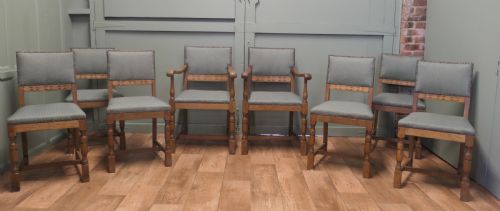
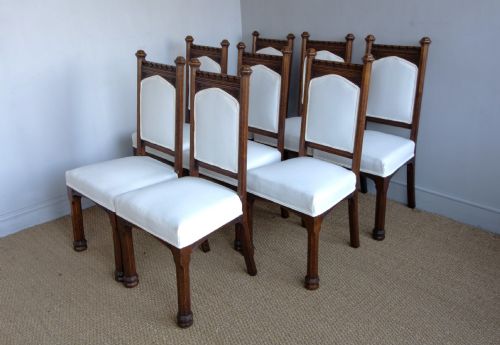
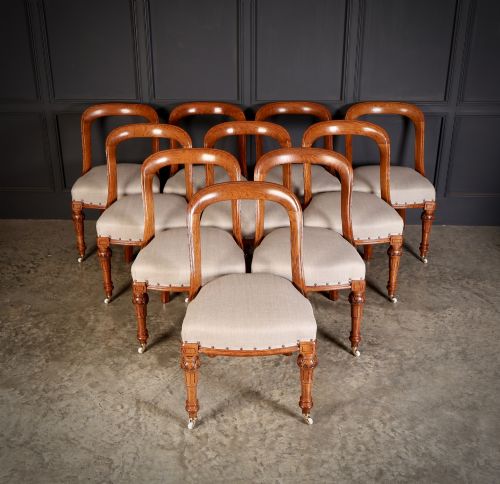
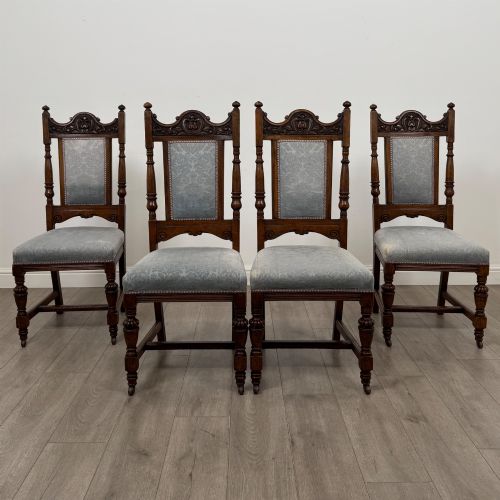
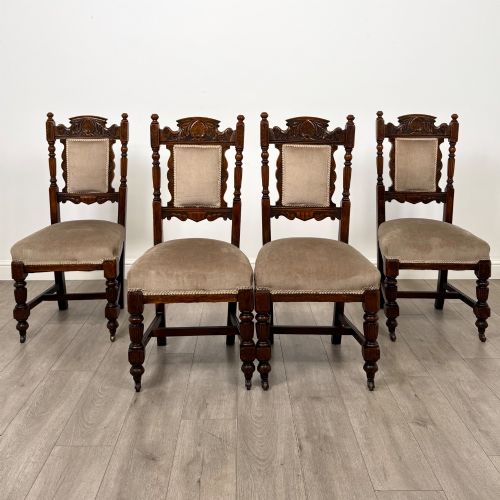
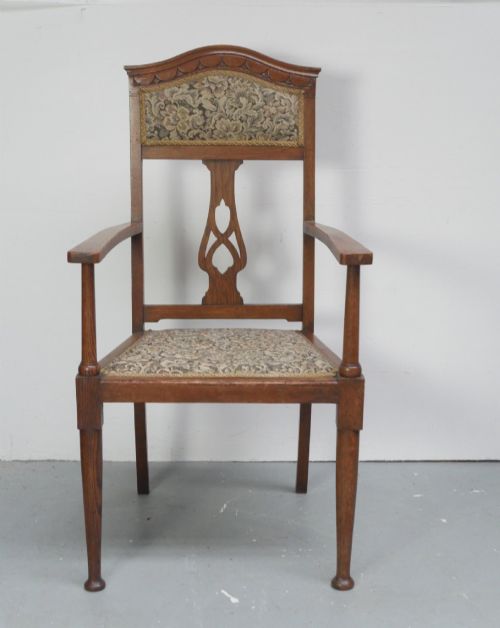
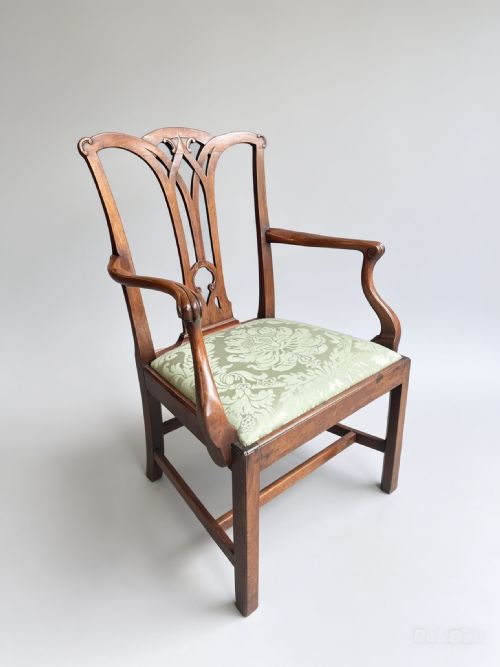
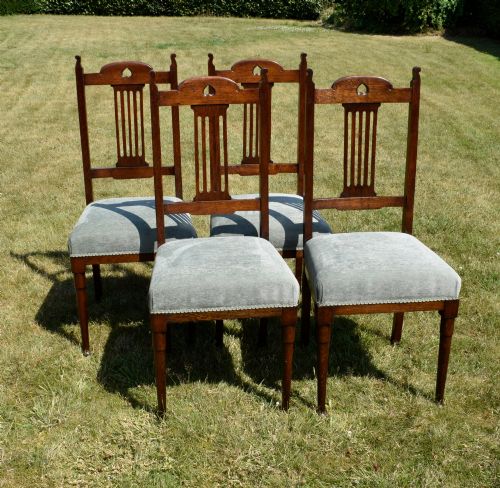
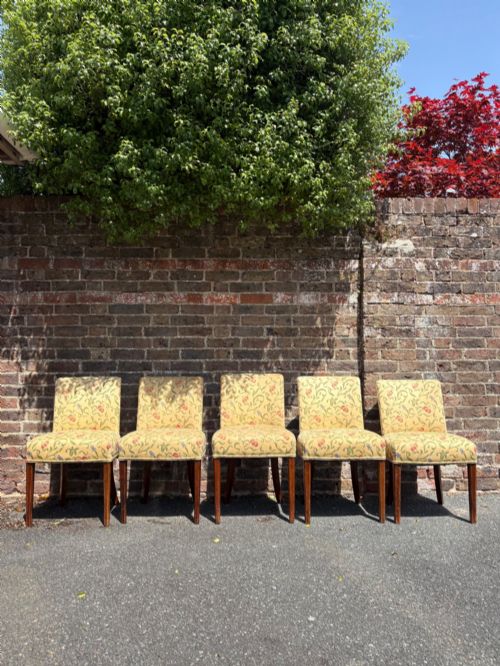
Upholstered oak dining chairs appear frequently in sets, spanning styles from the nineteenth century into the early twentieth century. You will encounter high-back formats, low farmhouse designs, and revival interpretations such as Jacobean, Louis XV, and Arts and Crafts.
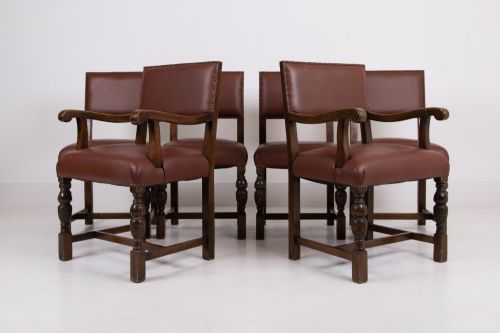
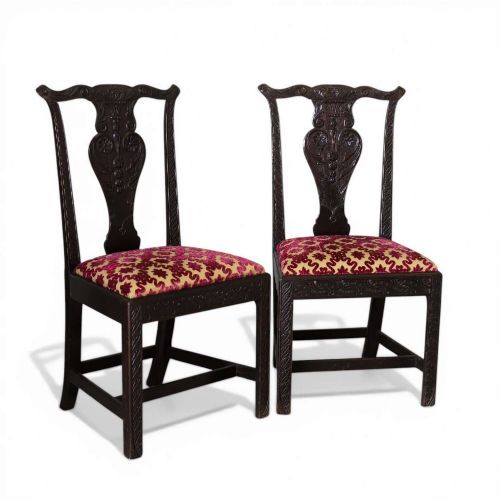
The timber frames utilise solid oak, paired with various coverings including fabric, velvet, leather, and metal or brass detailing. These pieces serve formal dining rooms as well as country kitchens, reflecting diverse regional British and continental European cabinetmaking traditions.
Sets range from small groups of four up to larger dining suites numbering ten or twelve pieces. Surviving examples demonstrate how dining seating evolved across the Victorian, Edwardian, and later periods while retaining oak as the primary structural material.
Construction and Materials
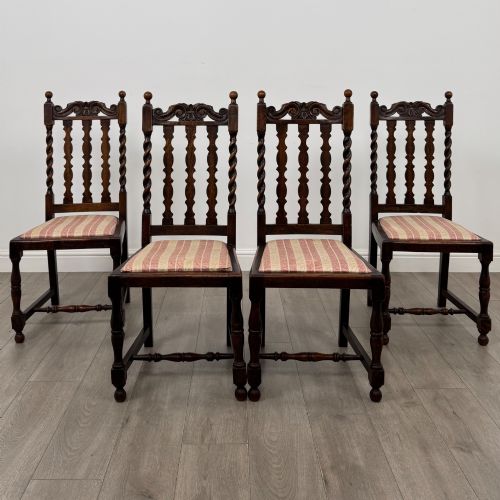
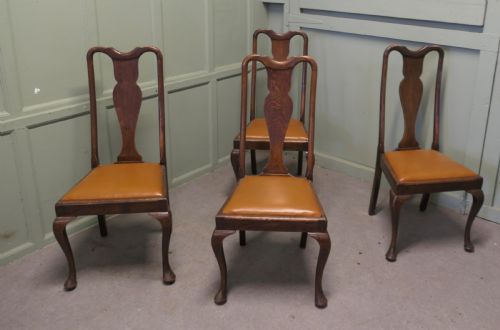
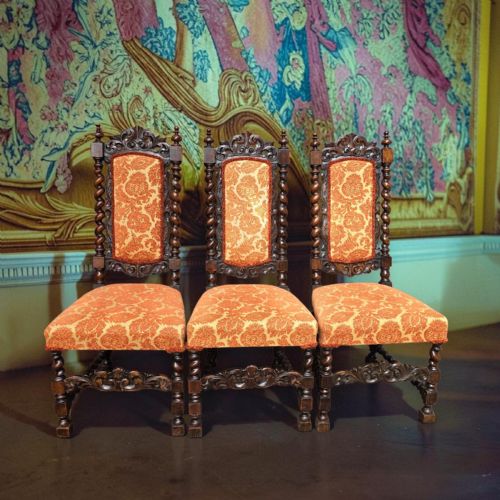
Frames employ solid oak, shaped through turning, scroll carving, and joinery techniques like mortise and tenon. Supports often incorporate barley twists, cabriole legs, stretchers, and high carved backs.
Upholstery methods secure fabric, velvet, or leather directly to drop-in seats or padded backrests. Metal and brass fixings support the structural joints and decorative elements across different regional styles.
Retail Price Guide 2026
Typical UK retail prices for upholstered oak dining chairs, calculated from the Sellingantiques database of over a million retail prices indexed since 2003. This retail price guide relies exclusively on Sellingantiques data; no external sources or auction records are used, so the figures do not describe the wider market.
Listings feature oak dining chairs across the nineteenth and twentieth centuries, including Edwardian, Victorian, and Arts and Crafts periods.
Judging Quality and Execution
The distinction between standard production and finer examples lies in the depth of the carving and the integrity of the oak frame. Crisp joinery and well-balanced proportions separate bespoke seating from basic utilitarian workshop output.
The choice of covering also defines the tier, with heavy leathers, rich velvets, and quality woven fabrics showing superior wear resistance. Uniformity across an entire set preserves visual harmony and historical cohesion.
Rigaux
The Upholstered Oak Dining Chairs Glossary
- Drop-in seat
- A removable upholstered frame that drops into a rebated wooden seat rail. This construction simplifies recovering and maintenance.
- Barley twist
- A woodworking technique turning timber into a spiral column shape. It appears frequently on the legs and stretchers of Victorian chairs.
- Cabriole leg
- A furniture leg featuring a double curve, bowing outward at the top and inward at the foot. This form draws on continental revival influences.
- Scroll carving
- Ornamental woodwork shaped into curved spiral scrolls. Craftsmen applied this detail to the crest rails and balloon backs of dining chairs.
Frequently Asked Questions
How do I clean antique oak frames?
Clean timber frames using a soft, dry cloth to remove dust without disturbing the polished surface.
Avoid harsh chemical sprays or excessive moisture, which can damage the aged oak and surrounding upholstery joints.
Are these chairs suitable for daily use?
Solid oak construction provides substantial durability, making these chairs robust enough for regular dining room seating.
Inspect the joints periodically to ensure the frame remains stable under everyday weight and movement.
How do I identify the period of an oak chair?
Dating relies on stylistic markers such as barley twist supports, high upholstered backs, or carved Jacobean revival motifs.
Comparing the timber grain, construction joints, and upholstery style helps narrow down the decade of manufacture.
Can I reupholster antique dining chairs?
Many chairs feature drop-in seats or straightforward padding that allows for professional recovering in modern or period-appropriate fabrics.
Retaining the original webbing and padding structure helps preserve the internal integrity of older pieces.