
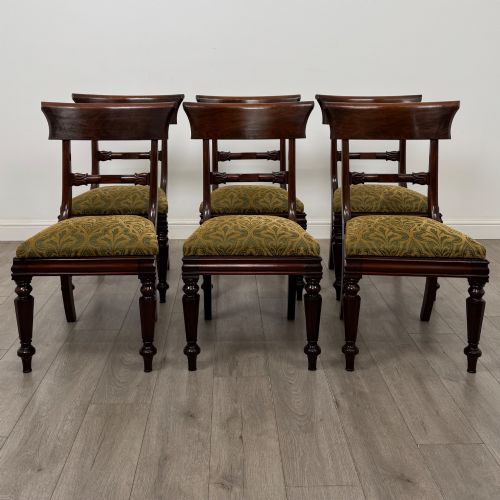
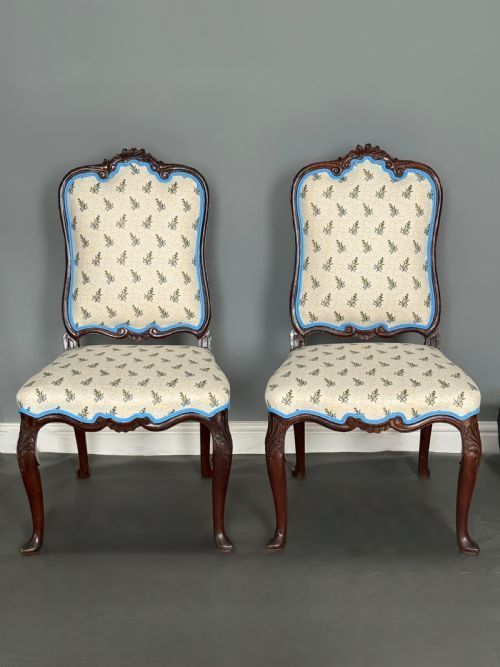
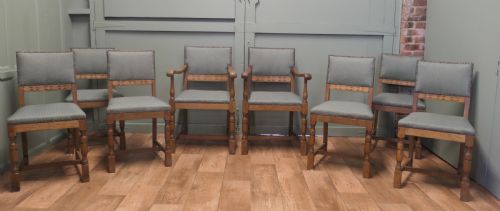
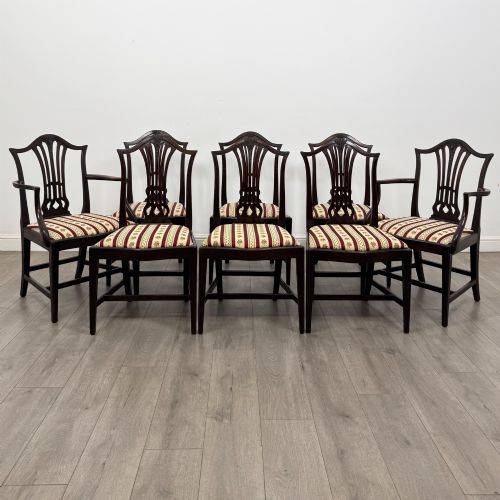
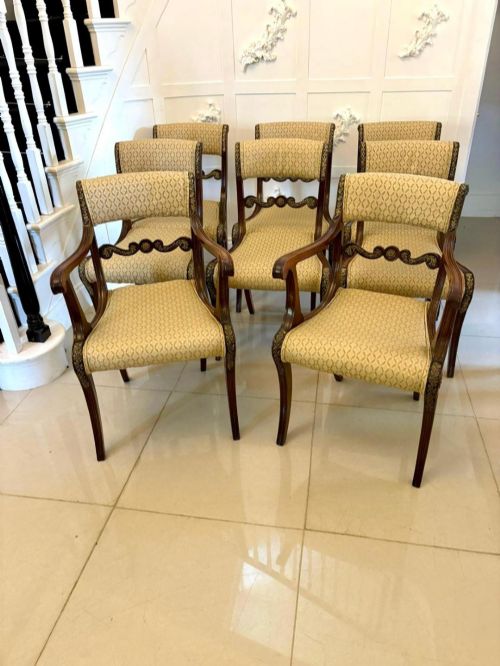


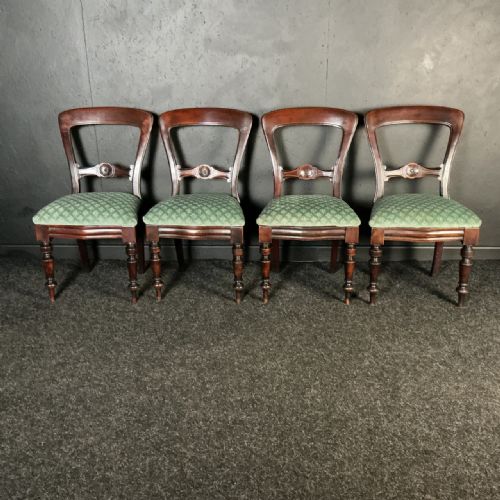
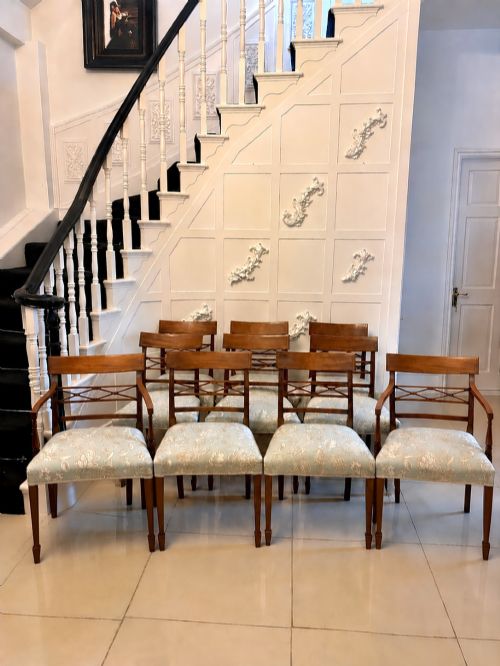
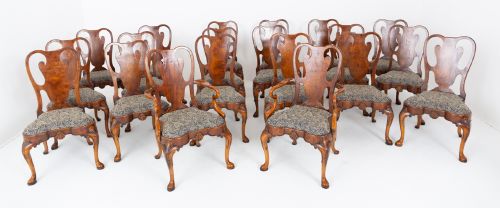
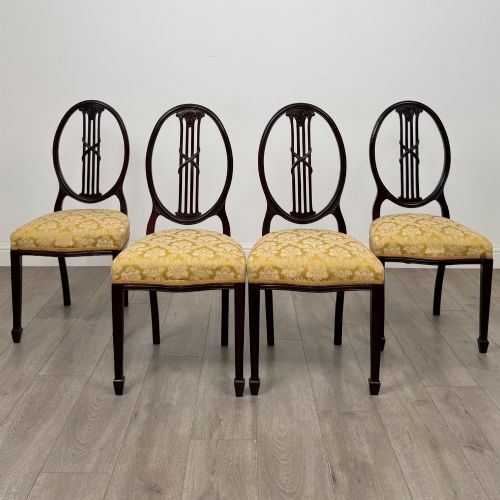
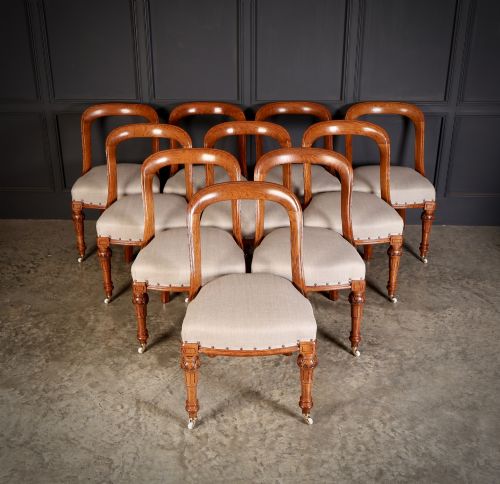
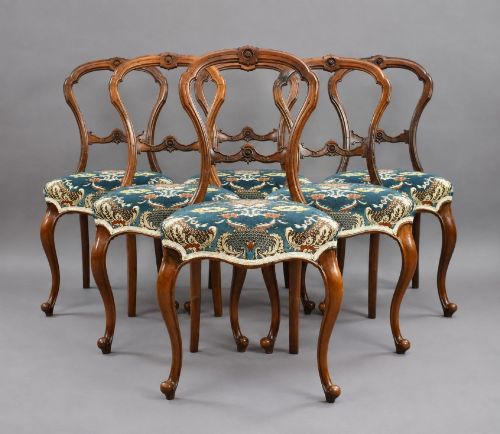
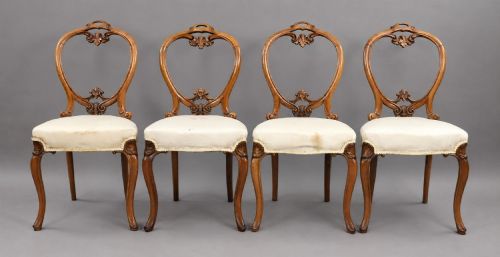
Traditional Upholstered Side Chairs
Traditional upholstered side chairs bring warmth and formal poise to a room, offering adaptable seating shaped through centuries of British craftsmanship.
Traditional Upholstered Side Chairs
Traditional upholstered side chairs encompass versatile seating forms designed for dining rooms, halls, and reception spaces across multiple historical periods. When exploring this selection, buyers encounter pieces originating from the Georgian, Regency, and Victorian eras, alongside Edwardian and early twentieth-century revivals.
Construction and Materials
Frames rely primarily on hardwoods such as mahogany, oak, walnut, and maple, shaped through traditional joinery techniques including mortise and tenon joints. Carved details adorn backs and legs on many examples, utilising durable timbers capable of supporting repeated daily use.
Upholstery incorporates traditional textile coverings including velvet and woven fabrics, secured over padded foundations with brass tacks or hidden fixings. Timber surfaces receive hand-finished polish or wax to highlight the natural grain of the wood.
Traditional Upholstered Side Chairs Retail Price Guide 2026
Typical asking prices for traditional upholstered side chairs among the pieces listed under this phrase on Sellingantiques today, from the lower quarter to the upper quarter. They describe what is for sale here now, not the wider market.
The listings span multiple centuries, capturing timber varieties from Cuban mahogany and walnut to golden oak and elm.
Judging Quality
Quality reveals itself in the crispness of timber carving, the integrity of the frame construction, and the coherence of matching sets. Superior examples display refined proportions, well-seasoned woods with rich patination, and balanced joinery that remains rigid over time.
Differences also emerge in the fidelity of revival styles to their original periods and the quality of the textile upholstery selected for the seat pads. Original timber surfaces and undisturbed construction details generally distinguish finer items from simpler utilitarian equivalents.
Charles Tozer·Maple and Co·Gillows
The Traditional Upholstered Side Chairs Glossary
- Shield back
- A chair back design shaped in the outline of a heraldic shield, popular during the eighteenth century and subsequent revival periods.
- Balloon back
- An oval or rounded chair back profile resembling a balloon, characteristic of nineteenth-century seating.
- Bar back
- A horizontal wooden slat crossing the uprights of a chair back, frequently seen on Regency and William IV dining chairs.
- Barley twist
- A spiral turning technique applied to wooden chair legs and stretchers, common in oak furniture from various periods.
- Cuban mahogany
- A dense, dark timber harvested in the Caribbean, prized for its rich grain and utilised in high-grade furniture.
Traditional Upholstered Side Chairs: Frequently Asked Questions
Are these chairs suitable for daily dining?
Most traditional side chairs are structurally robust enough for regular daily use, provided the timber frames and joints remain sound. Solid hardwood construction ensures long-term durability.
Routine checks of the underframe and reupholstering worn seat pads will keep these chairs functional and comfortable for everyday seating arrangements.
What is the difference between side chairs and armchairs?
Side chairs are built without armrests, allowing them to tuck neatly beneath a dining table or line a hallway wall efficiently. Their compact footprint makes them highly versatile for various rooms.
Armchairs feature structural arm supports and generally occupy more space, often serving as host seating at the head of a dining table or as standalone accent pieces.
How do I match chairs with an existing table?
Matching wood tones and historical styles creates a cohesive appearance, though contrasting timbers can also succeed if proportions align. Mahogany and oak pieces offer distinct visual weights.
Consider the seat height and the clearance required beneath the table apron to ensure guests sit comfortably without their knees striking the underside.