




Edwardian Queen Anne Chairs
Edwardian queen anne chairs bring together early eighteenth-century grace and the solid craftsmanship of the early twentieth century.
Edwardian Queen Anne Chairs
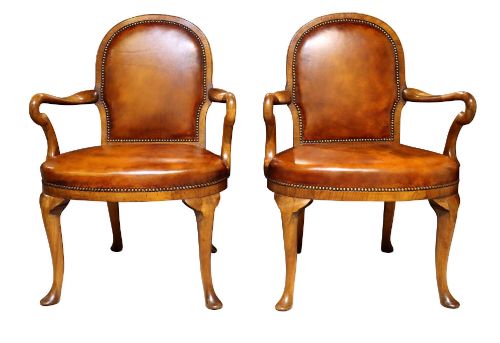
Edwardian queen anne chairs take their primary design cues from the restrained walnut furniture of the early eighteenth century, reinterpreted during the Edwardian period and the early twentieth century. Buyers seeking this phrase encounter sets of dining chairs, carvers, armchairs, and desk chairs that echo the distinctive silhouette of the earlier era.
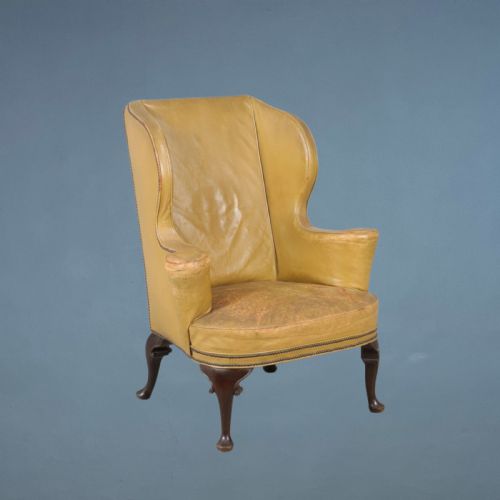
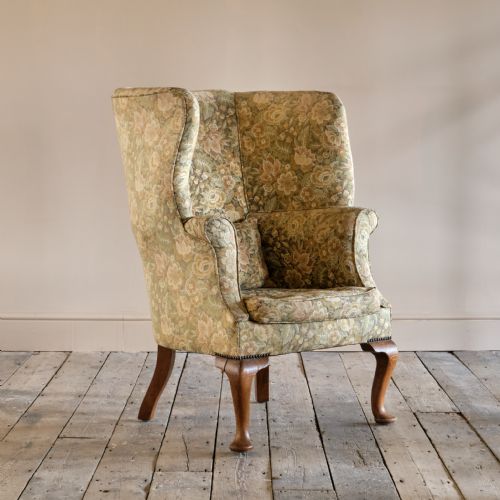
The version most commonly met on this page is the dining chair executed in mahogany or walnut, often appearing in sets of six or eight alongside individual armchairs and wing chairs. These pieces demonstrate the revivalist enthusiasm of the late nineteenth and early twentieth centuries, applying classical forms to domestic seating.
Makers and workshops of the period also produced specialised forms such as corner chairs, nursery chairs, and children's chairs, all adopting the characteristic smooth line and proportion associated with queen anne style design.
How they were made
Makers constructed these frames predominantly from walnut, mahogany, and oak, occasionally utilising burr walnut or rosewood veneers to add decorative depth to the primary surfaces. Timber selection governed the weight and durability of the seating, with solid hardwoods forming the structural core of dining sets and armchairs.
Upholstery techniques involved traditional stuffing materials covered in leather, velvet, fabric, or textile, fixed with brass detailing where appropriate. Decorative elements included carved splat backs, parcel gilt accents, Marquetry inlay, and painted details on specific revival pieces.
Edwardian Queen Anne Chairs Retail Price Guide 2026
Typical asking prices for edwardian queen anne chairs among the pieces listed under this phrase on Sellingantiques today, from the lower quarter to the upper quarter. They describe what is for sale here now, not the wider market.
Listings demonstrate a strong preference for mahogany and walnut timbers, with dining sets frequently appearing in configurations of six or eight pieces.
What varies in quality
Quality rests in the precision of the cabinetwork and the depth of the timber figuring, particularly where burr walnut or selected mahogany veneers are deployed across the splat and frame. Finer examples display crisp carving on the knees and feet rather than softened contours from hurried production.
The integrity of the frame construction and the fidelity of the revival proportions dictate the standing of individual pieces. Sets that maintain uniform colour and matching grain patterns across all chairs command greater appreciation than assembled groupings.
Charles Tozer·Whytock and Reid·Spillman and Co·Waring and Gillow·Maple and Co
The Edwardian Queen Anne Chairs Glossary
- Splati
- The vertical central strip of wood within the backrest of a chair, often shaped like a vase. In these pieces, the splat provides both structural support and the primary decorative focus.
- Carver
- An armchair designed to match a set of dining chairs, traditionally placed at the head of the table. These incorporate elbow rests while retaining the style of the side chairs.
- Cabriole Leg
- A furniture leg that curves outward in a convex arc and then bends inward in a concave arc, terminating in a pad or foot. This form derives from classical design and defines the profile of the seating.
Edwardian Queen Anne Chairs: Frequently Asked Questions
How do I date these chairs?
Dating relies on examining the timber characteristics, construction methods, and secondary woods used in the frame underneath. Edwardian and early twentieth-century pieces often combine revival styling with machine-assisted joinery alongside hand-finished details.
Comparing the specific proportions and finish against known archive examples from makers operating around nineteen hundred helps confirm the exact era of manufacture.
Are dining sets matching?
Many sets originating from the Edwardian period were produced as matched suites by large cabinet makers and department stores. However, some groupings are assembled later to form uniform sets of six, eight, or fourteen chairs.
Inspecting the timber grain, minor variations in carving, and frame dimensions reveals whether chairs started life together in the same workshop.
How should I care for leather seats?
Leather upholstery requires regular dusting with a dry cloth and occasional treatment with appropriate conservation balms to prevent the hide from drying out. Keeping the chairs away from direct sunlight and heat sources preserves the natural suppleness of the material.
Avoid using heavy synthetic detergents or modern chemical polishes that can strip the original finish from the leather or the surrounding timber frame.
What is a corner chair?
A corner chair is a specialised seating form featuring a curved backrest supported by posts and a square seat set diagonally. These pieces were designed to fit neatly into room corners or serve as writing chairs.
Examples from this period apply queen anne style legs and splats to the corner configuration, creating a compact and versatile seat.