
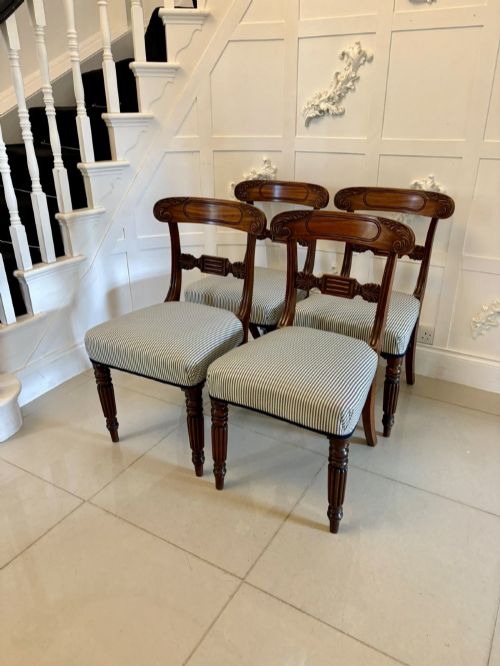
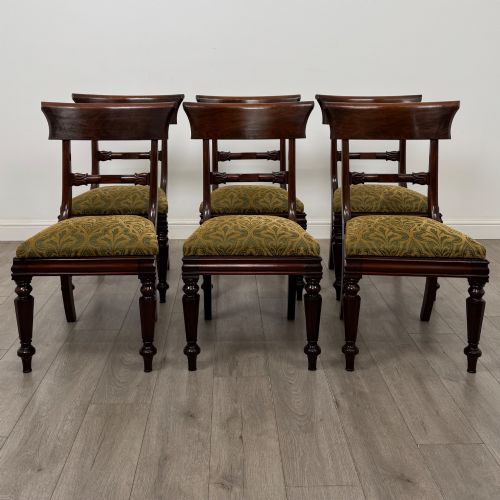
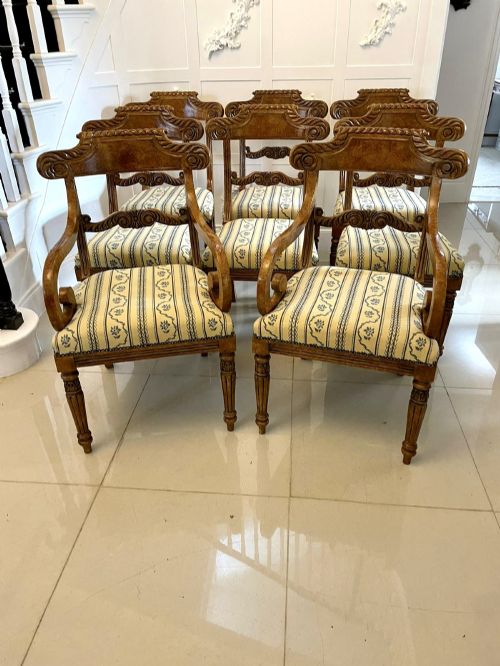
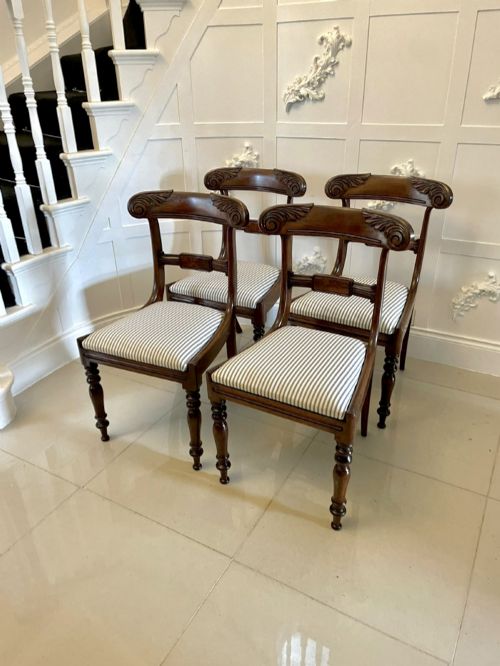


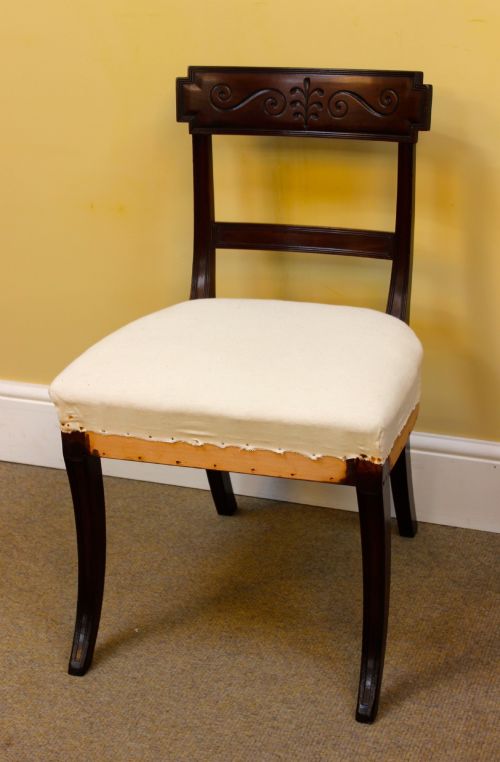
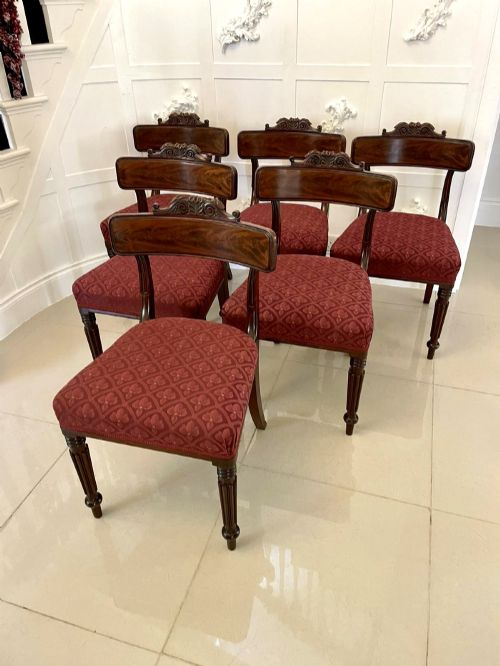
Regency Carved Side Chairs
Regency carved side chairs bring precise lines and rich timber into a room, offering functional seating rooted in early nineteenth-century design.
Regency Carved Side Chairs
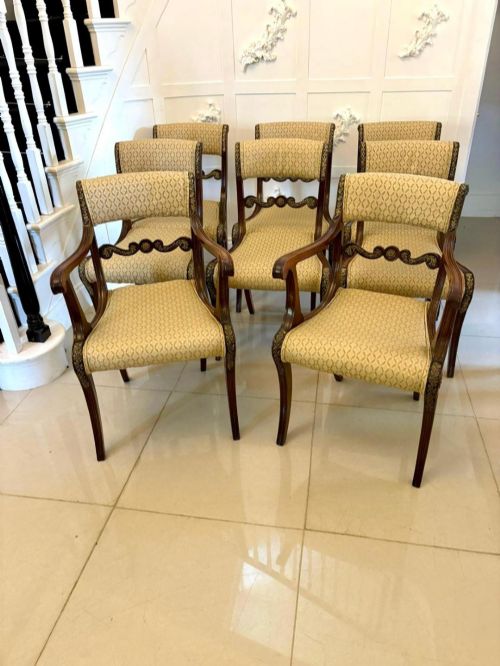
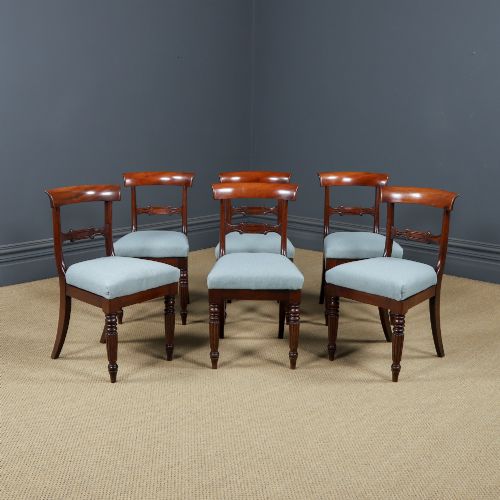
Regency carved side chairs encompass dining seats, hall chairs, and occasional seating originating primarily from the nineteenth century, with periods stretching from Georgian roots to later Victorian and Edwardian revivals. The form typically presents an upright posture intended for placement against a wall or around a dining table, avoiding the bulky arms of elbow chairs.
Makers and workshops of the era produced these pieces in sets or pairs, utilising durable timbers suited to domestic interiors. While the search phrase points directly to Regency production, the listings also include William IV, George IV, and later revival interpretations that share similar structural profiles.
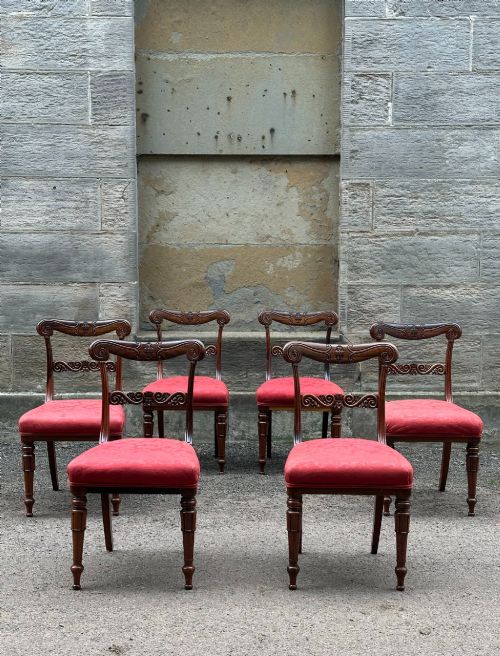
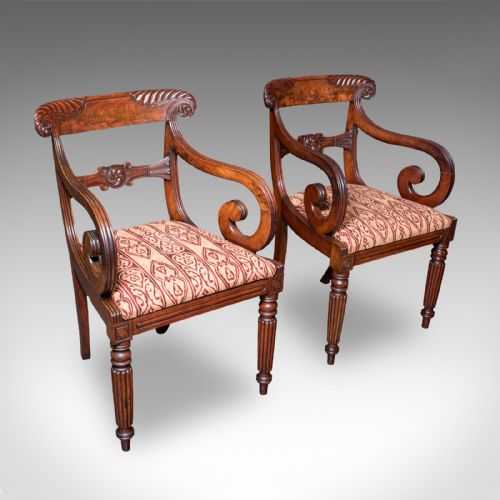
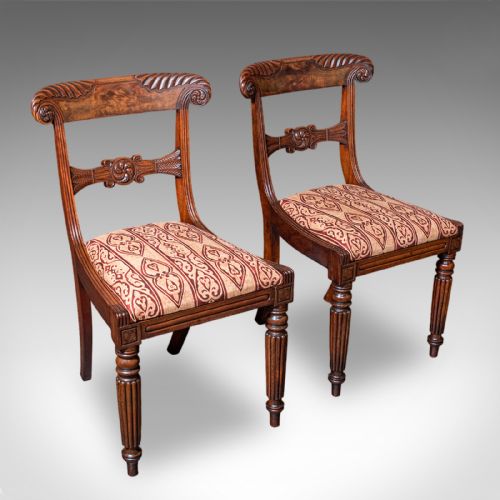
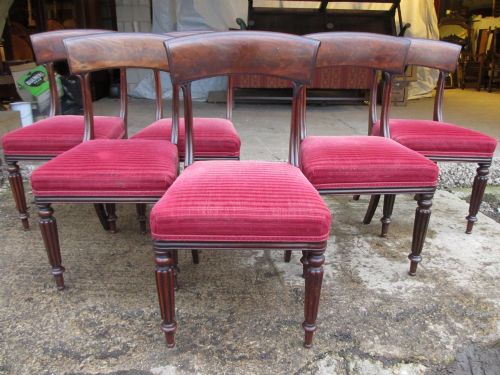
Buyers encounter individual pairs as well as larger assembled or matched sets spanning four to ten pieces. The construction focuses on solid wood frames, often incorporating carved details on the top rail or back splat that define the aesthetic of the period.
Materials and construction
Cabinetmakers constructed these frames predominantly from dense hardwoods such as mahogany and rosewood, occasionally employing simulated rosewood, faux birds eye maple, or ebonised finishes to mimic rarer timbers. Brass inlay and gilt work frequently accentuate the dark grain of the wood.
Joinery methods relied on traditional mortise and tenon joints to secure the legs, seats, and backs under daily use. Seats were upholstered in various fabrics or fitted with original cane work, depending on whether the chair served the dining room, hall, or library.
Periods represented span from Georgian and Regency eras through to Victorian and Edwardian revivals.
Distinctions in quality
The degree of carving sophistication distinguishes standard workshop output from pieces attributed to prominent makers like Gillows. Crisp chisel work on the crest rail and sabre legs indicates superior craftsmanship.
The choice of primary timber influences the tier of the piece, with heavily figured mahogany or solid rosewood sitting above secondary woods finished with painted grain. Original surfaces and retained upholstery materials further separate intact historical examples from later adaptations.
Gillows
The Regency Carved Side Chairs Glossary
- Side chair
- A chair without arms, designed for dining or placement against a room perimeter. These items form the majority of seating options in the period.
- Sabre leg
- A gently curved leg that tapers toward the foot, typical of seating design in the early nineteenth century. This shape provides stable support while maintaining a light visual profile.
- Bar back
- A horizontal wooden slat crossing the upper backrest of a chair, often curved to fit the user's spine. It appears frequently on dining seats from the Regency and William IV periods.
- Library chair
- A heavy, substantial seating form intended for reading rooms, sometimes constructed with wider proportions or specialised arm supports. These pieces prioritize sustained comfort during study.
- Grecian
- A design style drawing heavily on classical antiquity, featuring scrolled elements and outward-curved legs. This aesthetic dominated fashionable interiors during the early nineteenth century.
Regency Carved Side Chairs: Frequently Asked Questions
How do I identify a Regency side chair?
Look for classical motifs, sabre legs, and dark timbers such as mahogany or rosewood. The proportions remain clean and restrained compared to heavier Victorian styles.
Check the backrest construction for horizontal rails or carved classical details typical of the early nineteenth century.
Were these chairs used only for dining?
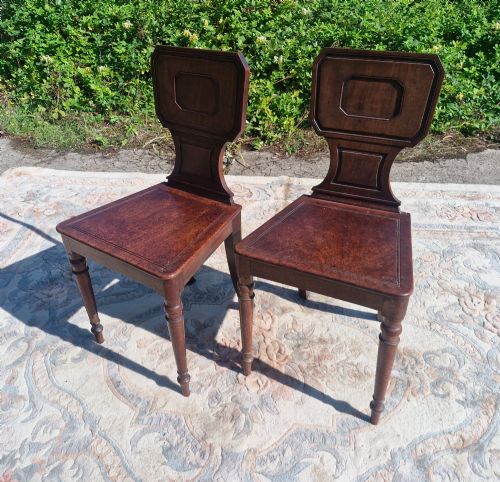
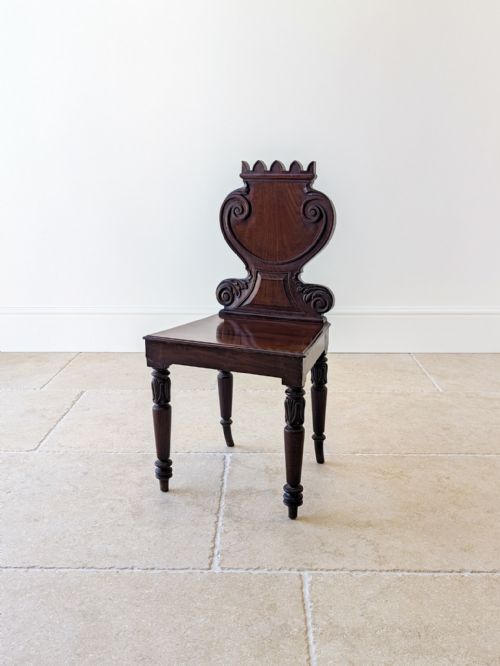
While many served around the dining table, builders also designed them as hall chairs, library seats, and morning room furniture. Hall chairs often featured solid wooden seats rather than upholstery.
Pairs frequently sat in reception spaces or bedrooms rather than dining settings.
What is the difference between Regency and William IV?
Regency design emphasises slender lines, classical restraint, and lighter proportions derived from ancient Greek and Roman models. William IV pieces tend to be heavier, with broader splats and bolder carvings.
Both periods utilise mahogany and rosewood extensively, but William IV furniture often displays a more robust silhouette.
Can I mix different sets of chairs?
Matching sets remain popular for formal dining rooms, but individual pairs or mismatched groups function well around an eclectic table. Ensure the seat heights align for comfortable dining.
Matching timber tones helps unify chairs gathered from different sources.