
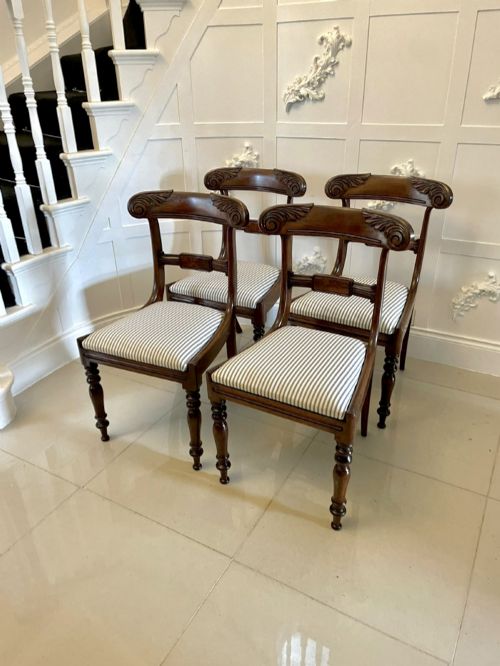
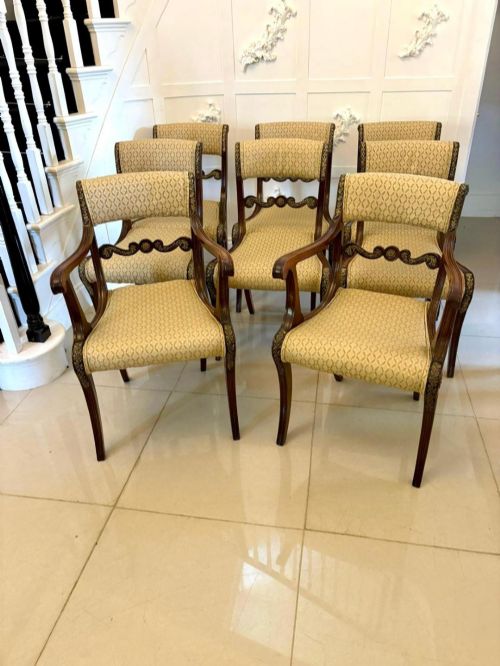


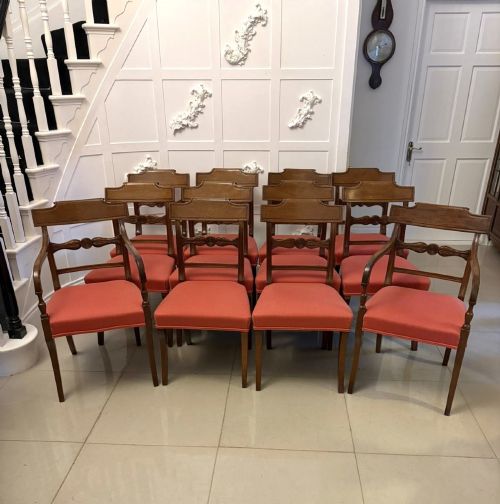
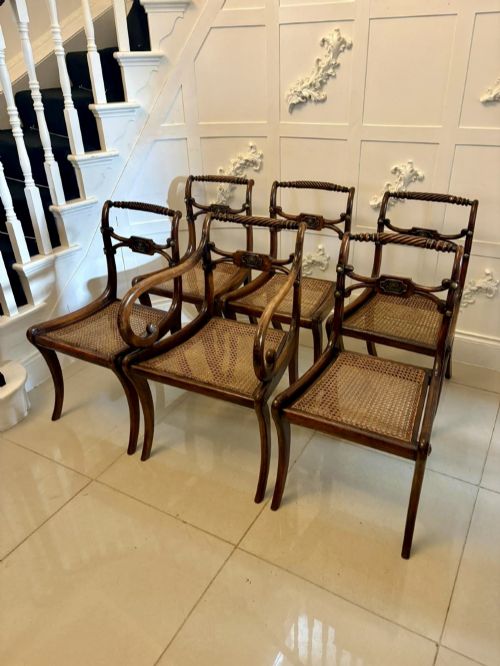
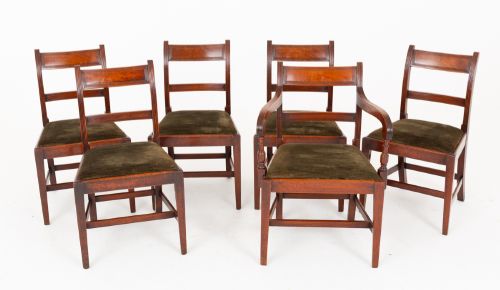
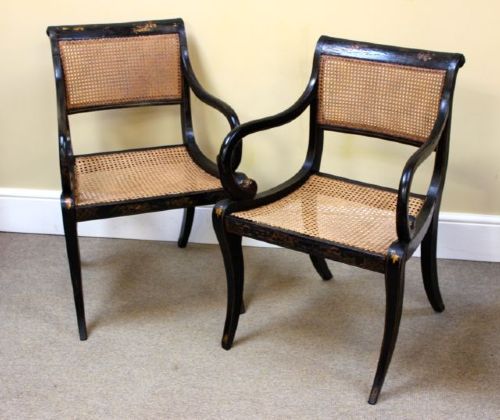
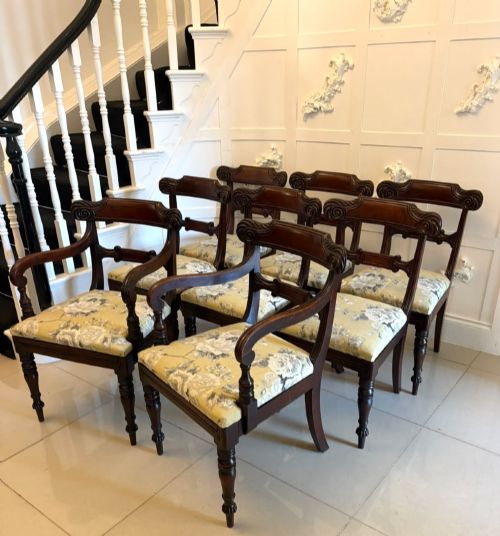
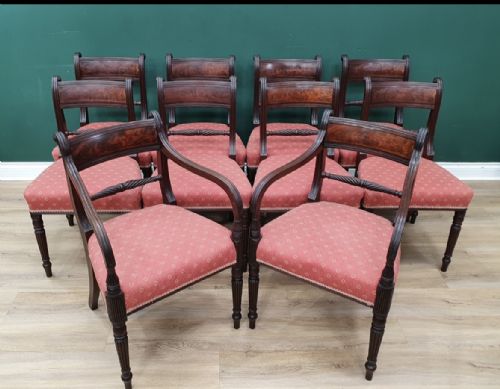
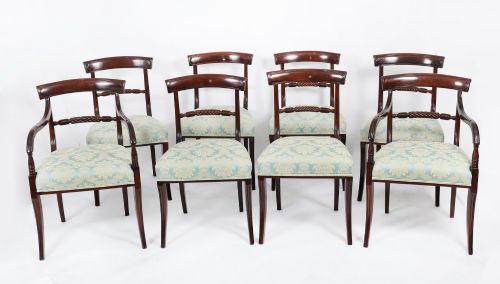
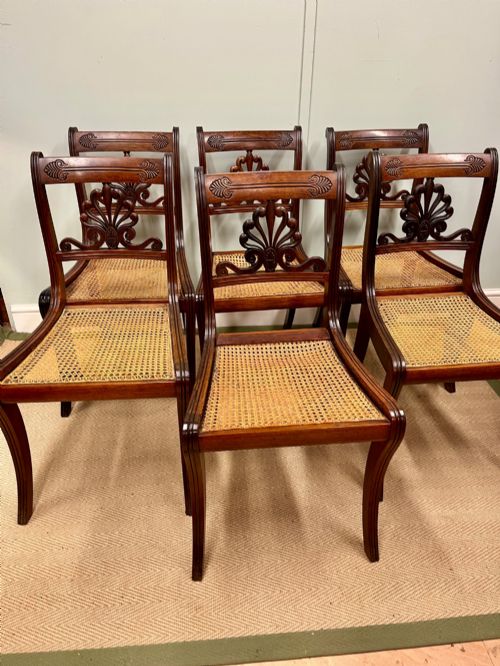
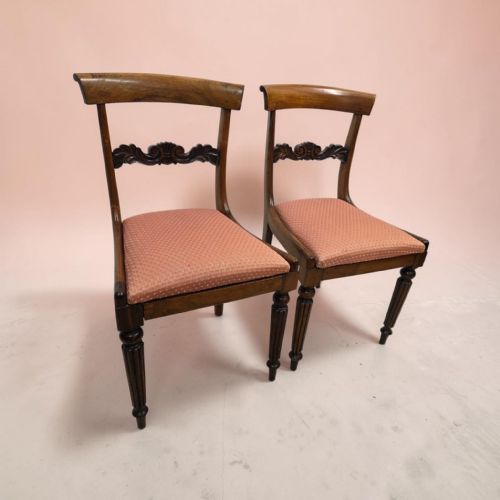
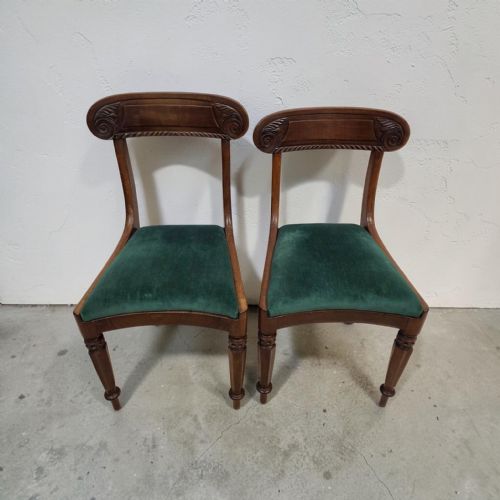
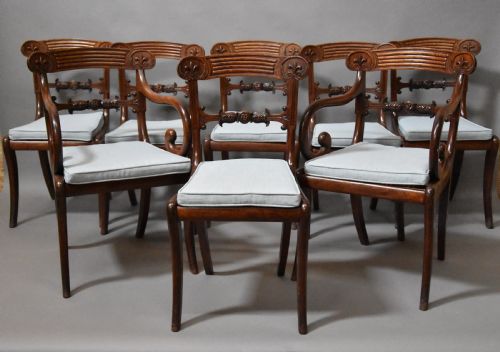
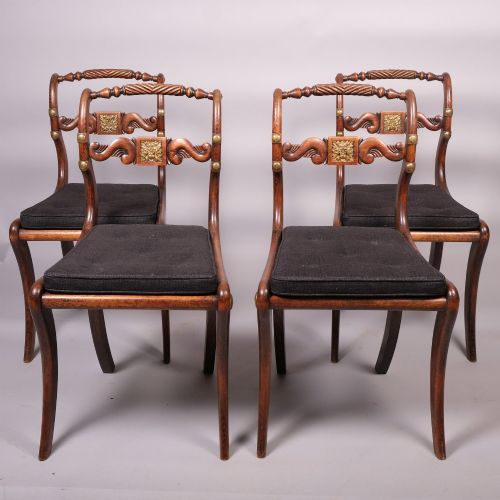
Period Regency Dining Seats
These period regency dining seats provide the solid construction and distinct proportions required to anchor a traditional dining room.
Period Regency Dining Seats
When you search for period regency dining seats, you encounter forms designed during the early nineteenth century alongside later revivals from the twentieth century.
The most common examples on this page are mahogany dining chairs, often found in sets ranging from four to twelve pieces with matching carvers.
Makers of the period also utilised rosewood, simulated rosewood, and cane to achieve the characteristic light and elegant forms of the era.
Materials and construction methods
Cabinetmakers relied heavily upon solid mahogany and rosewood, selecting dense timber to support slender sabre legs and curved back rails.
Seating portions frequently incorporated woven cane or upholstered pads covered in fabric, velvet, or leather to provide comfort.
Details such as brass inlay, marquetry, and ebonising finish surfaces that reflect the neoclassical taste of the Regency style.
Listings span multiple periods including Regency, Georgian, Victorian, and Edwardian, with mahogany remaining the dominant timber choice throughout.
Distinctions in craftsmanship and survival
Superior sets maintain matched timber grain across all chairs, whereas lesser examples show inconsistency in the wood selection between singles and carvers.
The crispness of carved details on bar backs and top rails separates standard production from exhibition quality pieces.
Original un-restored surfaces and intact early cane panels command higher regard than replaced structural elements or altered frames.
The Period Regency Dining Seats Glossary
- Carver
- An armchair designed to sit at the head of a dining table, usually matching a set of smaller single chairs.
- Bar back
- A horizontal wooden slat forming the upper portion of a chair back, characteristic of Regency and William IV designs.
- Sabre leg
- A curved chair leg that tapers toward the foot, mimicking the shape of a cavalry sword.
- Cane
- Woven rattan material used to form light, resilient seat panels on chairs.
- Rosewood
- A heavy, dark timber with distinct figuring utilised for high-status dining furniture.
Period Regency Dining Seats: Frequently Asked Questions
How many chairs come in a standard set?
Sets vary widely, with four, six, eight, and twelve chairs appearing frequently. Many larger groups include two matching carver armchairs for the heads of the table.
Buyers often select sets based on their dining table capacity and the number of guests they regularly host.
What is the difference between singles and carvers?
Single chairs are armless and designed to fit compactly along the sides of a dining table. Carvers feature open arms and slightly larger proportions for the hosts.
Both forms share identical leg and back designs to maintain visual harmony around the room.
Are cane seats durable for daily use?
Original cane seating woven from rattan offers surprising resilience if treated with care. Many surviving examples retain their initial webbing.
Owners can add loose squab cushions to reduce direct wear on historic cane panels during regular meals.
How do I spot a later revival chair?
Twentieth-century Regency style pieces often utilise machine-cut joints and timber finishes distinct from genuine early nineteenth-century stock. Examination of the wood patina and structural wear reveals the true age.
Consulting listing descriptions for specific period indicators helps clarify whether a set is original or a later reproduction.