



Regency Rope Twist Chairs
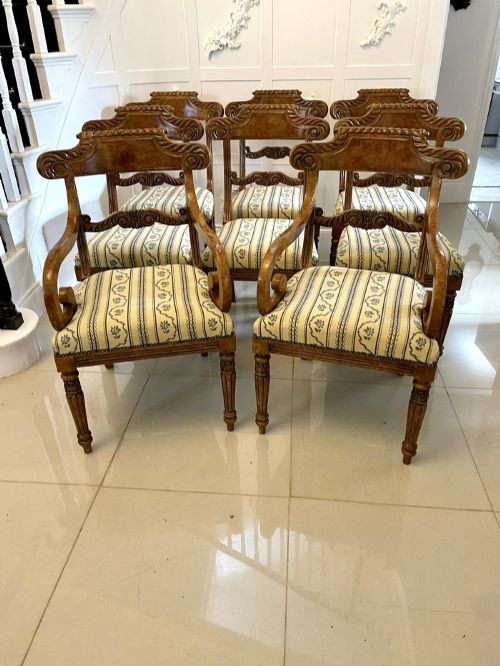
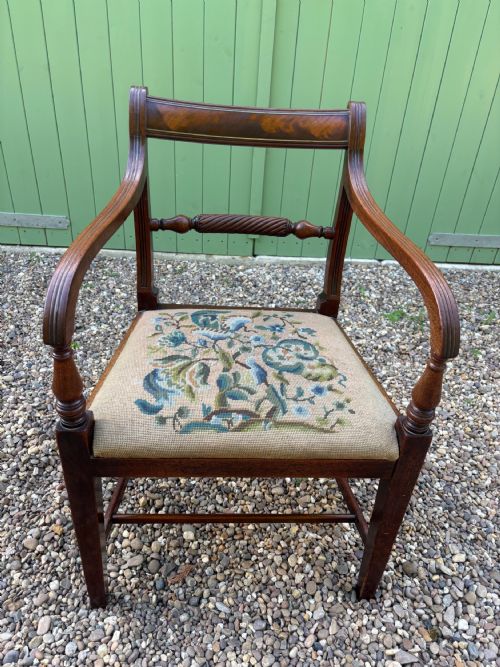
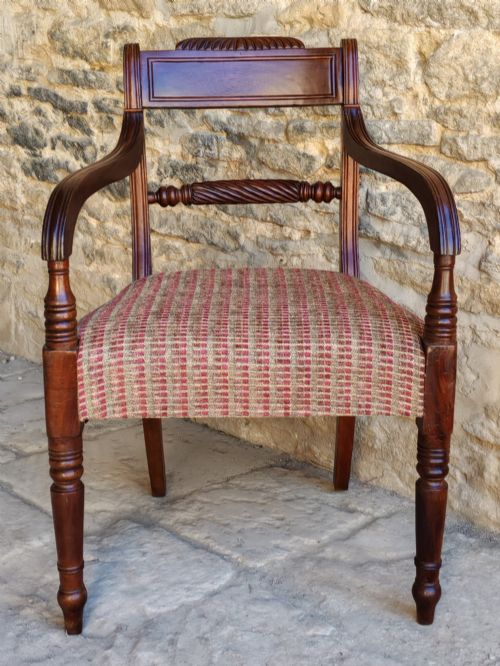
Regency rope twist chairs are sophisticated seating from the early nineteenth century defined by carved backrails that resemble knotted rope.
Regency Rope Twist Chairs
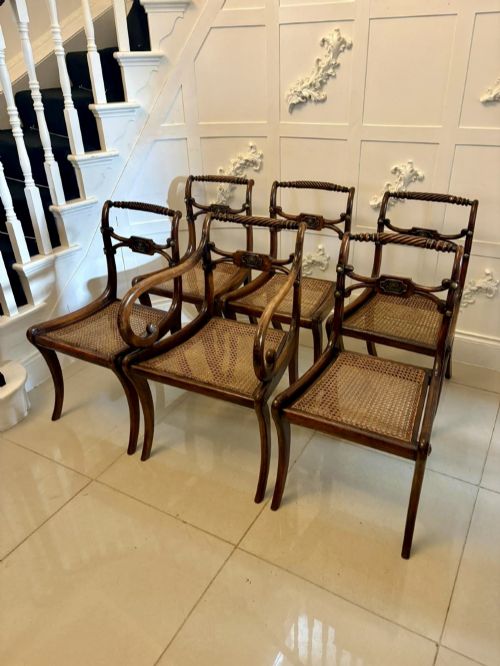
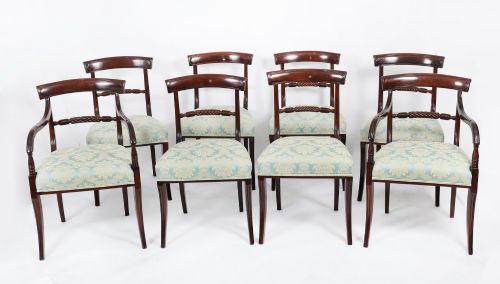
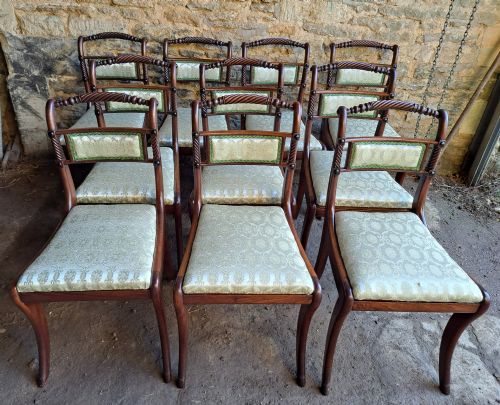
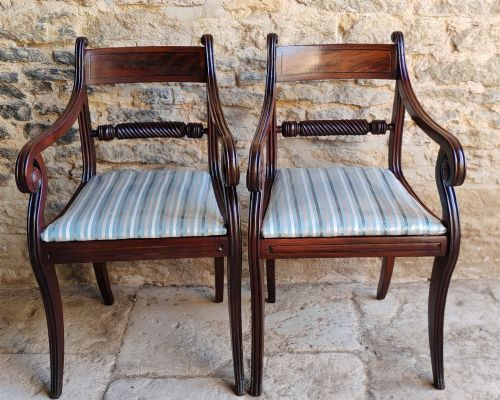
Regency rope twist chairs are dining and parlour seats produced primarily during the Regency and Georgian periods around eighteen hundred to eighteen thirty. These pieces appear as single side chairs, armchairs, carvers, and larger sets of four up to ten items.
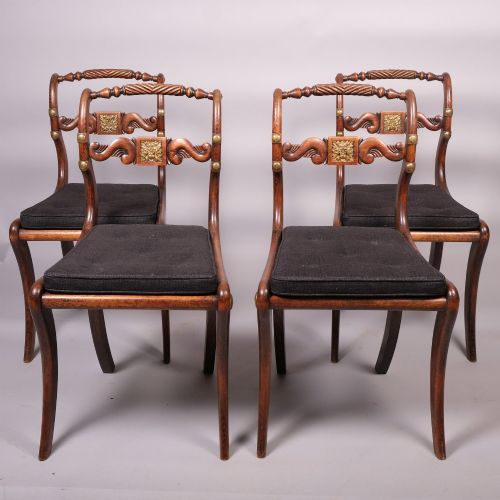
The version most commonly encountered on this page is the mahogany dining chair featuring a rope-back or rope-twist carved top rail. Alongside standard mahogany, examples emerge in simulated rosewood, ebonised finishes, and cane-seated variations.
Origins trace through English and Scottish workshops, alongside occasional Chinese export commissions sharing the same distinctive stylistic vocabulary. The form serves functional dining roles while offering sculptural carved detail to the interior.
How they were made
Cabinetmakers utilised solid mahogany and occasionally alternative timbers like maple, applying simulated rosewood paint or ebonising to mimic more costly exotic woods. Seat constructions incorporated drop-in upholstered pads, fixed upholstery fabric, and woven cane panels.
The defining rope twist and rope back motifs were hand-carved directly into the wooden crossrails of the chair backs. Joinery relied on traditional mortise and tenon techniques to ensure structural rigidity across dining and carver chairs.
Some nineteenth-century makers could not afford actual rosewood, so they painted pine and maple to fake the grain and fool dinner guests.
What varies in quality
Quality reveals itself in the crispness and depth of the hand-carved rope twist detail along the top rail. Softer, shallow carving indicates standard production, whereas sharp, undercut twists reflect superior artisan skill.
The selection of timber grain and the integrity of larger matched sets elevate certain pieces above single chairs. Original surface patination and intact structural joinery further separate ordinary seating from the finest survivals.
The Regency Rope Twist Chairs Glossary
- Carver
- An armchair designed for the head of a dining table, featuring supportive armrests matching the side chairs. These often accompany larger sets of dining seating.
- Cane
- Woven rattan material utilised for lightweight, resilient seat panels. This technique appears frequently on nineteenth-century dining chairs.
- Ebonised
- Wood finished with a dark, black stain to imitate expensive ebony. Makers applied this treatment to create dramatic contrast in Regency interiors.
- Simulated rosewood
- Painted grain effect applied to standard timber to replicate the appearance of costly exotic rosewood. This decorative technique was popular during the Regency era.
- Trafalgar chair
- A distinct chair form from the Regency period associated with naval victories. These pieces often feature specific horizontal reeded or rope back rails.
Regency Rope Twist Chairs: Frequently Asked Questions
How do I date a rope twist chair?
Dating relies on timber selection, construction methods, and stylistic cues characteristic of the early nineteenth century. Pieces generally span from eighteen hundred to eighteen thirty, aligning with Georgian and Regency design periods.
Secondary indicators include hand-carved joinery details, patinated wood surfaces, and original drop-in or cane seat structures. Comparing specific rail profiles against verified period examples helps narrow the decade of production.
Were these chairs made in sets?
Cabinetmakers produced these seats individually, in pairs, or in larger dining sets ranging from four to ten pieces. Sets frequently include a mix of single side chairs and matching carvers with armrests.
Finding larger matched groups requires careful examination of timber grain and subtle carving variations. Single chairs and pairs also appear regularly for casual or accent seating.
What wood is most common?
Mahogany is the primary timber found across these listings, valued for its durability and rich colour. Workshops also utilised alternative woods finished with simulated rosewood grain or ebonised coatings.
Some unusual examples incorporate decorated faux bird's eye maple. Timber choice directly influenced the final decorative scheme intended for Regency dining rooms.
Can I use them for daily dining?
These antique chairs function well for daily use provided the structural joinery remains sound. Solid timber construction and traditional mortise joints offer reliable support for modern dining arrangements.
Upholstered pads and cane seats can be maintained or restored without compromising the historic frame. Proper weight distribution and gentle care ensure these nineteenth-century seats endure.