

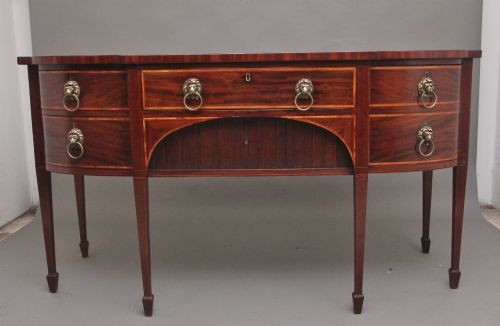
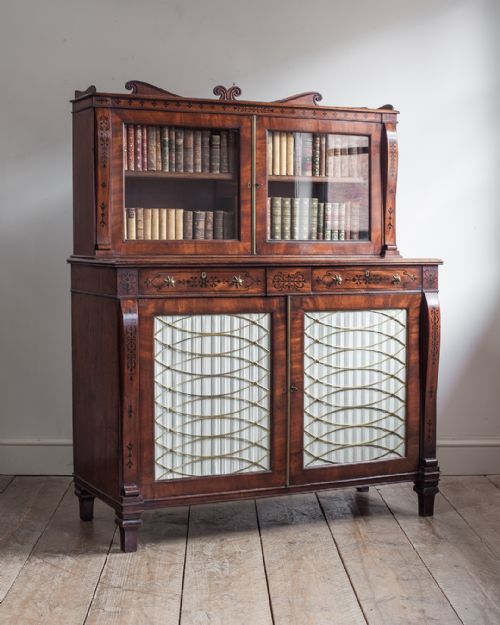


Regency Brass Inlay Cabinet
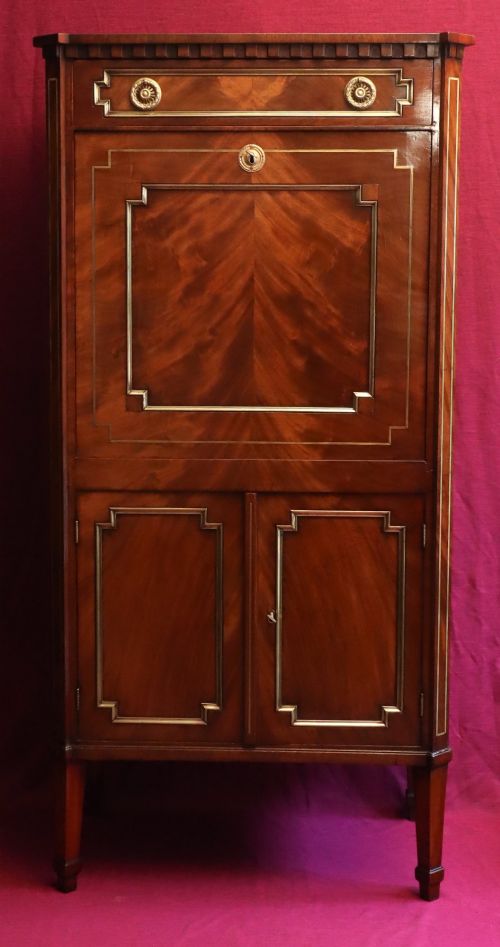
A regency brass inlay cabinet brings together figured rosewood and gleaming brass lines to anchor a formal interior.
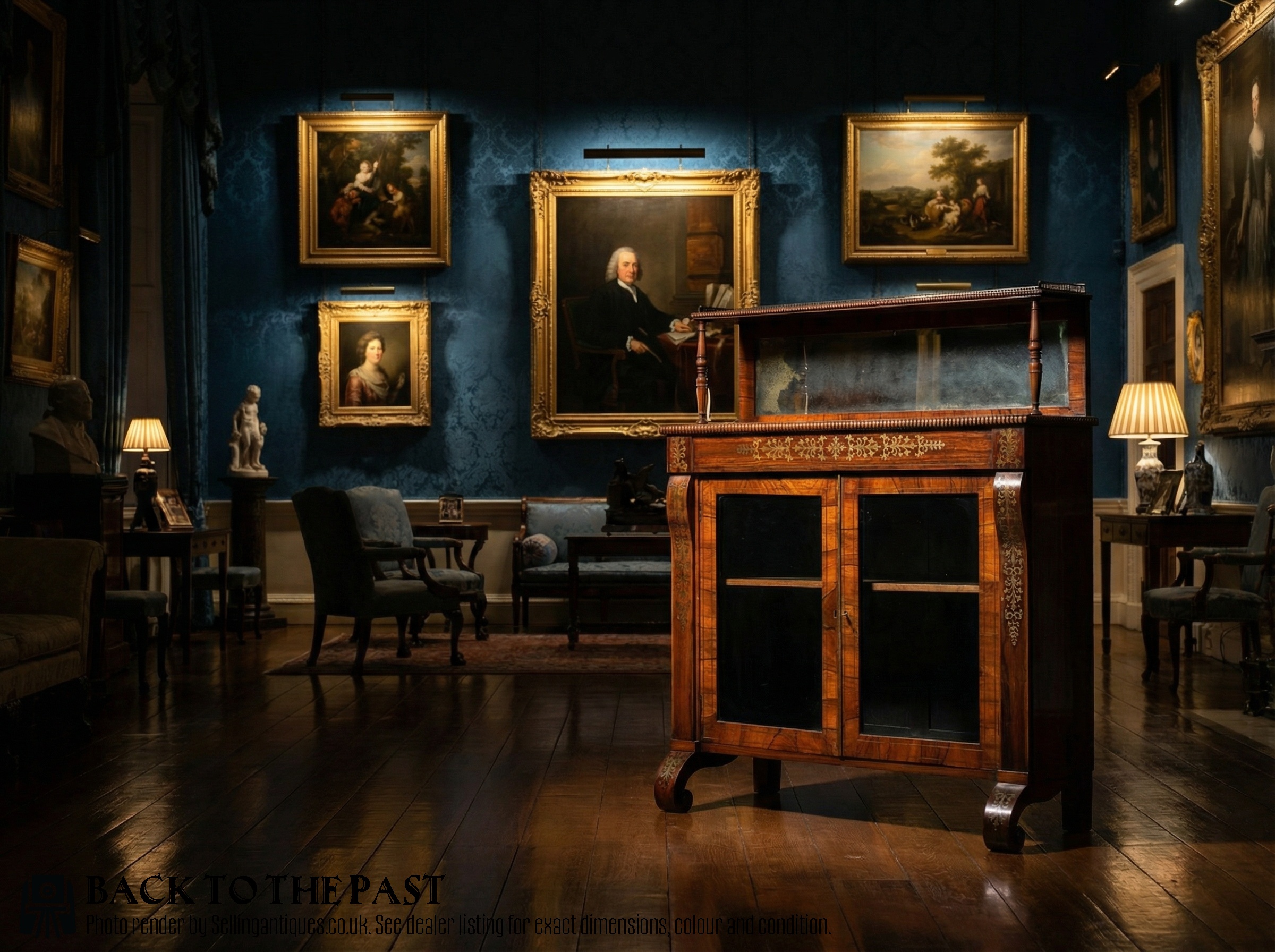
Regency Brass Inlay Cabinet
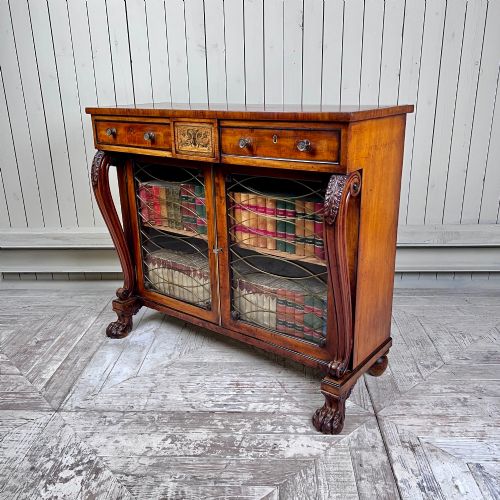
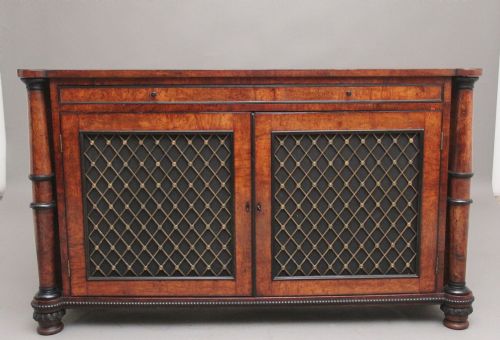
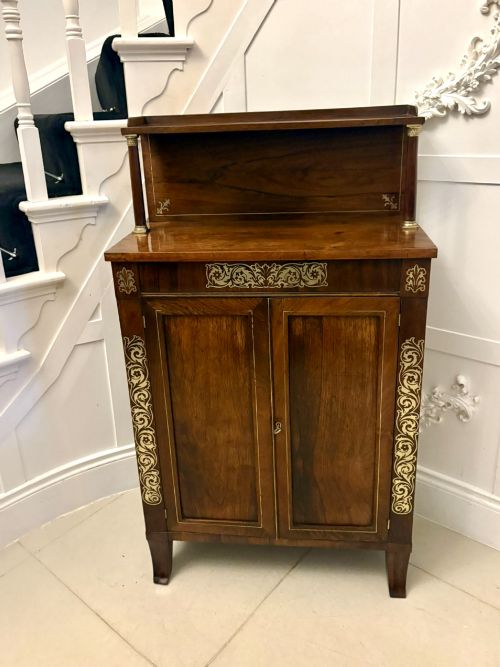
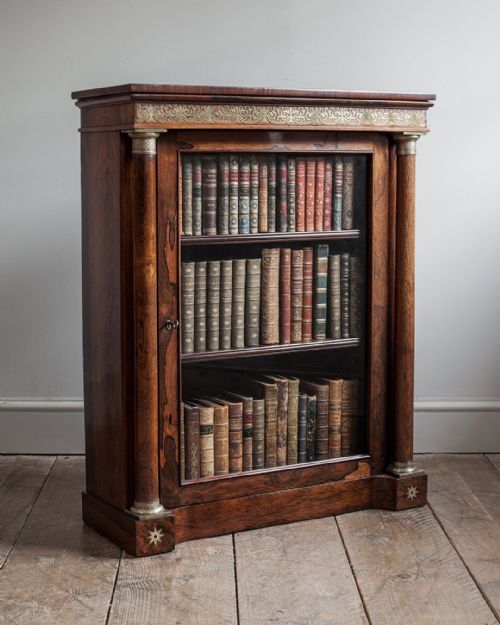
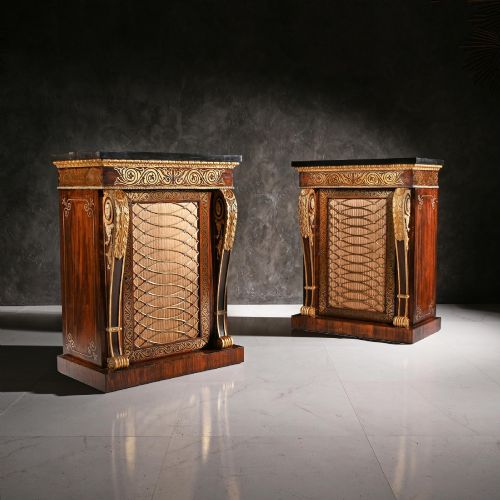
A regency brass inlay cabinet encompasses side cabinets, chiffoniers, bookcases, and pier cabinets dating primarily from the Regency and nineteenth-century periods. These pieces serve primarily for display and storage in formal reception rooms.
Rosewood and mahogany form the predominant timber choices, accented with precise brass line inlay, brass handles, and contrasting woods such as ebony, boxwood, and pollard oak. Side cabinets and chiffoniers appear most frequently across the current selection.
Materials and Technique
Cabinetmakers utilised dense tropical timbers like rosewood and mahogany as the structural foundation, often displaying highly figured grain patterns across the primary surfaces. Boxwood, ebony, and amboyna were selected for contrasting stringing and banding details.
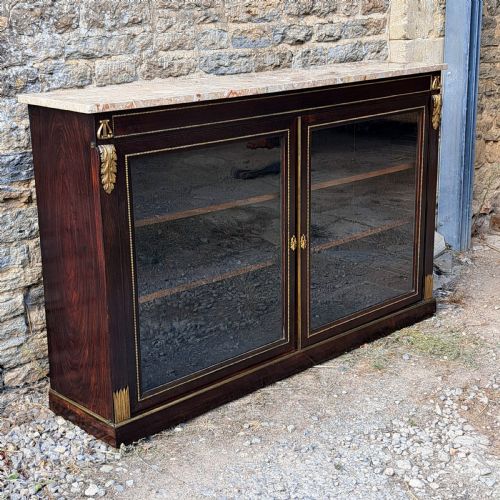
Brass wire and sheet metal were meticulously embedded into routed channels within the timber to create geometric and classical motifs. Glass panels, marble tops, and fabric-backed door grilles frequently completed the construction of the finer pieces.
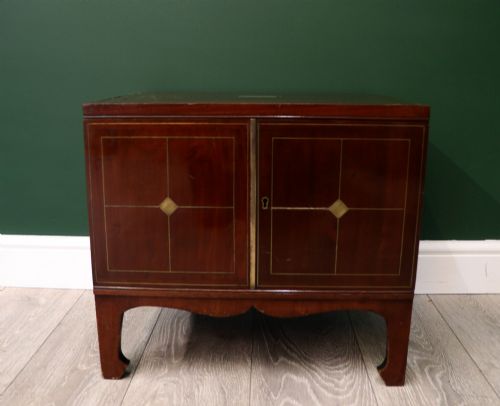
A tiny tabletop jewellery box hides secret compartments alongside miniature brass inlay.
Craftsmanship and Proportion
Quality separates in the precision of the brass inlay work and the selection of timber veneer figures, where continuous, matched grain demonstrates superior workshop output. Finely cast or chased brass mounts and original handles elevate an example above standard production.
Proportion and structural integrity dictate the standing of a piece, with balanced door panels, tight joints, and secondary timbers of matching quality showing the hand of a skilled maker.
Louis Constantin Le Gaigneur·John McClean
The Regency Brass Inlay Cabinet Glossary
- Chiffonier
- A low cabinet equipped with shelves or doors below, frequently fitted with a raised superstructure or mirrored back. This form gained popularity during the Regency period for dining and drawing rooms.
- Pier Cabinet
- A narrow piece designed to fit the wall space between windows. These often feature glass doors and brass inlay to reflect light in formal rooms.
- Breakfront
- A cabinet or sideboard whose central section projects forward from the flanking outer sections. This architectural arrangement creates depth and visual rhythm in large case furniture.
- Stringing
- A narrow strip of contrasting wood or metal inlaid into the surface of a piece in a linear pattern. Cabinetmakers used brass stringing to outline drawers, doors, and tabletops.
- Campaign Style
- Furniture designed for portability, typically featuring recessed brass handles, corner brackets, and sectional construction. These pieces were built to withstand travel by military officers.
Regency Brass Inlay Cabinet: Frequently Asked Questions
What rooms suit a regency brass inlay cabinet?
These cabinets suit formal drawing rooms, libraries, and living spaces where their polished timber and reflective brass work can catch the light. They function well as statement display pieces or side storage.
Their compact footprints, particularly in pier and side cabinet formats, allow them to fit against walls without overwhelming smaller architectural proportions.
How do I care for rosewood and brass?
Rosewood surfaces benefit from application of quality furniture wax to maintain moisture and sheen in the timber grain. Avoid placing pieces in direct sunlight or near heat sources to prevent veneer warping.
Brass inlay requires gentle cleaning with a soft cloth to remove dust without abrasive polishes that might scratch the surrounding wood surface.
How do I identify a Regency period piece?
Regency pieces often display classical motifs, such as Egyptian Revival elements, alongside symmetrical brass line inlay and dense rosewood or mahogany veneers. Construction methods include hand-cut dovetails and native secondary timbers inside drawers.
Reference to specific makers like John McClean or stylistic markers like chiffonier superstructures help confirm the early nineteenth-century manufacturing window.
Can I use these cabinets for book storage?
Many surviving examples function as open bookcases or glazed chiffoniers designed specifically for holding leather-bound volumes. Adjustable shelving inside some cabinets accommodates varied book heights.
Ensure that heavier volumes do not overload older wooden shelves, and verify that glass doors protect delicate bindings from dust.