


Rosewood Glazed Sideboard
A rosewood glazed sideboard brings rich grain and glass-fronted display together, offering a practical yet decorative centrepiece for the home.
Rosewood Glazed Sideboard
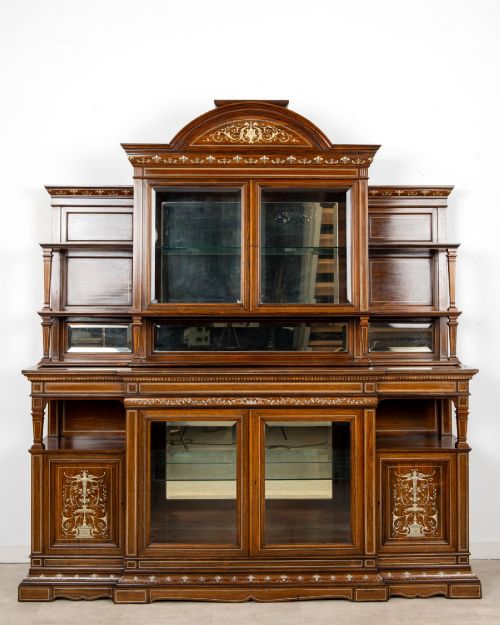
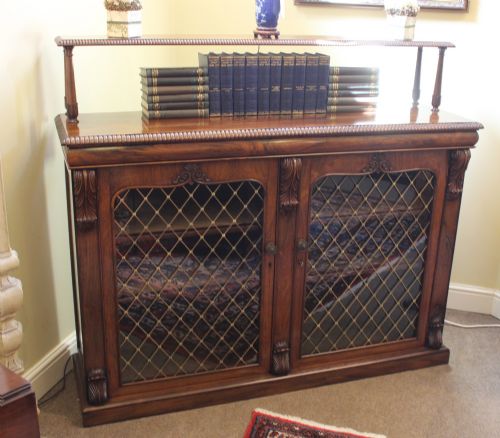
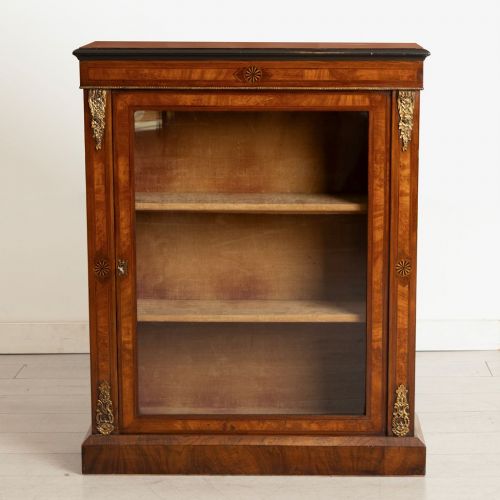
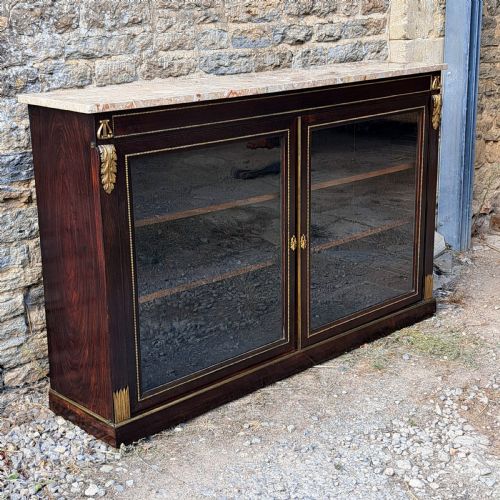
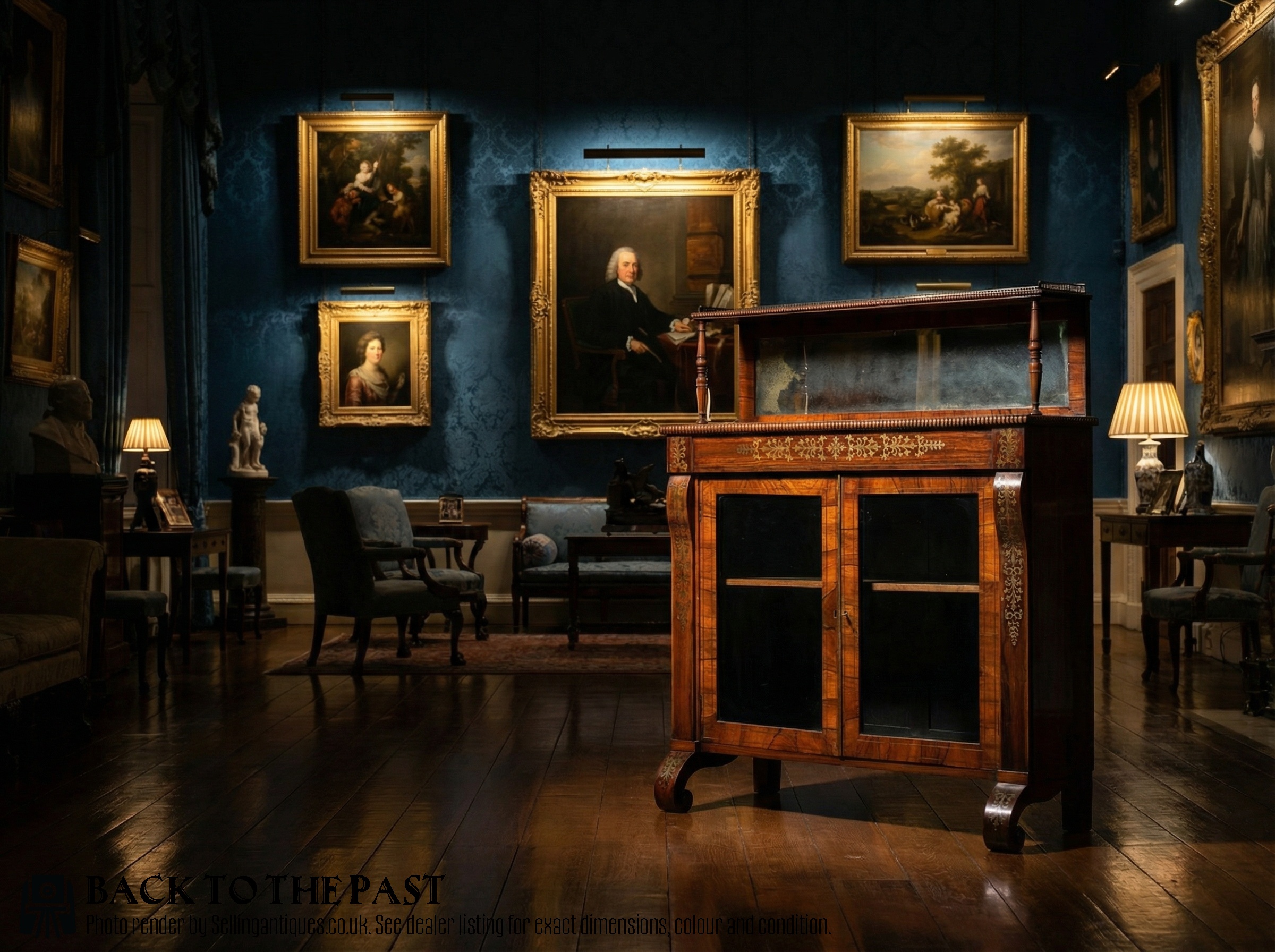
A rosewood glazed sideboard encompasses various nineteenth-century storage forms, from Victorian credenzas and display cabinets to Georgian breakfronts and chiffoniers. These pieces combine timber cabinetry with glass doors or panels, serving as functional storage units that also display ceramics or glassware.
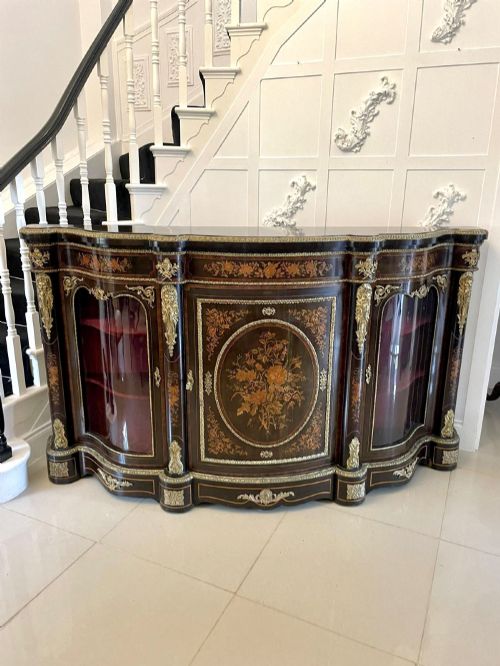
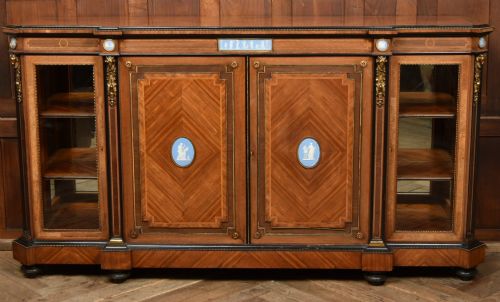
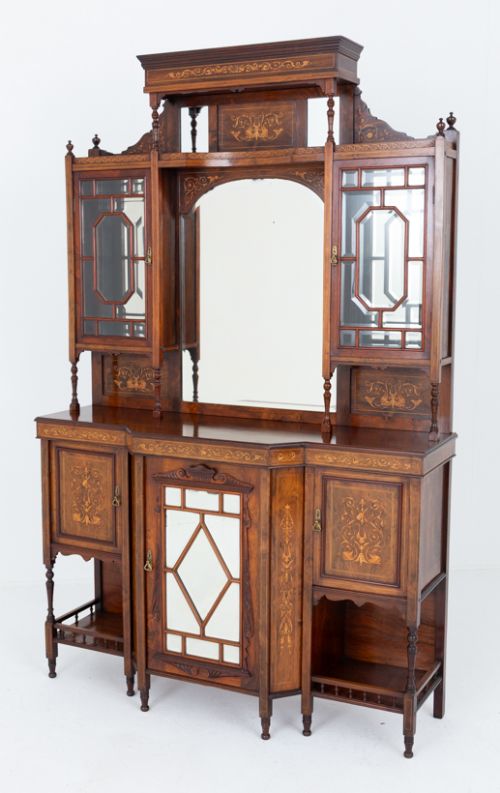
The versions most frequently encountered on this page date from the Victorian period, including pieces with marquetry, satinwood inlay, and mirrored backs. Makers constructed these cabinets in styles spanning Regency, William IV, and Edwardian designs, often incorporating shaped fronts and brass or ormolu mounts.
Materials and construction methods
Cabinetmakers utilised dense rosewood timber, sometimes applied as veneers over secondary woods, alongside contrasting elements like burr walnut, satinwood, ebony, and brass inlay. Structural integrity relied on traditional joinery, while decorative surfaces often incorporated detailed floral marquetry or polished marble tops.
Glazing techniques allowed for the integration of glass panels into doors, protecting the contents while maintaining visibility. Metal mounts in ormolu and brass, alongside turned columns and mirror glass, completed the decorative vocabulary of these functional cabinets.
Several cabinets feature barley twist columns, giving static timber the lively appearance of striped peppermint sticks.
Distinctions in craftsmanship
Quality reveals itself in the precision of the marquetry and the selection of the rosewood grain, where finer pieces demonstrate seamless inlay and symmetrical patterning. The intricacy of the cabinet's silhouette, such as serpentine shaping or breakfront profiles, further separates standard production from exceptional examples.
Hardware and secondary materials also indicate grade, with substantial ormolu mounts, well-turned barley twist columns, and heavy brass inlay marking out superior workshops. The integration of mirrored elements and the weight of the glass panels contribute to the overall substance of the piece.
Collinson & Lock·Sigmund Jaray, Wien·Howard and Sons·James Plunckett
The Rosewood Glazed Sideboard Glossary
- Marquetry
- Decorative veneer work forming pictures or patterns by using thin slices of wood and other materials. This technique adorned many late nineteenth-century cabinet doors and panels.
- Ormolu
- Gilt bronze mounts applied as decorative ornaments to furniture. Makers used these metallic accents to enrich the corners and friezes of credenzas.
- Chiffonier
- A low sideboard or cabinet featuring shelves or a raised back. These compact pieces offered versatile storage in Victorian dining rooms and parlours.
- Breakfront
- A piece of furniture having a central section that projects forward from the flanking sections. This architectural arrangement created visual depth on large sideboards.
- Credenza
- A buffet or sideboard originally designed for displaying plate, later adapted into a low cabinet with glass doors. They frequently stood against principal walls in formal reception rooms.
Rosewood Glazed Sideboard: Frequently Asked Questions
What is a rosewood glazed sideboard?
A rosewood glazed sideboard is a nineteenth-century storage cabinet featuring glass panels and dark rosewood timber, designed for both utility and display in reception rooms.
These pieces range from formal Victorian credenzas to Edwardian display cabinets, incorporating shelves behind glass doors to house precious items.
How do I date a rosewood cabinet?
Dating relies on stylistic clues such as Regency brass inlay, William IV robust proportions, or Victorian floral marquetry and ormolu mounts.
Construction methods and secondary woods also assist in placing a piece within the nineteenth century, alongside any attributed maker marks.
Where were these sideboards used?
Original placement was primarily in formal dining rooms, drawing rooms, or entrance halls where hosts displayed ceramics and silverware.
The glass doors protected valued possessions from dust while allowing guests to admire them during gatherings.
How do I care for rosewood furniture?
Maintenance involves keeping the timber away from direct sunlight and extreme temperature fluctuations to prevent the rosewood and veneers from drying out.
Gentle dusting with a dry, soft cloth preserves the polished surface without the need for heavy modern polishes.