
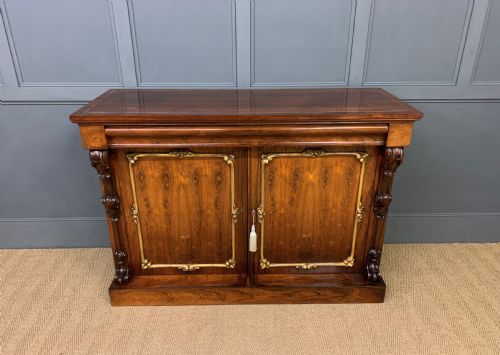
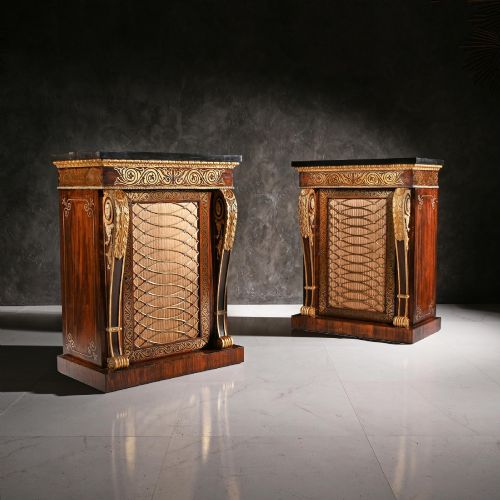


Gilt Rosewood Cupboard
A gilt rosewood cupboard brings warmth and refinement to a room, offering rich timber grain paired with gilded detail.
Gilt Rosewood Cupboard
When buyers search for a gilt rosewood cupboard, they encounter an array of sophisticated nineteenth-century cabinetry designed for display and storage. The pieces listed on this page span the Regency, Victorian, and later periods, capturing distinct eras of European craftsmanship.
Originating largely from English and French workshops, the selection includes grand breakfront forms alongside intimate bedside tables and pedestal cupboards. The variety reflects the diverse domestic requirements of nineteenth-century interiors, from formal drawing rooms to private boudoirs.
How they were made
Cabinetmakers constructed these pieces using dense rosewood veneers applied to solid secondary timbers, often incorporating simulated rosewood graining where specific visual effects were desired. The natural figuring of the wood provides a deep, variegated surface that forms the foundation of each piece.
Ornate metalwork defines the decorative vocabulary of these cabinets, utilising cast ormolu mounts, chased brass inlay, and gilt-brass grilles across door panels. Marble tops, frequently in white or veined varieties, provide a durable and luxurious upper surface on French commodes and side cabinets.
Marquetry and porcelain plaques occasionally supplement the timber and metal elements, particularly in French Louis XV and Louis XVI revival pieces. These varied techniques demand precise joinery and metal-working skills to unite divergent materials into a cohesive piece of furniture.
Several cabinets include secret compartments designed to hide jewellery and love letters from prying eyes.
What varies in quality
The sophistication of the timber preparation and veneer selection largely dictates the visual impact of a cabinet. Highly figured rosewood with symmetrical grain patterns represents superior work compared to plain or heavily faded surfaces.
The execution and weight of the metal mounts indicate the standard of the workshop. Crisp chasing in ormolu and finely fitted brass inlay demonstrate a higher level of artisanal skill than cast metal components with soft details or simple stamped decoration.
Structural integrity and the quality of secondary timbers inside drawers and carcases reflect the original purpose and cost of commission. Cabinets retaining original marble slabs, intact silk-backed grilles, and functioning locks maintain greater historical integrity.
Louis Constantin Le Gaigneur·Gillows
The Gilt Rosewood Cupboard Glossary
- Ormolu
- Gilded bronze mounts used extensively on French and English nineteenth-century furniture for decorative enrichment. The process involves applying a mercury-gold amalgam to cast bronze before heating.
- Marquetry
- The art of applying decorative pieces of veneer to a structure to form intricate pictorial or geometric designs. Craftsmen utilise various tinted woods and metals to achieve contrast.
- Chiffonier
- A low sideboard or cabinet featuring shelves or enclosed storage, popular during the Regency and Victorian eras. It typically serves to display porcelain or hold small household items.
- Breakfront
- A piece of furniture having a central section that projects forward from the flanking wings. This architectural form creates depth and shadow across the front elevation.
- Meuble d'appui
- A French term for a support cabinet or low side cupboard used for display and storage. These pieces frequently feature marble tops and gilt-bronze mounts.
Gilt Rosewood Cupboard: Frequently Asked Questions
Where should I place a gilt rosewood cupboard?
These cabinets suit reception rooms, dining spaces, or hallways where their decorative timber and gilt details can be appreciated. Their storage capacity makes them practical for holding tableware, books, or linens.
Ensure the piece sits away from direct sunlight and heat sources to protect the rosewood veneer and polished finish from fading or drying out over time.
How do I care for rosewood furniture?
Dust the surface regularly with a soft, dry cloth to prevent particulate accumulation. Avoid silicone-based polishes, opting instead for traditional beeswax applied sparingly.
Maintain stable humidity levels in the room to prevent the timber and veneers from expanding or contracting, which can stress the joints and mountings.
What distinguishes Regency from Victorian styles?
Regency furniture, dating from the early nineteenth century, typically exhibits clean architectural lines, classical restraint, and refined brass inlay. The proportion is often light and heavily influenced by Greco-Roman antiquity.
Victorian pieces tend toward heavier proportions and exuberant revivalism, drawing inspiration from Louis XV and Louis XVI aesthetics with more pronounced carving and elaborate ormolu mounts.
Are marble tops original to these cabinets?
Many French commodes and side cabinets feature fitted marble tops as an integral part of their original design, providing a cool and durable surface. White, grey, and variegated marble slabs were standard on high-end nineteenth-century pieces.
When evaluating a piece, check that the marble sits flush with the timber frame and matches the era of the cabinet carcase below.