



Georgian Rosewood Cupboard
A georgian rosewood cupboard brings rich dark grain and polished brass into a room, offering both display space and practical storage.
Georgian Rosewood Cupboard
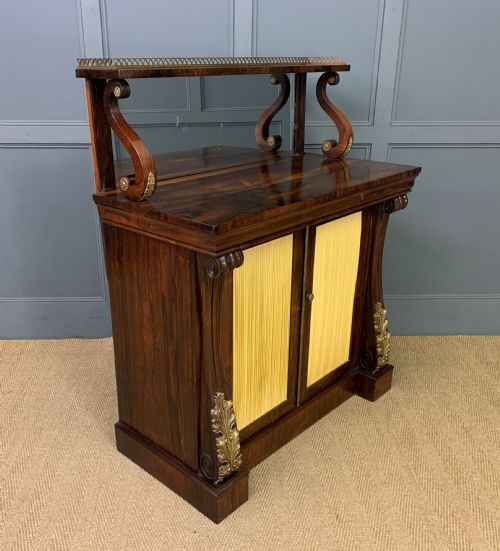
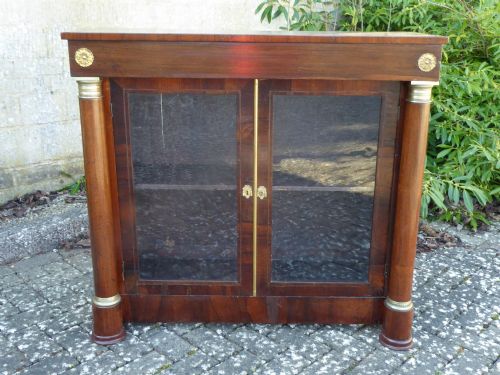
A georgian rosewood cupboard covers a variety of storage furniture including chiffoniers, side cabinets, and display pieces from the nineteenth century and later revival periods. These items range from formal Regency designs with brass inlay to later Edwardian and Victorian interpretations.
How they were made
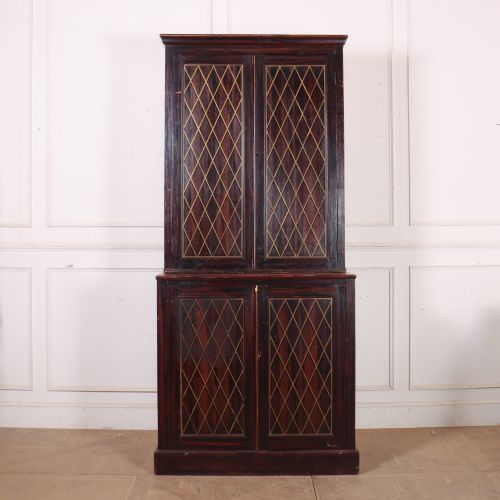
Construction relies heavily on solid timber and pine carcases finished with rosewood veneers, often enhanced by contrasting wood inlay and satinwood details. Simulated rosewood surfaces appear where painters applied grain effects to alternative woods.
Brass mounting and intricate brass inlay define the Regency examples, integrating metalwork directly into the wood doors and upstands. Fabric panels and glass doors also appear in the display cabinets and chiffoniers to house books and porcelain.
What varies in quality
The refinement of the brass inlay and the selection of the rosewood veneer set the standard for each piece. Richly figured grain and precise metalwork distinguish the finer Regency items from simpler simulated versions.
Proportion and execution across revival periods differ significantly, separating workshop pieces made with careful attention to historical detail from standard commercial output.
The Georgian Rosewood Cupboard Glossary
- Chiffonier
- A low sideboard or cabinet featuring shelves or a panelled back, popular during the Regency period. It typically provides enclosed lower storage with open or glass-fronted upper sections.
- Crossbanded
- A method of applying veneer strips across the grain of the primary wood to form a decorative border. This technique frames drawer fronts and table tops on better quality furniture.
- Regency
- An English design period spanning the early nineteenth century defined by classical restraint and archaeological influence. Furniture from this era often incorporates brass inlay and gonçalo-alvez or rosewood veneers.
- Simulated rosewood
- A painted finish imitating the distinctive dark grain of true rosewood timber. Craftsmen applied this technique to secondary woods during periods when exotic hardwoods were scarce or expensive.
- Breakfront
- A cabinet design where the central section projects forward from the flanking sides. This architectural arrangement creates depth and visual interest in side cabinets and bookcases.
Georgian Rosewood Cupboard: Frequently Asked Questions
Where did people put a chiffonier?
These cabinets stood in dining rooms and living parlours to store linen, cutlery, and glassware. The top surface held decorative items or serving trays.
In many homes, the upper shelf displayed books or small ceramic collections near the fireplace or along a main wall.
How do I spot simulated rosewood?
Simulated rosewood relies on paint applied over a softer timber base to mimic the natural dark figuring of the wood. Close inspection under good light reveals brushwork rather than natural grain depth.
This technique appeared on both Regency originals and later decorative pieces where solid exotic timber was not used.
What is brass inlay?
Brass inlay involves cutting thin strips of metal into precise channels carved directly into the wooden surface. Artisans used this method to outline panels and doors on Regency furniture.
The metal catches the light and contrasts sharply against the dark rosewood background.
Are these cabinets suitable for modern books?
Many side cabinets and bookcases provide adequate shelf depth for standard volumes and display items. Adjustable or fixed wooden shelving accommodates everyday storage needs.
Buyers should check internal dimensions to ensure larger modern editions fit comfortably behind the doors.