
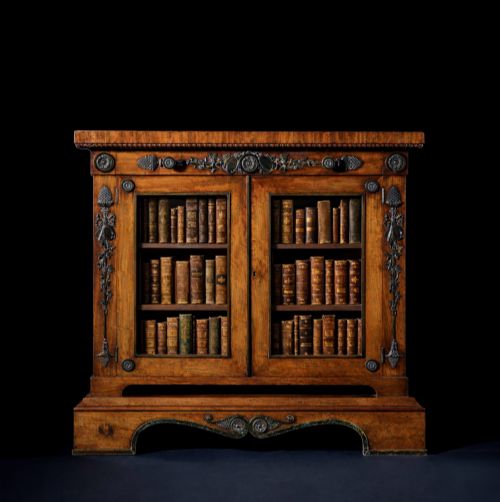
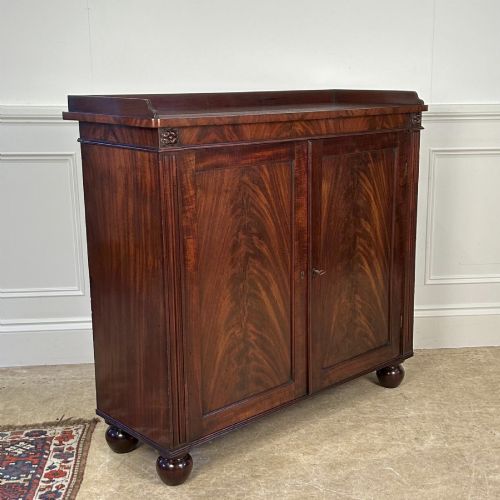
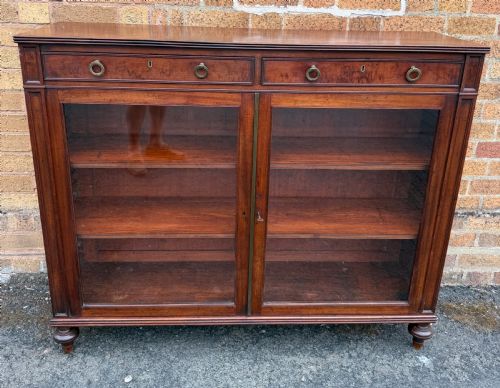
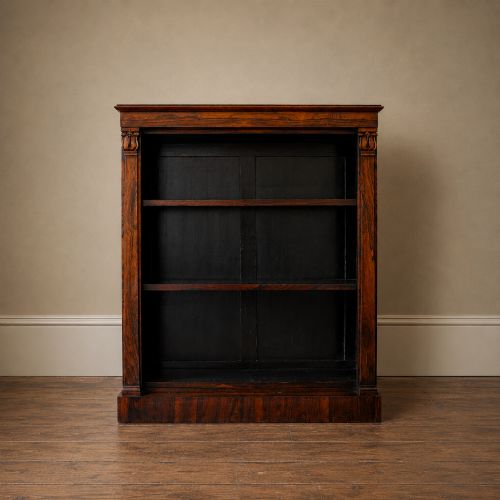
Regency Low Bookcase Cabinet
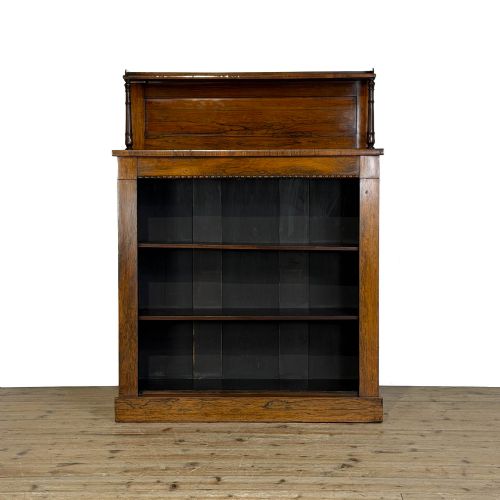
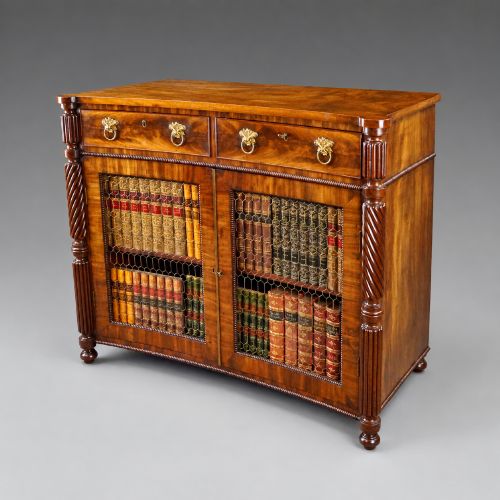
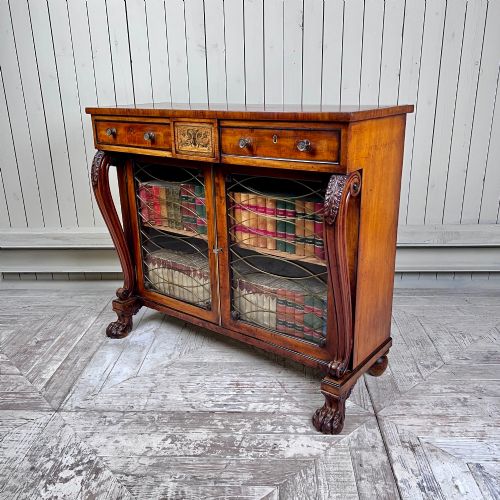
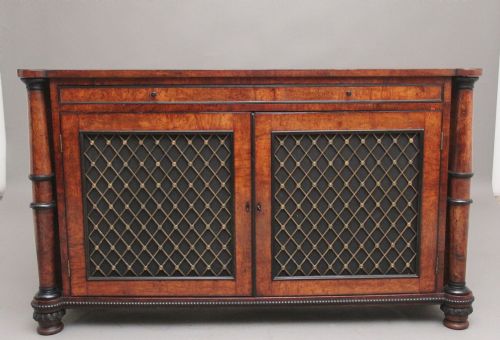
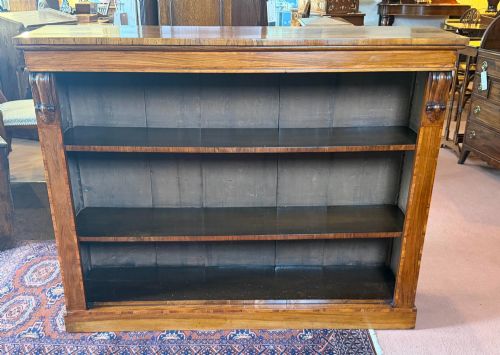
A regency low bookcase cabinet brings timber grain and brass detail together, offering neat storage for a room.
Regency Low Bookcase Cabinet
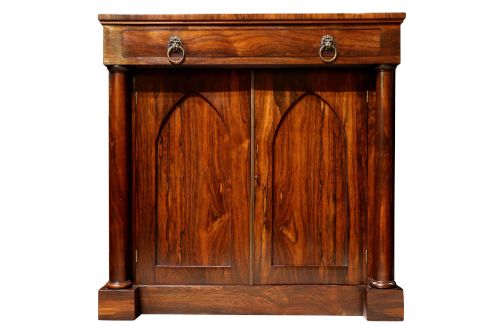
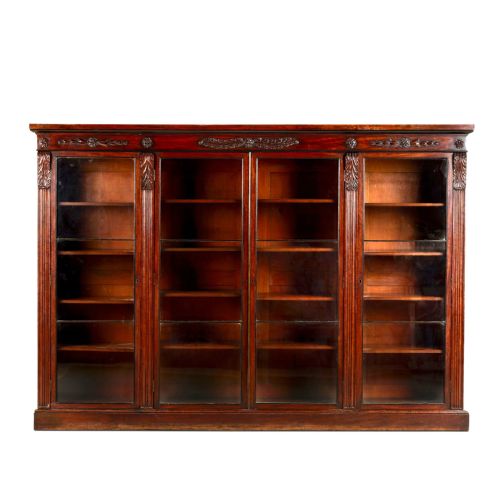
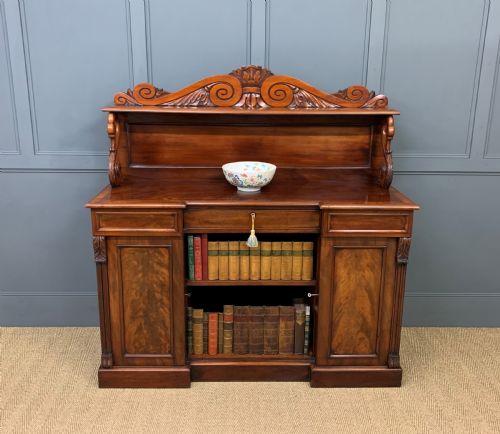
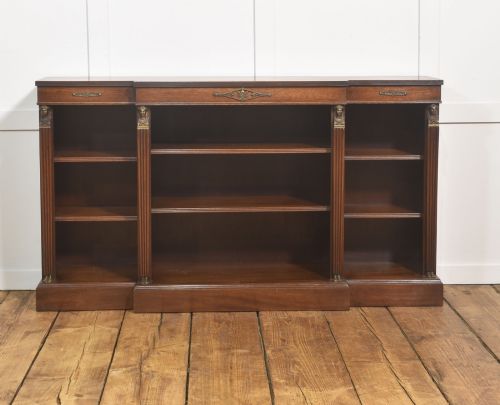
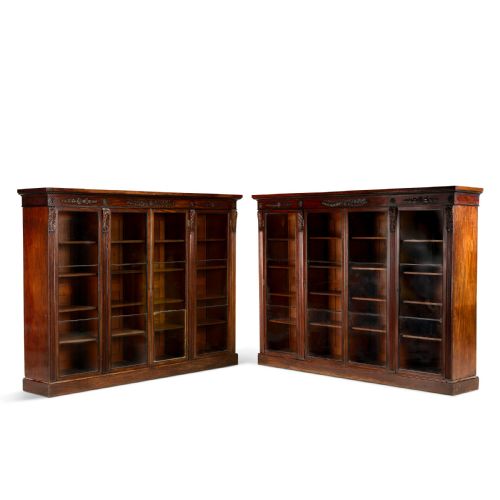
A regency low bookcase cabinet combines display shelves with enclosed lower storage, built in periods spanning the Georgian, Regency, and Victorian eras. These pieces appear as dwarf bookcases, chiffoniers, side cabinets, and waterfall bookcases designed to sit low against a wall.
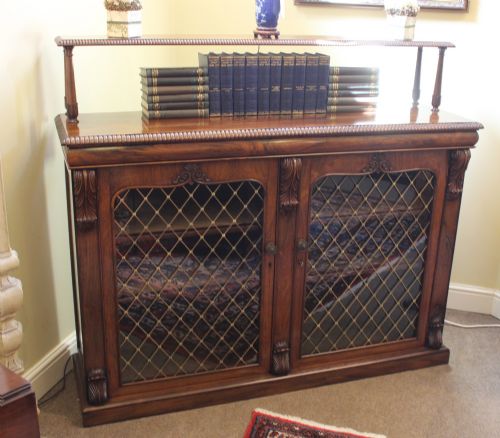
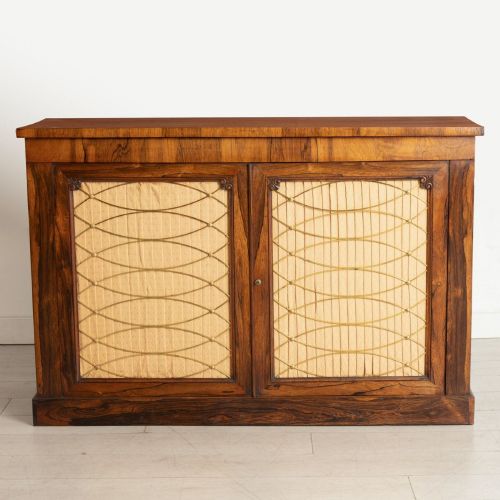
Rosewood and mahogany dominate the selection, often enriched with brass inlay, grilles, or mirror fronts. Cabinets frequently feature adjustable shelves, Gothic panelled doors, or pleated chiffon panels behind glass and brass mesh.
Makers and workshops of the nineteenth century produced both open shelf variations and two-door cupboards. Proportions remain neat, suiting studies, morning rooms, and drawing rooms where height is kept low.
Materials and construction
Glass panels, mirror plates, and pleated fabric insert into door frames, while marble tops appear on select pieces. Construction relies on traditional joinery techniques suited to housing adjustable timber shelving and panelled doors.
Listings feature rosewood, mahogany, and walnut cabinets from the Georgian, Regency, and Victorian eras, alongside architectural brass and marble elements.
Judging the work
Quality rests in the selection of timber figures, such as flame mahogany or rich rosewood, matched across doors and panels. Precision in brass inlay and the fineness of turned columns or bronze mounts distinguish finer examples.
Proportion and structural honesty separate workshops, where neat lines and original fittings hold greater merit than later alterations. The integration of functional elements like adjustable shelving and well-fitted doors reflects the original maker's standard.
Gillows
The Regency Low Bookcase Cabinet Glossary
- Chiffonier
- A low cabinet featuring enclosed storage beneath shelves or a superstructure, popular in the nineteenth century. It frequently incorporates silk pleated panels or brass grilles to the doors.
- Dwarf Bookcase
- A low open or glazed bookcase designed to sit beneath dado height. These pieces provide accessible shelving without dominating wall space.
- Pier Cabinet
- A narrow cabinet built to fit the wall space between windows. They often feature glass doors and fine timber veneers.
- Ormolu
- Gilded bronze mounts applied to furniture for decorative contrast. It provides metallic highlight against dark woods like rosewood and mahogany.
- Brass Grille
- A lattice of fine wire or brass fitted into cabinet doors instead of glass. It allows ventilation while partially concealing the contents.
Regency Low Bookcase Cabinet: Frequently Asked Questions
Where were these cabinets used?
These cabinets served primarily in morning rooms, libraries, and drawing rooms to hold books and display ornaments. Their low height meant they did not obscure wall art or windows.
Variations with fabric panels or brass grilles often stored delicate items or linen. Today they function equally well as sideboard units or media storage in living areas.
How do I tell Regency from Victorian pieces?
Regency pieces typically date from around 1800 to 1830, displaying classical restraint, precise brass inlay, and selected rosewood or mahogany veneers. Proportion is paramount, with clean architectural lines.
Victorian examples from later in the nineteenth century often show heavier mouldings, differing walnut tones, or revival styles like Gothic panelling. Comparing the timber grain and secondary woods helps clarify the period of manufacture.
Are the shelves adjustable?
Many examples feature adjustable timber shelving supported by brass ratchets or wooden bearers. This allowed owners to alter shelf heights for different book sizes.
Original adjustable systems indicate careful workshop production. Checking the interior sides reveals the original peg holes or tracking mechanisms.