

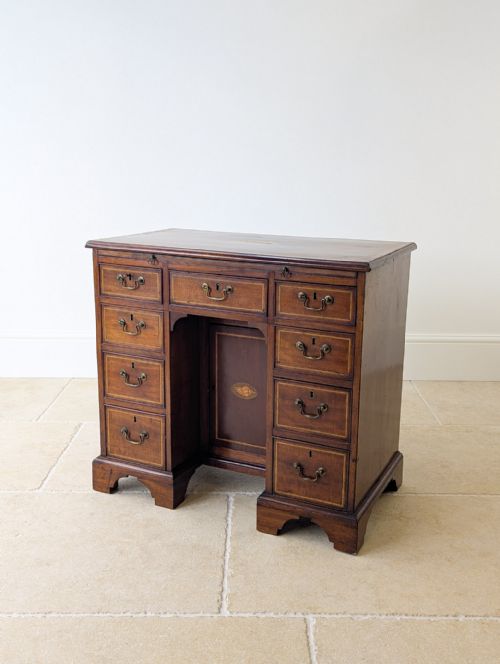
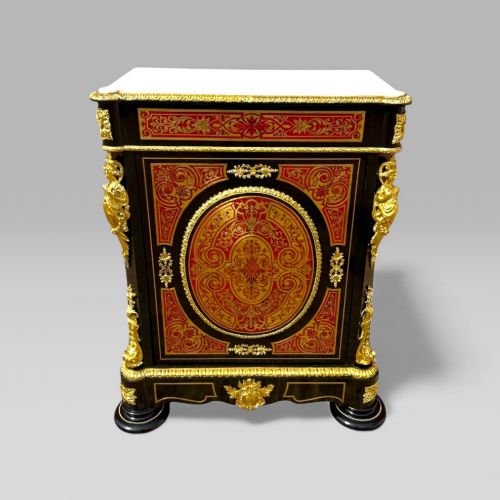
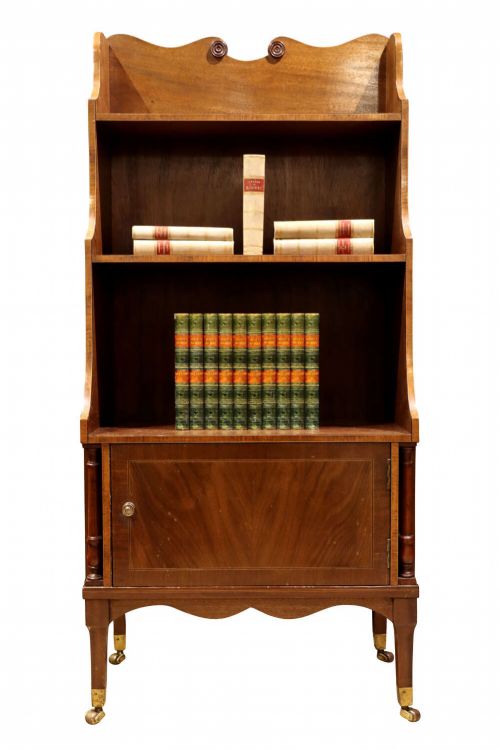
Brass Inlaid Cupboard
A brass inlaid cupboard brings rich dark timber and bright metalwork together, offering both display space and practical storage for a traditional interior.
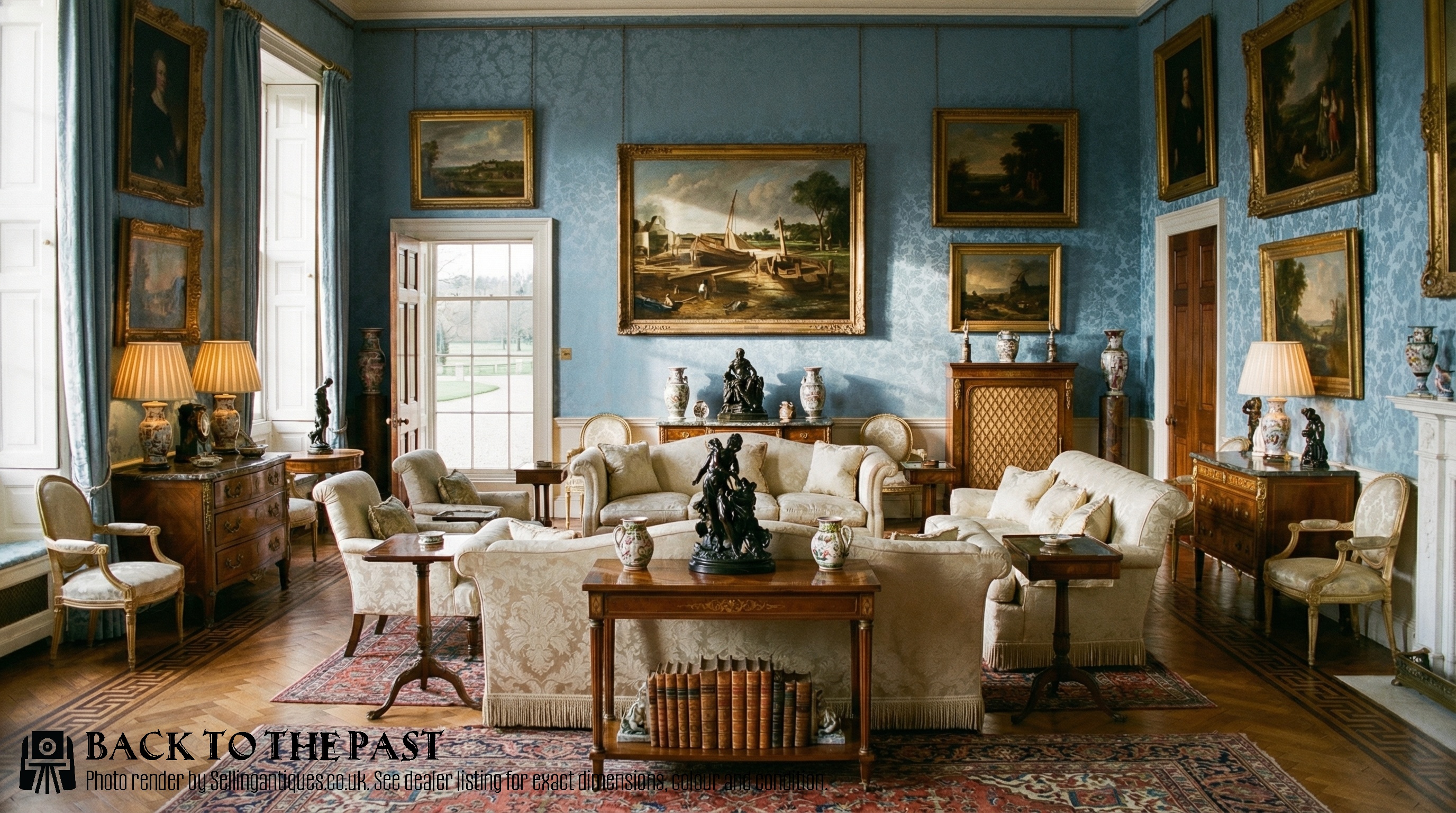
Brass Inlaid Cupboard
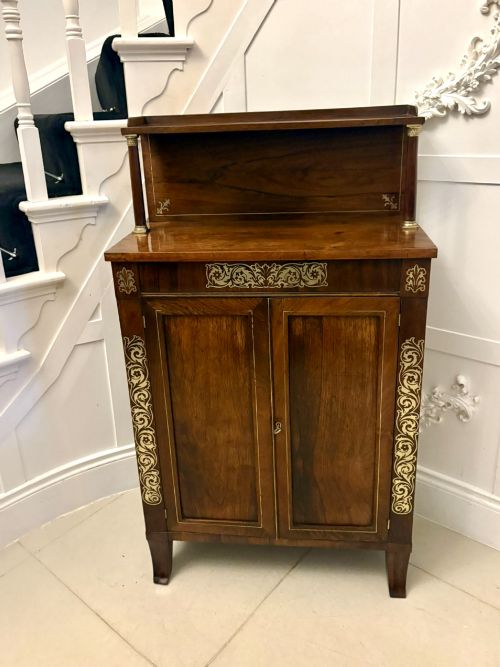
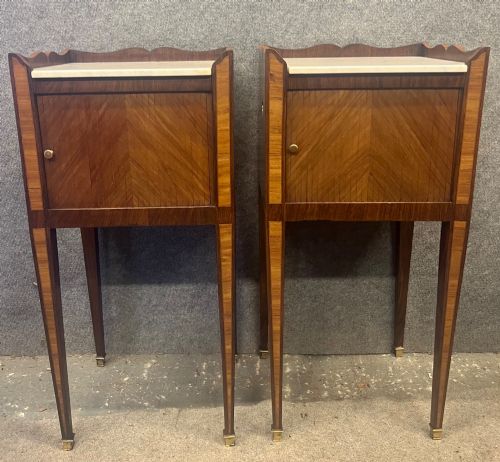
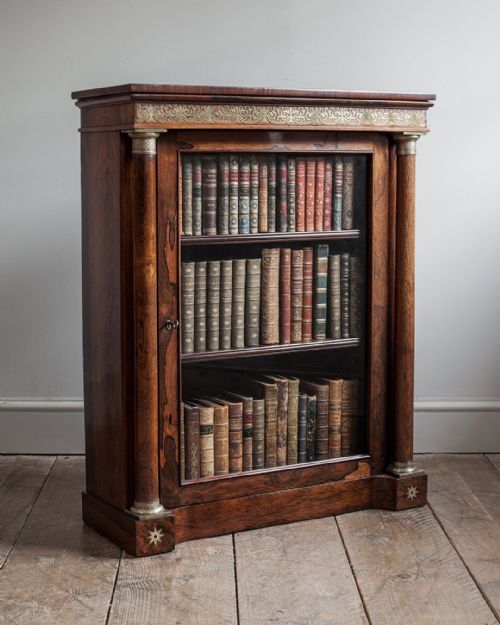
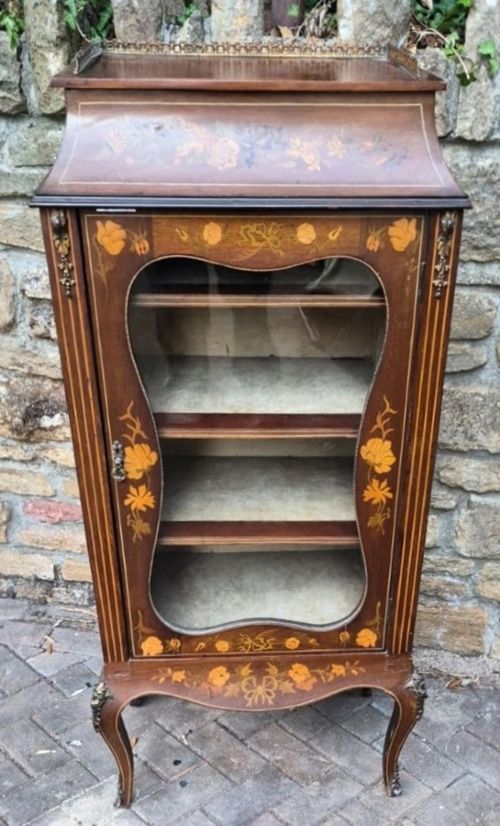
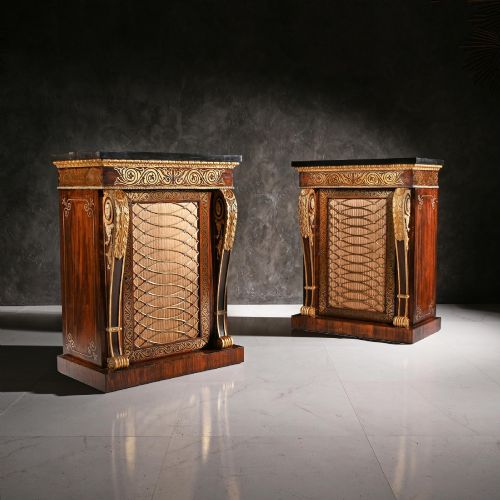
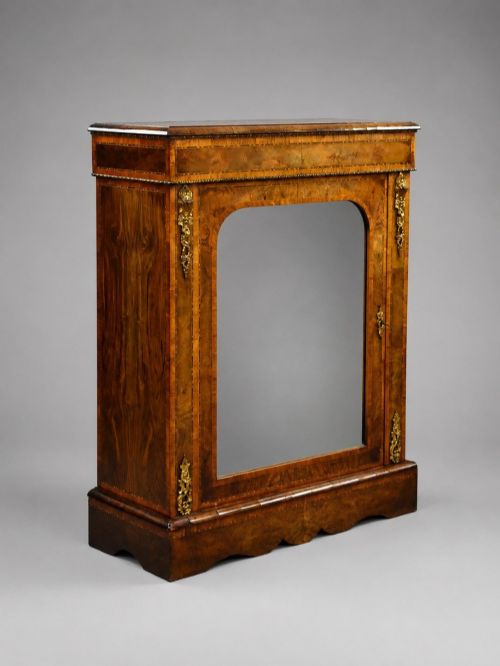
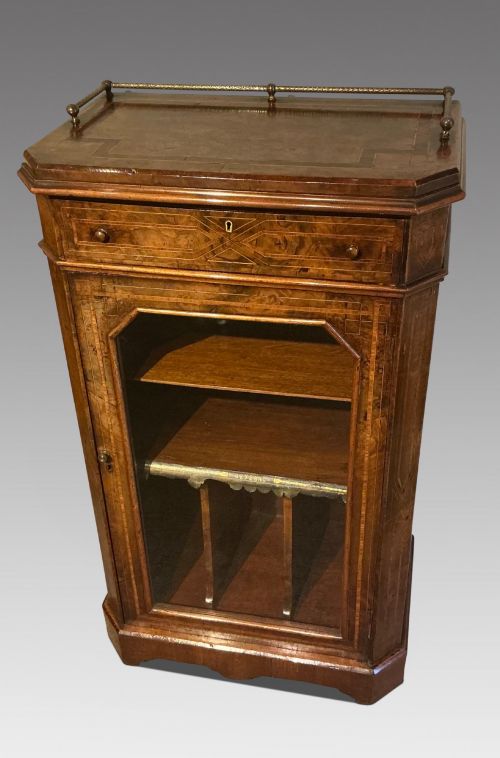
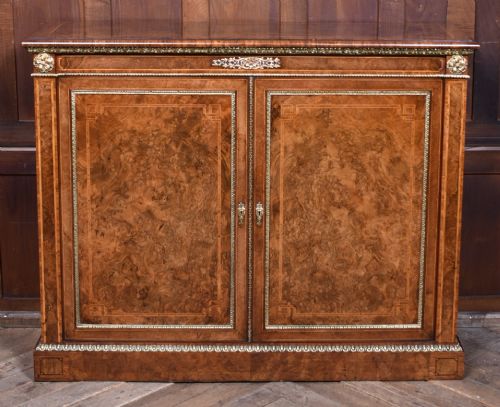
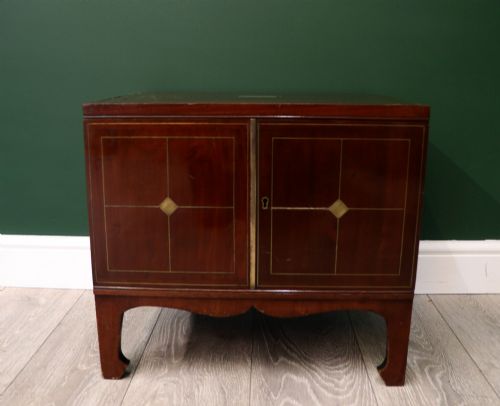
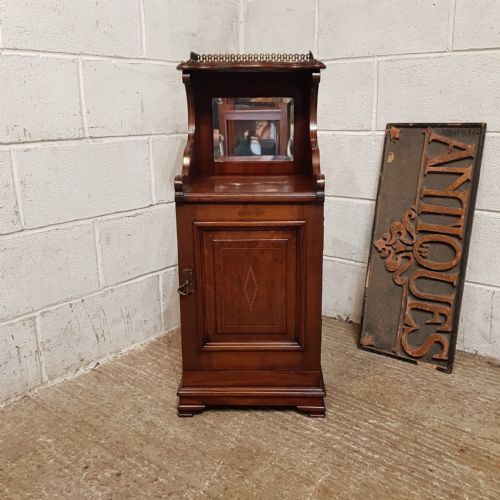
A brass inlaid cupboard spans several distinct forms including side cabinets, chiffoniers, pier cabinets, and bedside tables. When searching for a brass inlaid cupboard, collectors encounter pieces primarily drawn from the Regency, Victorian, and Georgian periods, alongside later twentieth-century examples.
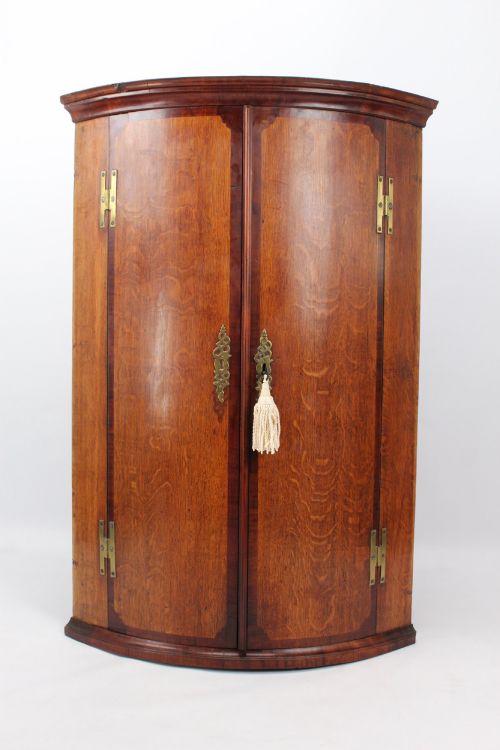
The materials paired with the metalwork define the character of these pieces, with dark timbers such as mahogany, rosewood, and ebonised wood forming the main body. Interiors and specific formats range from glazed display cabinets to corner cupboards and music cabinets.
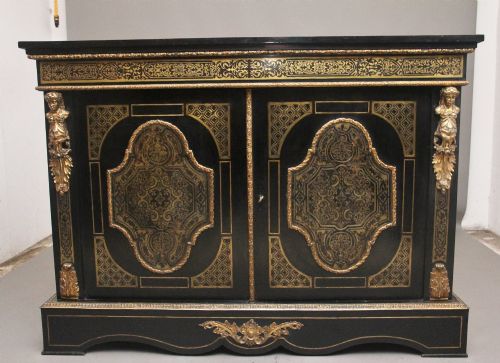
Origin and style often align with English Regency design or French Napoleon III and Louis influences, incorporating marquetry and ormolu mounts alongside linear brass work.
How they were made
Cabinet makers constructed the carcases from solid timbers and fine veneers like mahogany, rosewood, burr walnut, and kingwood, often building upon oak or pine secondary woods. Surfaces were then channelled by hand to receive thin brass strips or intricate brass wire inlay.
French polish or traditional oil finishes were applied to bring out the grain of the wood and contrast sharply against the bright metallic inlay. Ormolu mounts, tortoiseshell, and marble tops were frequently added to elevate the status of grander pier cabinets and credenzas.
The listings span pieces from the Georgian, Regency, and Victorian eras, utilising materials such as brass, mahogany, rosewood, and marble.
What varies in quality
The precision of the metal inlay into the timber substrate dictates the primary tier of craftsmanship, where tighter joints and smoother flush surfaces separate superior work from simpler execution. The selection of veneers, particularly highly figured burr walnut, amboyna, or rich rosewood, similarly separates standard utility furniture from high-status salon pieces.
Secondary detailing such as fire-gilt ormolu mounts, cast brass handles, and fine interior carpentry determine the overall standing of an individual cabinet.
Louis Constantin Le Gaigneur·Collinson and Lock
The Brass Inlaid Cupboard Glossary
- Boulle work
- An elaborate form of marquetry consisting of tortoiseshell and brass inlaid in contrasting patterns. This technique gained popularity in French Napoleon III pieces.
- Chiffonier
- A low cabinet featuring shelves or a drawer, closely related to the side cabinet. Regency examples frequently incorporate brass inlay and mirrored doors.
- Pier cabinet
- A tall, narrow cabinet designed to stand against the wall space between windows. These often feature glass doors for the display of ceramics.
- Ormolu
- Gilded bronze applied as decorative mounts to furniture. It provides a bright golden contrast to dark woods like mahogany and ebonised timber.
- Marquetry
- Decorative patterns formed by the insertion of pieces of wood, shell, or metal into a veneered surface. It frequently complements linear brass stringing.
Brass Inlaid Cupboard: Frequently Asked Questions
How do I date a brass inlaid cupboard?
Dating relies on identifying the underlying timber, structural carcass methods, and stylistic cues such as Regency brass stringing or Victorian burr walnut veneers. Comparing the secondary woods and hardware against known period examples helps narrow down the decade of manufacture.
Later twentieth-century reproductions occasionally mimic these older forms, but examination of the timber shrinkage and polish reveals the true age of the piece.
Where should I place a pier cabinet?
A pier cabinet fits neatly into narrow wall spaces, particularly between windows or flanking a fireplace, due to its shallow and upright proportions. These cabinets serve well for displaying small collections behind glass while occupying minimal floor space.
Care should be taken to keep rosewood and mahogany cabinets away from direct sunlight to prevent the timber from fading.
How do I clean brass inlay safely?
Dusting with a soft, dry cloth prevents particulate build-up in the channels surrounding the brass work. Avoid harsh commercial metal cleaners that can stain or strip the surrounding wood polish.
Applying microcrystalline wax helps protect both the timber surface and the metal inlay from moisture and tarnishing.