


Red Wool Saddlebag Face
A red wool saddlebag face brings tactile tribal weaving into a room, offering dense piled fragments and flatweaves from nomadic groups.
Red Wool Saddlebag Face
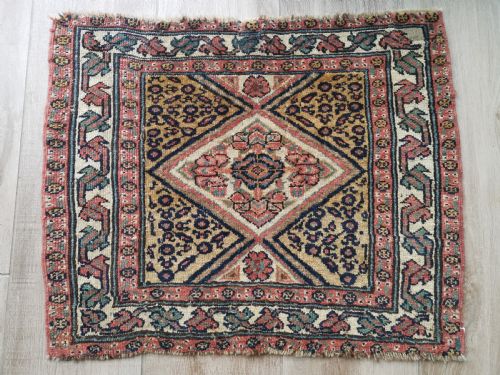
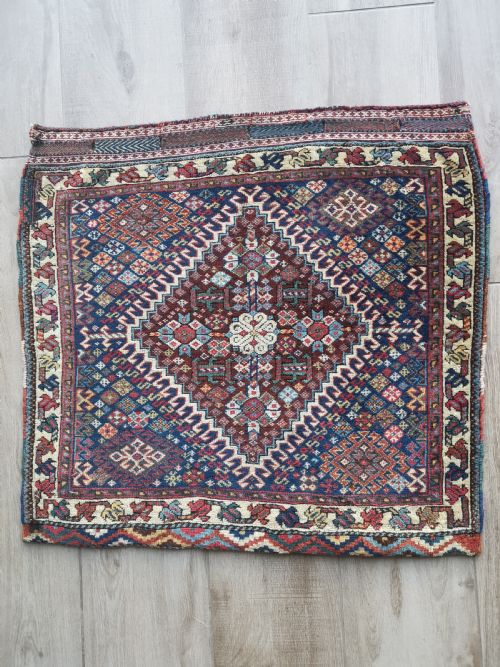
A red wool saddlebag face represents the front panel of a larger nomadic carrier, severed from its reverse to survive as an individual textile. When buyers search for a red wool saddlebag face, they find woven panels originating from tribal confederations across Persia, the Caucasus, and Central Asia.
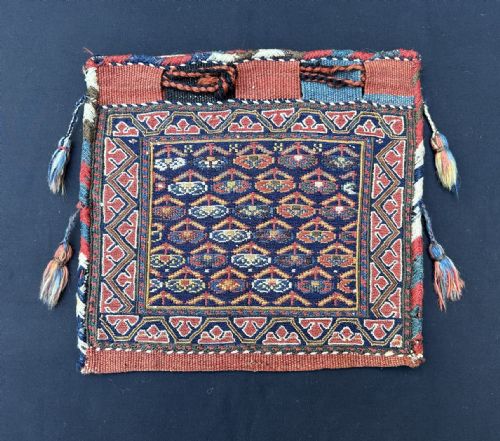
The selections span the nineteenth century, including specific decades from eighteen-fifty to nineteen-hundred. Common structural formats include single bag faces, half-saddlebags, and complete khorjins retaining their plain weave backs.
Tribal groupings such as the Qashqai, Afshar, Jaf Kurd, Shahsevan, and Luri dominate the inventory. These works function as decorative wall hangings or small floor fragments rather than utilitarian horse gear.
How they were made
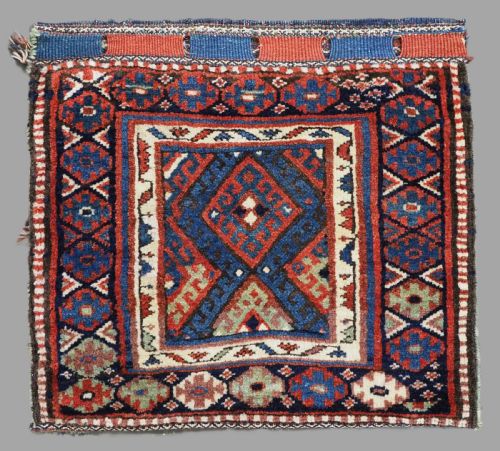
Weavers utilised hand-spun wool for both the structural foundation and the surface pile, combining natural dyes to achieve saturated red tones. Artisans employed symmetric and asymmetric knotting alongside flatweave techniques like Soumak.
Nomadic makers constructed these textiles on portable horizontal looms set up in camps. Cotton frequently appears in the foundational warps andwefts alongside wool, while plain weave wool backs provide structural contrast to the patterned pile faces.
Listings feature nineteen-century nomadic weaving from regions including Fars, Luristan, and Kerman, utilising wool, cotton, and natural dyes.
What varies in quality
Quality rests in the density of the knotting and the handling of natural dyes, which dictates the depth of the red ground. Finer examples display meticulous geometric precision within tribal motifs such as boteh designs and banded weft work.
The integrity of the surviving wool and the completeness of the original borders distinguish superior specimens. Softer, lustrous wool types elevate certain tribal pieces above standard utilitarian outputs.
The Red Wool Saddlebag Face Glossary
- Khorjin
- A traditional double saddlebag used by nomadic tribes for transport and storage. These items were often divided into two compartments joined by a web.
- Soumak
- A supplementary weft-wrapping technique that creates a durable, flat-faced fabric without pile. This method produces crisp geometric patterning on Shahsevan pieces.
- Boteh
- A stylised floral motif resembling a folded almond or paisley shape. This symbol appears frequently in Afshar and Persian tribal textiles.
- Warp
- The stationary vertical threads stretched onto a loom that hold the tension of the weave. Wool and cotton serve as the primary materials for these structural elements.
- Weft
- The horizontal threads passed through the warps to bind the structure together. In saddlebag faces, visible wefts often form banded colour patterns.
Red Wool Saddlebag Face: Frequently Asked Questions
What is a saddlebag face?
A saddlebag face is the decorative front panel of a nomadic storage bag, separated from the reverse web over time. These woven textiles functioned originally as transport gear on animals before being preserved independently.
Today, collectors mount these panels on walls or display them as small rugs. They showcase the compressed artistry of specific tribal groups in a manageable format.
How do I date these textiles?
Dating relies on wool quality, natural dye saturation, and structural characteristics typical of nineteenth-century nomadic weaving. Pieces span from eighteen-fifty to nineteen-hundred based on stylistic attribution to specific tribes.
Earlier examples often exhibit more saturated natural palettes and finer hand-spun wool. Structural clues such as selvedge treatments and end finishes also help establish age.
Which tribes made these bags?
Nomadic and village groups across Persia and Central Asia produced these textiles, including the Qashqai, Afshar, Shahsevan, Jaf Kurd, and Luri. Each confederation utilised distinct colour palettes and geometric motifs.
Fars Province, Kerman, and Luristan represent the geographic origins of many surviving pieces. These regional groups maintained distinct weaving traditions passed down through generations.
How should I display a bag face?
These textiles adapt well to wall hanging using non-damaging mounting methods or conservation-grade Velcro systems. Their compact dimensions allow them to sit comfortably in smaller spaces where larger rugs do not fit.
Placing them away from direct sunlight protects the natural red wool dyes from fading. Occasional gentle vacuuming without a beater bar keeps surface dust at bay.