





Vintage Khorjin Cushion Cover
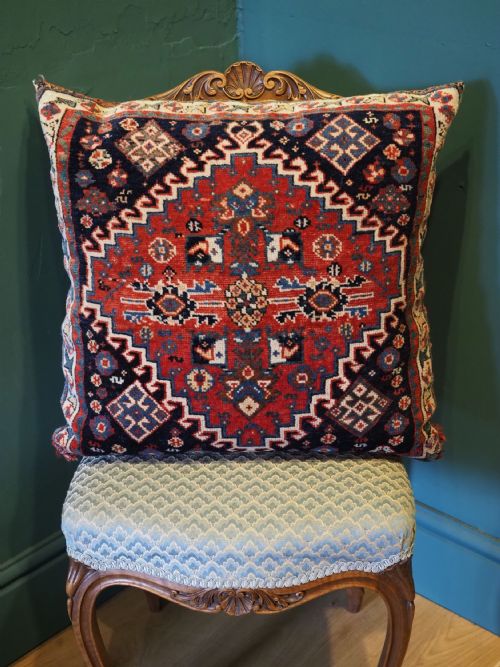
A vintage khorjin cushion cover brings tactile tribal history into a room, formed from repurposed nomadic saddle bags.
Vintage Khorjin Cushion Cover
A vintage khorjin cushion cover transforms authentic nineteenth and early twentieth-century Persian nomadic storage into soft furnishings for the home. These pieces typically originate from tribal and nomadic groups such as the Qashqai, Afshar, and Kurdish weavers.
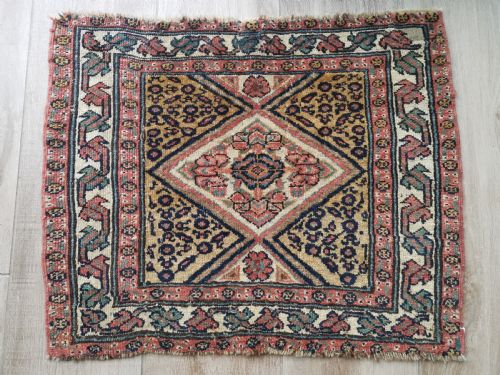
Most examples found here are adapted bag faces or rug fragments, retaining the original geometric patterns and pile woven structures of the horse or camel saddle bags. They range from nineteenth-century origins up to the nineteen-twenties, preserving the nomadic utilitarian craft in a domestic format.
How they were made
Weavers utilised hand-spun wool for the pile, creating dense and durable surfaces that hold rich textures across the front face. Natural dyes provided the deep chromatic range found in these tribal weavings.
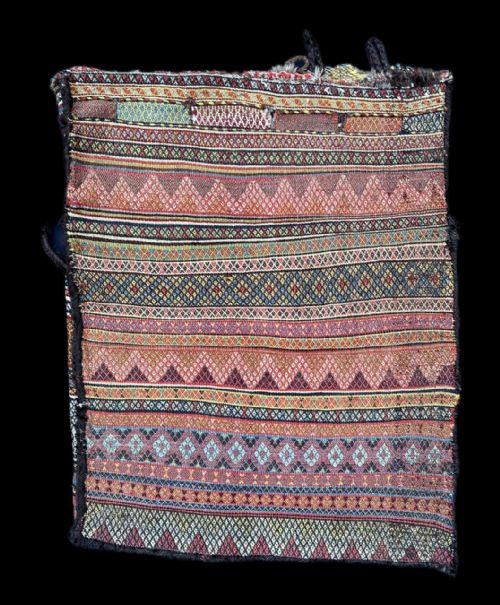
The construction often combines knotted pile with flatweave backs, using cotton or wool foundations to sustain daily use. Each piece reflects the regional techniques of Persian tribal communities working with local materials.
Vintage Khorjin Cushion Cover Retail Price Guide 2026
Typical asking prices for vintage khorjin cushion cover among the pieces listed under this phrase on Sellingantiques today, from the lower quarter to the upper quarter. They describe what is for sale here now, not the wider market.
Listings feature pieces spanning the nineteenth century up to nineteen-twenty, utilising hand-spun wool and natural dyes across various Persian tribal styles.
What varies in quality
The quality of a vintage khorjin cushion cover depends on the handling of the wool and the depth of the natural dyes. Luminous, lustrous pile and precise tribal motifs distinguish the finest bag faces from simpler iterations.
Integrity of the weave and the preservation of the original design layout define the superior pieces. The distinction lies in the crispness of the geometric drawing and the richness imparted by traditional dyeing methods.
Qashqai nomads·Afshar tribe·Kurdish weavers·Jaf tribe
The Vintage Khorjin Cushion Cover Glossary
- Khorjin
- A traditional Persian double saddle bag used by nomads for transport and storage. These bags are frequently repurposed into cushion covers.
- Bag face
- The decorative front panel of a saddle bag, which displays the primary woven iconography and is typically salvaged for cushions.
- Natural dye
- Colourants derived from plants, insects, and minerals rather than synthetic compounds, producing the characteristic aged tones of older tribal textiles.
- Qashqai
- A confederacy of nomadic pastoralist tribes in south-west Persia known for producing distinctive, finely knotted tribal rugs and bag faces.
- Boteh
- A stylised floral motif resembling a almond or pine cone shape, frequently appearing in Afshar and other Persian tribal designs.
Vintage Khorjin Cushion Cover: Frequently Asked Questions
What is a khorjin cushion cover?
A khorjin cushion cover is made from the front panel or fragments of a traditional Persian nomadic saddle bag. These textiles repurpose nineteenth and early twentieth-century utilitarian weaving for interior decoration.
They bring tactile tribal history into a room, combining practical domestic use with authentic nomadic craftsmanship from regions like Fars province.
How do I care for my cushion cover?
These wool and cotton textiles require gentle maintenance to preserve their natural fibres and dyes. Professional cleaning is recommended when necessary to protect the structure of the antique pile.
Avoid placing them in direct sunlight for prolonged periods to prevent fading of the natural colourants used by the original tribal weavers.
Are these covers made from authentic antique bags?
The pieces originate from authentic nineteenth and early twentieth-century Persian nomadic items. They utilise historical bag faces and rug fragments woven by tribal groups.
Materials include hand-spun wool and natural dyes, reflecting the traditional methods of groups such as the Qashqai, Afshar, and Kurdish communities.
How do I identify different tribal styles?
Tribal styles are distinguished by their specific geometric layouts, colour palettes, and regional motifs. For instance, Afshar pieces often feature large boteh designs, while Qashqai work displays distinct south-west Persian iconography.
Examining the weave structure and wool quality also helps determine whether a piece originates from Kurdish, Jaf, or other nomadic traditions.