
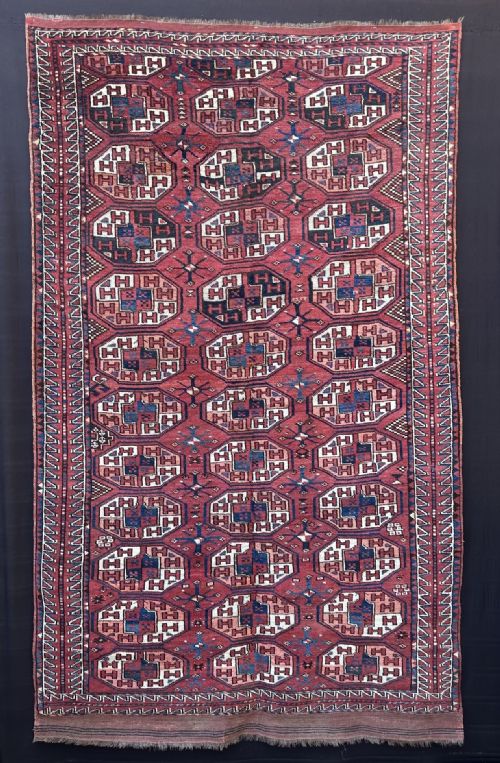
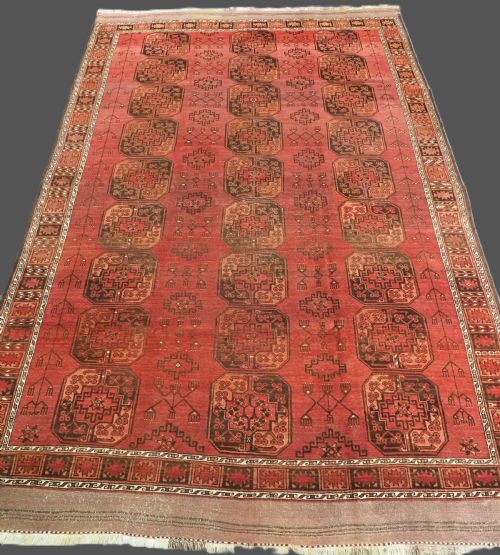
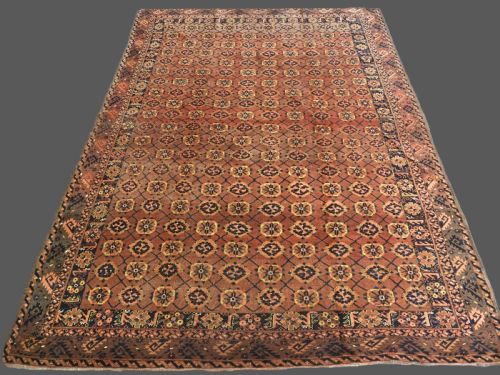
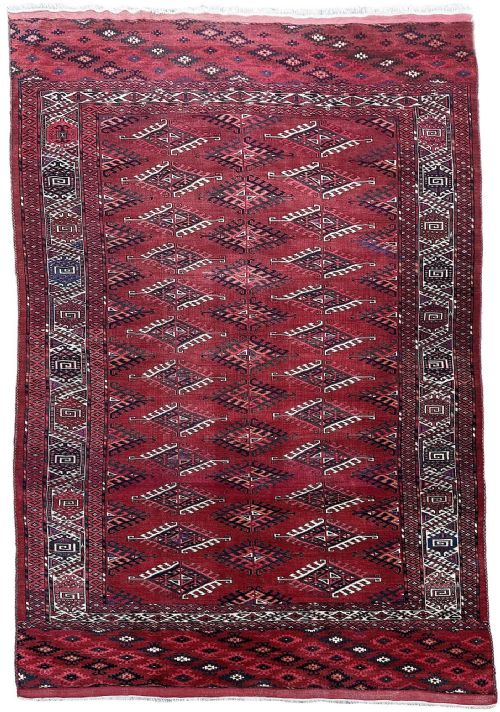
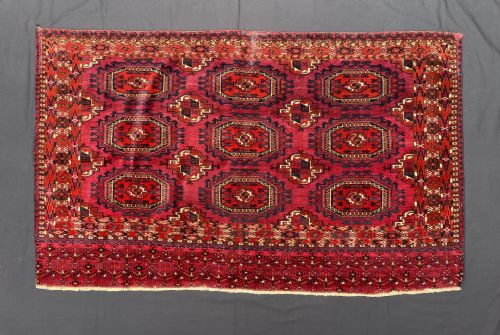


Red Turkmen Area Rug
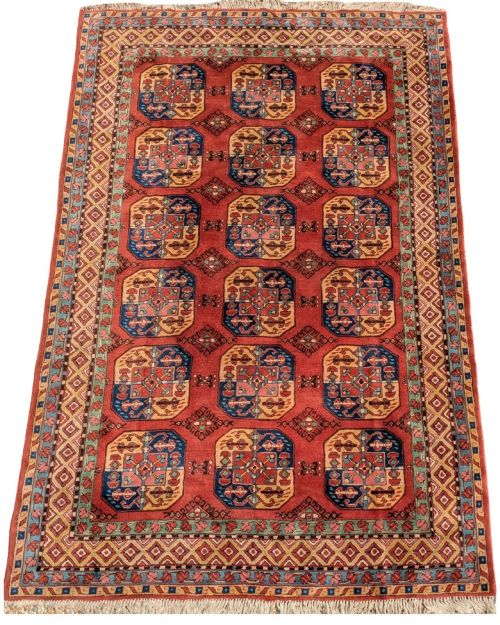
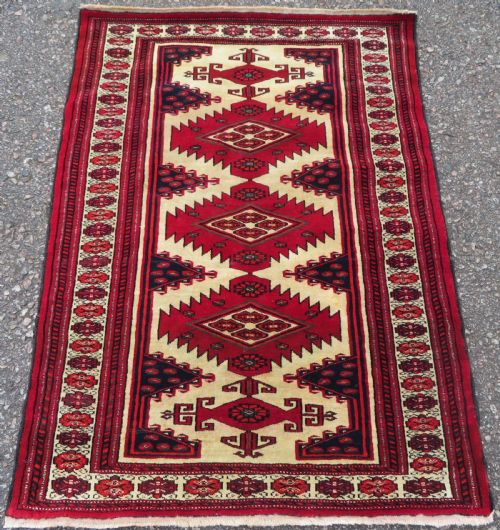
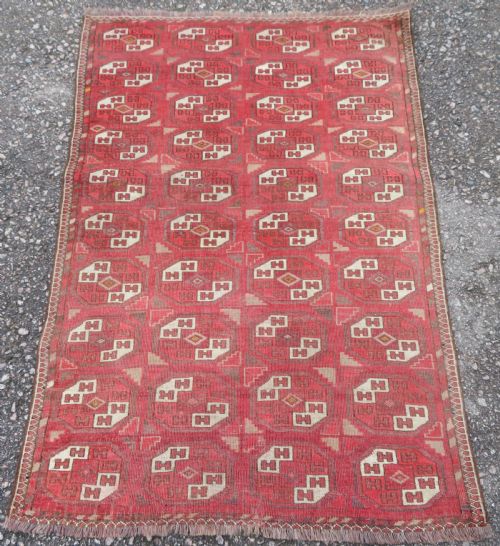
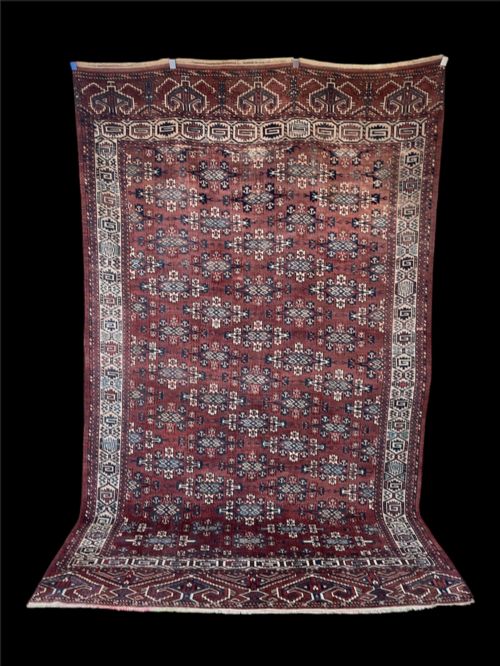
When you search for a red turkmen area rug, you encounter hand-knotted tribal carpets from Central Asia featuring rich madder dyes and traditional geometric gul motifs.
Red Turkmen Area Rug
A red turkmen area rug encompasses tribal floor coverings and utilitarian textiles woven by nomadic and village groups across Central Asia, including Turkmenistan and northern Afghanistan. These pieces range from large room-sized main carpets to smaller utilitarian formats such as tent door rugs, wedding rugs, and prayer rugs.
The selections on this page span the mid-nineteenth century through the early twentieth century, representing tribal identities such as the Tekke, Ersari, Yomut, and Kizil Ayak. Each group utilises distinct design vocabularies, notably repeating octagonal or diamond motifs known as guls.
Buyers encounter various functional textile types beyond standard floor carpets, including bags and hanging panels like chuvals, torbas, and engsis. These items reflect the domestic and nomadic heritage of Central Asian weaving communities.
How They Were Made
Weavers constructed these textiles predominantly using wool foundations and hand-spun wool pile, frequently incorporating natural dyes to achieve deep red and madder colour palettes. Certain main carpets and utility pieces also integrate structural elements of cotton, silk, goat hair, or horsehair.
The production relies on traditional hand-knotting techniques executed within tribal workshops and nomadic camps. Artisans arranged structural warps and wefts to support dense pile surfaces designed for durability.
Listings span production dates from the mid-nineteenth century through the 1930s, utilising wool, natural dyes, cotton, and silk.
What Varies in Quality
Quality in these textiles rests upon the precision of the knotting, the handling of natural dyes, and the clarity of the tribal gul design. Finely spun wool and tight structural foundations generally produce greater durability and sharper geometric definition.
Examples also vary according to the specific tribal sub-group and the intended function of the textile. Pieces exhibiting scarce structural variations, precise repeat lattice patterns, or well-preserved elem borders typically represent more accomplished weaving standards.
The Red Turkmen Area Rug Glossary
- Gul
- A repeating octagonal or medallion motif used across Central Asian tribal weaving. Different tribes utilised specific gul variations to signal lineage and identity.
- Chuval
- A large storage bag face produced by nomadic tribes. These rectangular panels feature detailed field patterns and were used inside dwellings.
- Engsi
- A tribal wall hanging or tent door rug traditionally hung at the entrance of a yurt. They typically feature a quartered design layout.
- ELEM
- The decorated lower horizontal panel at either end of a carpet. These sections often display tree or floral motifs distinct from the main field.
- Torba
- A small hanging bag face utilised for domestic storage within nomadic tents. They display compressed versions of primary tribal gul designs.
Red Turkmen Area Rug: Frequently Asked Questions
What is a red turkmen area rug?
A red turkmen area rug is a hand-knotted Central Asian textile produced by tribal groups such as the Tekke, Ersari, and Yomut. These pieces are characterised by deep red madder dye grounds and geometric medallion patterns.
Such rugs served both decorative and practical functions within nomadic and village households. They remain sought after for their durable wool construction and distinctive cultural iconography.
How do I identify different tribal designs?
Tribal attribution relies primarily on the specific shape and arrangement of the repeating gul motifs across the central field. For instance, Yomut weavings often display the Dyrnak gul, while Tekke pieces frequently feature four-part or turreted guls.
Border patterns and auxiliary ornamentations also provide clues to origin. Examining the structural materials, such as the inclusion of goat hair or cotton, further helps narrow down the producing group.
Were these rugs used on floors?
While many larger formats functioned as main floor carpets in rooms and tents, smaller textile types served entirely different domestic purposes. Formats like torbas and chuvals were woven as storage bags for household possessions.
Other formats such as engsis acted as tent door hangings, and specific smaller rugs were designated for prayer or wedding ceremonies. Each type reflects the specialised domestic life of Central Asian nomads.
How do I care for an antique rug?
Living with these textiles requires gentle maintenance, primarily through regular light vacuuming without beater bars to protect the wool pile. Professional cleaning suited for antique natural-dyed wool helps preserve the integrity of the fibres.
Keeping the rug out of direct, prolonged sunlight prevents the madder red dyes from fading unevenly. Using a suitable underlay also reduces friction and wear against hard floors.