
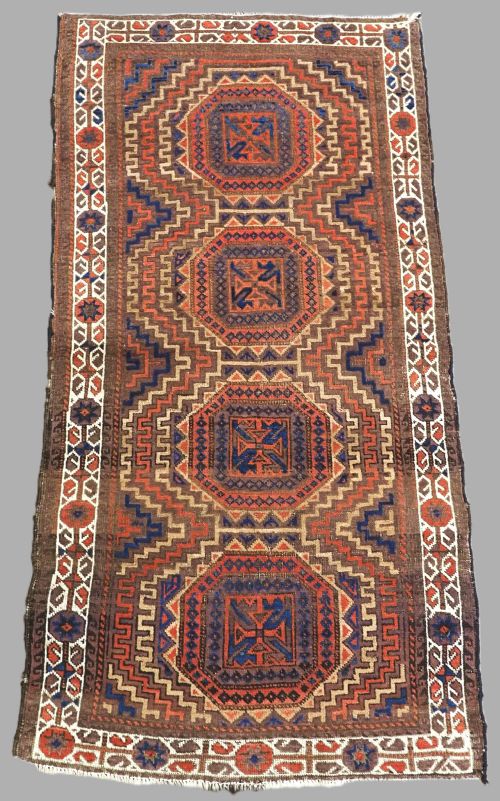
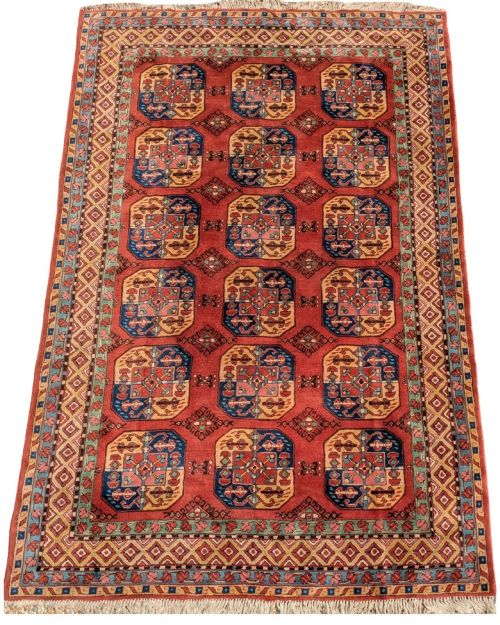
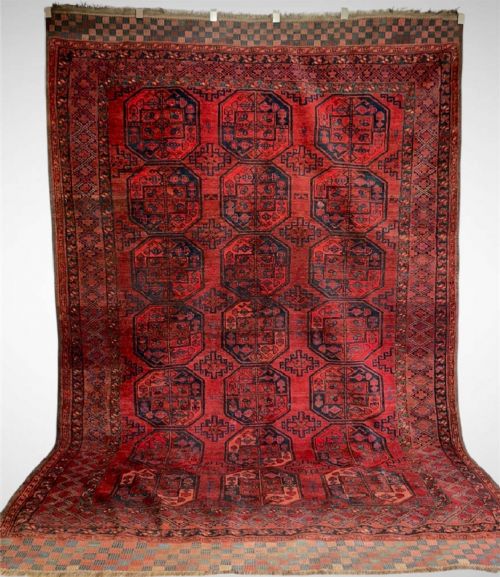


Octagonal Gul Rug
These octagonal gul rug examples bring together Turkmen tribal weaving traditions and rich red village carpets for collectors of nomadic textiles.
Octagonal Gul Rug
An octagonal gul rug represents the traditional weaving artistry of Turkmen and Afghan tribal makers, often taking the form of main carpets, village carpets, chuval faces or smaller area rugs. These pieces showcase distinctive regional patterns that have been passed down through generations of nomadic craftspeople.
The versions most commonly met on this page date from the late nineteenth century up to the nineteen-twenties. They include pieces from the Ersari, Yomut and Taghan sub-tribes, displaying characteristic medallion motifs and deep field colours.
How they were made
Weavers utilised soft, glossy wool for the pile, hand-knotting the material onto sturdy foundations. Some examples incorporated goat hair or horsehair within the structure to add durability to the tribal weaving.
Natural dye traditions produced deep rich red hues and varied secondary shades that mellow over time. The structural materials and knotting techniques reflect the nomadic or village origins of each textile.
Octagonal Gul Rug Retail Price Guide 2026
Typical asking prices for octagonal gul rug among the pieces listed under this phrase on Sellingantiques today, from the lower quarter to the upper quarter. They describe what is for sale here now, not the wider market.
Current listings feature pieces dated across the 1880s, 1900 and the 1920s, utilising wool, goat hair and horsehair.
What varies in quality
The standard of an octagonal gul rug depends upon the handle of the wool and the depth of the red palette. Fineness of knotting and structural integrity of the horsehair or goat hair foundation also distinguish finer village carpets from simpler utility pieces.
Patience in dye preparation and wool selection dictates the softness of the faded patina over decades of use. Pieces retaining rich, uncompromised saturation demonstrate superior early material selection by the maker.
The Octagonal Gul Rug Glossary
- Gul
- A primary octagonal medallion motif repeated across Turkmen and Afghan carpets. This geometric design serves as the central identifying symbol for tribal weaving groups.
- Chuval
- A large tent bag face produced by nomadic weavers for household storage. These panels frequently feature multiple guls and fine wool pile.
- Foundation
- The underlying grid of warp and weft threads that holds the knotted pile. In these rugs, foundations sometimes incorporate goat hair or horsehair alongside wool.
- Patina
- The surface sheen and softening of colour developed by textiles through age and gentle use. A soft faded patina indicates organic wool reacting to decades of light and atmosphere.
Octagonal Gul Rug: Frequently Asked Questions
What is an octagonal gul rug?
An octagonal gul rug is a tribal textile featuring repeating medallion designs, commonly woven by Turkmen and Afghan groups.
These pieces range from large village carpets to smaller utilitarian formats and rug panels created during the late nineteenth and early twentieth centuries.
How do I identify a Yomut or Ersari piece?
Attribution relies upon studying the specific drawing of the guls, border arrangements and the structural materials of the foundation.
Sub-tribes like the Ersari and Taghan often employ distinct geometric variations and deep red palettes that separate them from other village types.
Where were these carpets made?
These textiles originate from tribal and village communities across Central Asia, spanning regions associated with Turkmen and Afghan weavers.
Nomadic households produced them for domestic utility, decorative partitioning and storage within traditional dwellings.
How should I care for an old tribal rug?
Protect antique wool carpets from direct sunlight and damp conditions to preserve the integrity of the natural pile and dyes.
Regular gentle vacuuming without rotary brushes helps prevent dust accumulation within the goat hair or wool foundation.