


Gul Pattern Carpet
A gul pattern carpet brings Central Asian tribal weaving into a room through repeated octagonal motifs handed down across generations.
Gul Pattern Carpet
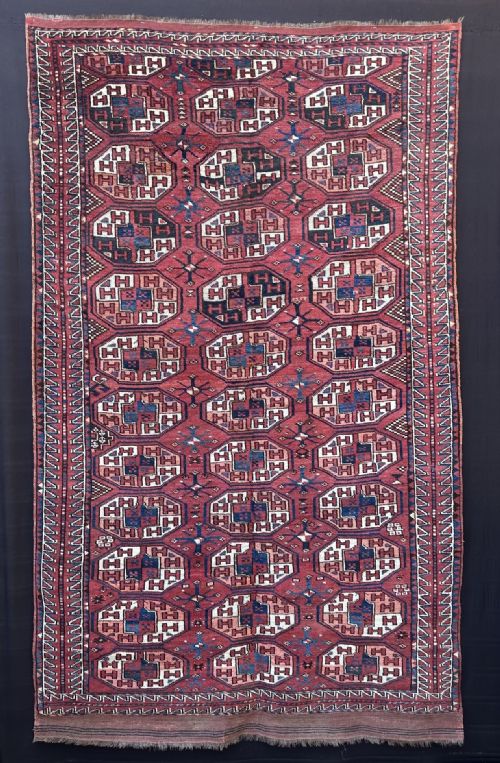
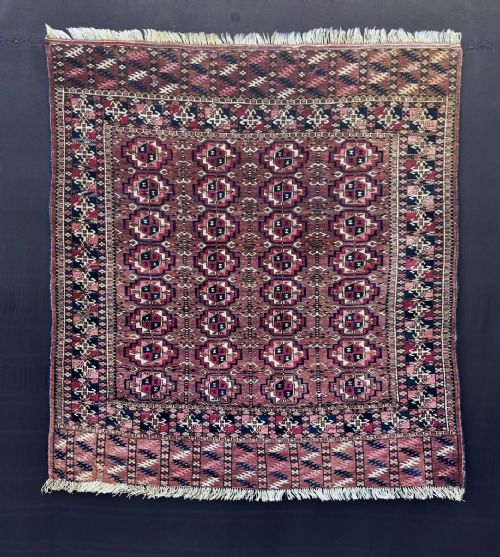
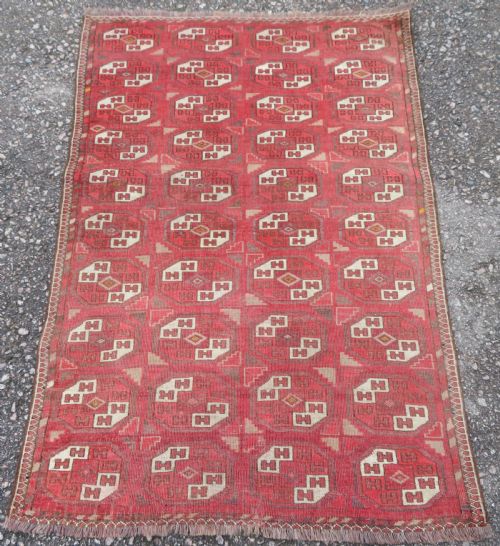
A gul pattern carpet comprises tribal textiles originating from Central Asian regions, most frequently associated with Turkmen, Ersari, Tekke, Yomut, and Afghan weavers. These floor coverings and tent hangings incorporate distinct geometric medallions known as guls, which often signify specific tribal lineages.
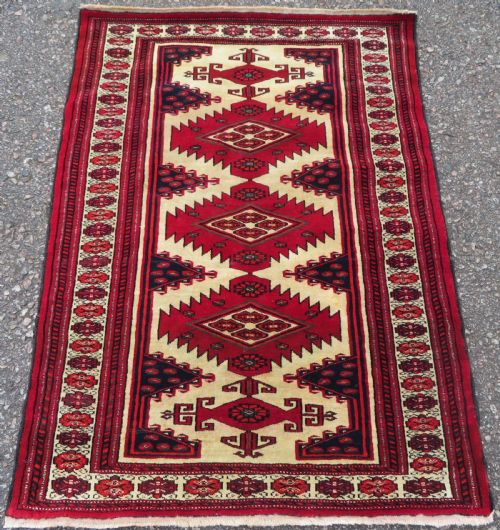
The pieces available span from the mid-nineteenth century through to the early twentieth century, encompassing main carpets, dowry rugs, tent door rugs, and smaller torba faces. Most items met on this page reflect traditional nomadic and village production methods from Central Asia and northern Afghanistan.
Buyers encounter formats ranging from compact dowry pieces to large country house size main carpets. The visual structure relies heavily on repeating primary guls flanked by minor ornaments and detailed borders.
How they were made
Weavers utilised natural dyes alongside hand-spun wool to build rich, enduring colour palettes across the pile. Goat hair and horsehair sometimes appear within the foundations or selvedges for added structural durability.
The construction involves dense knotting on wool foundations, designed to withstand daily nomadic life or heavy domestic use. Hand-weaving techniques ensure each gul motif retains subtle irregularities particular to individual makers.
Certain antique torba faces preserve the exact pocket format once used inside nomadic tents to store precious tribal belongings.
What varies in quality
The distinction between standard examples and superior ones rests upon the depth of the natural dyes and the crispness of the drawing within each gul. Finer knot density and softer wool grades elevate certain dowry rugs and main carpets above standard utilitarian items.
Preservation of the original borders and selvedges heavily influences the standing of a textile. Carpets retaining their complete early formats and uncompromised pile depth demonstrate greater integrity.
The Gul Pattern Carpet Glossary
- Gul
- A repeated octagonal or medallion motif used in Central Asian weaving to identify specific tribes and clans.
- Torba
- A small hanging bag or wall pocket utilised in nomadic tents for storage, often displaying primary tribal gul designs.
- Kapunuk
- A decorative tent door surround placed around the entranceway of a nomad's yurt.
- Main carpet
- A large-format rug produced for tribal use, ceremonies, or trade, featuring extended fields of repeating guls.
- Beshir
- A sub-style of Turkmen weaving originating from the middle Amu Darya region, known for distinct palette choices and large-scale designs.
Gul Pattern Carpet: Frequently Asked Questions
How do I clean a tribal carpet?
Gentle surface brushing and professional specialist washing suited to natural dye wools preserve the fibres without causing dye bleed.
Avoid standard domestic carpet cleaners or harsh chemical immersion which can ruin the historic wool foundation.
Where were these carpets woven?
Production centred across Central Asia, including regions within modern Turkmenistan and northern Afghanistan, by nomadic and village tribes.
Weavers worked within specific tribal groups such as the Tekke, Ersari, Yomut, and Kizyl Ayak.
How do I date an antique carpet?
Dating relies on assessing the wool quality, natural dye characteristics, structural wear patterns, and traditional tribal design layouts.
Pieces from the nineteenth century display distinct hand-spun textures and palette shifts compared to later twentieth-century village productions.
Can I place these rugs in high traffic areas?
Many main carpets and heavy-duty village pieces were constructed for demanding daily environments using robust wool foundations.
Using an appropriate underlay helps cushion the historic pile and prevents slipping on hard floors.