


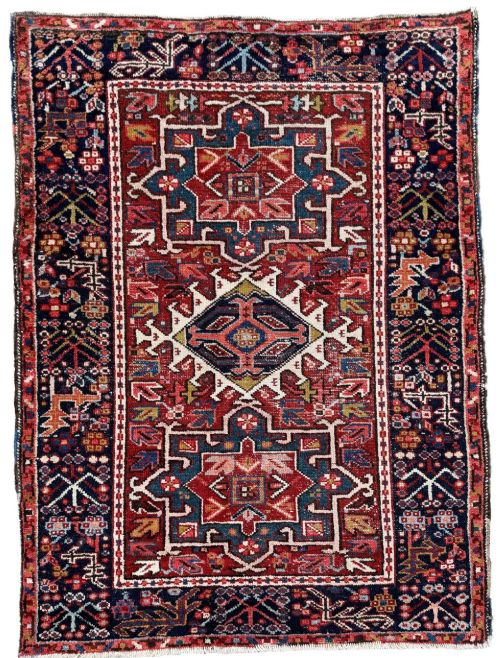
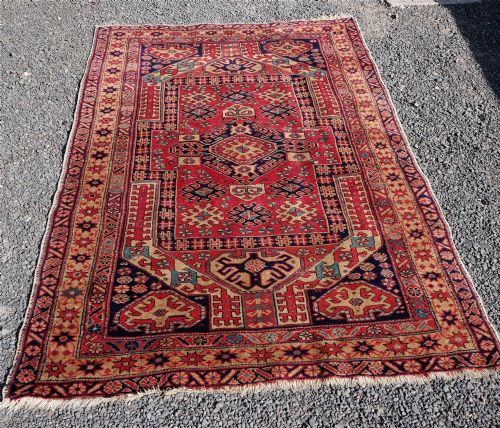
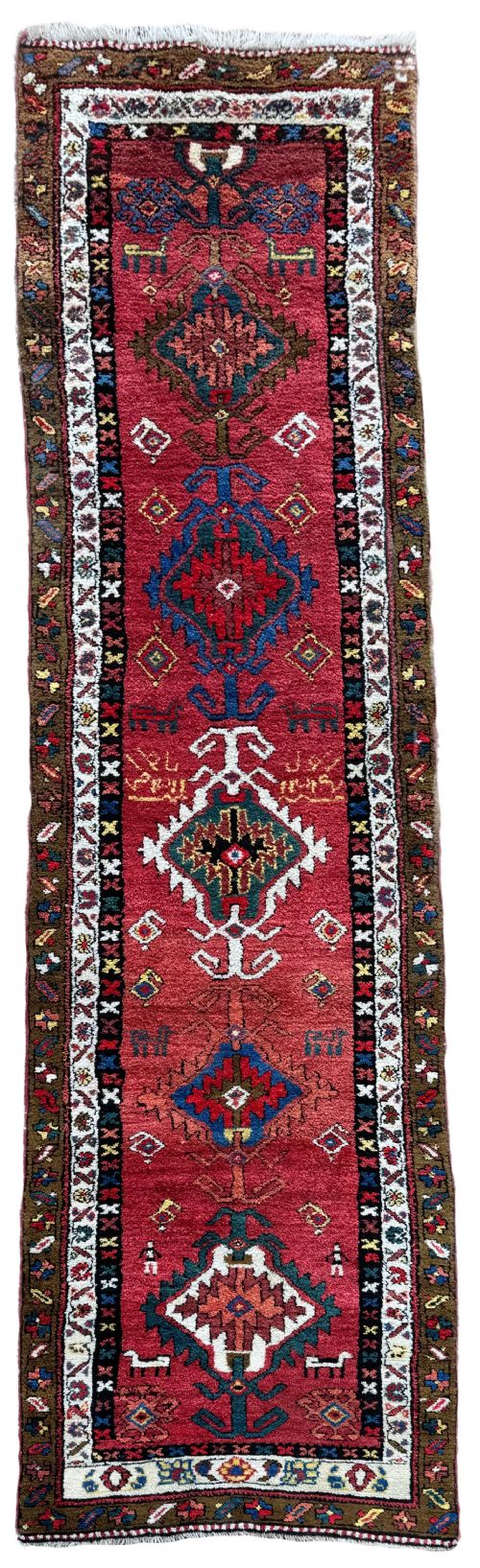
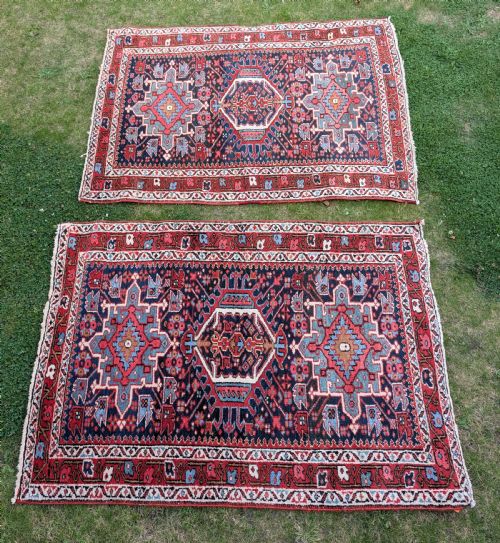
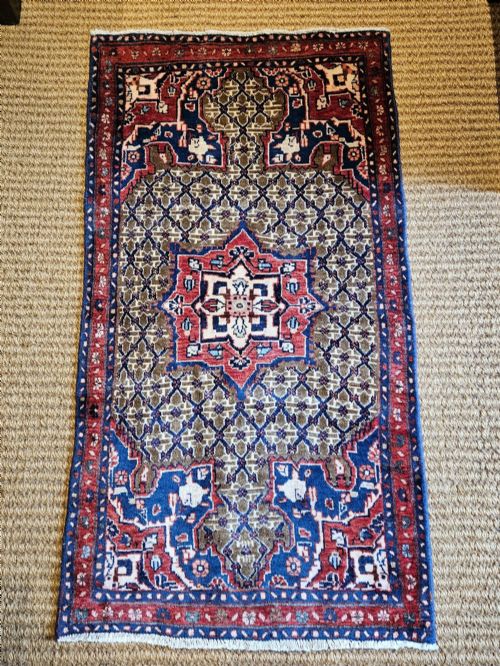
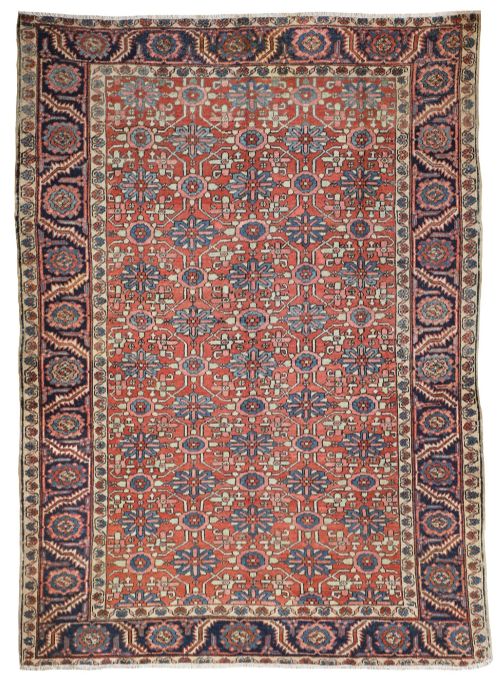
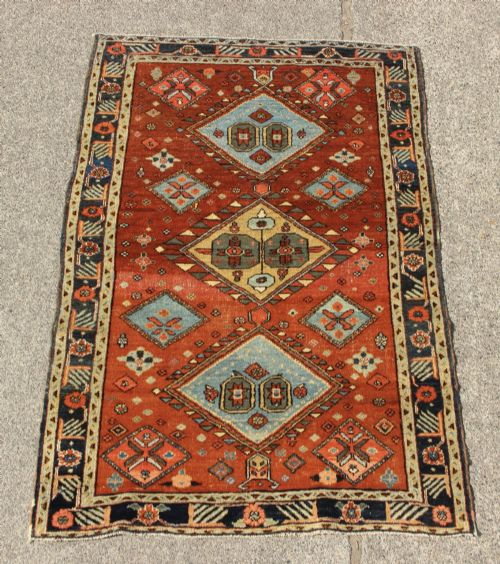
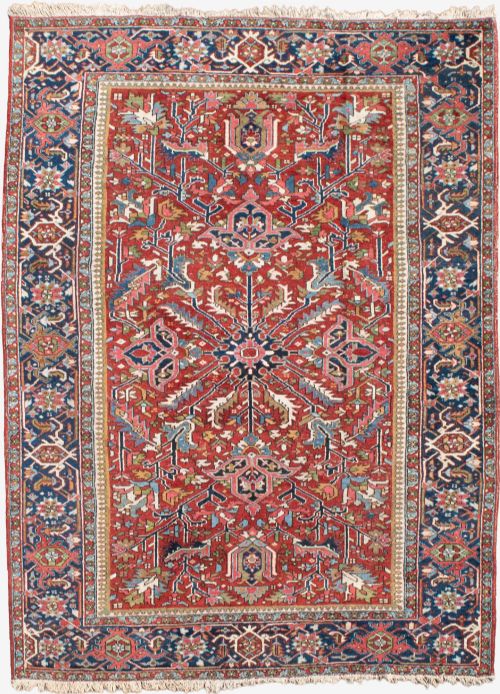
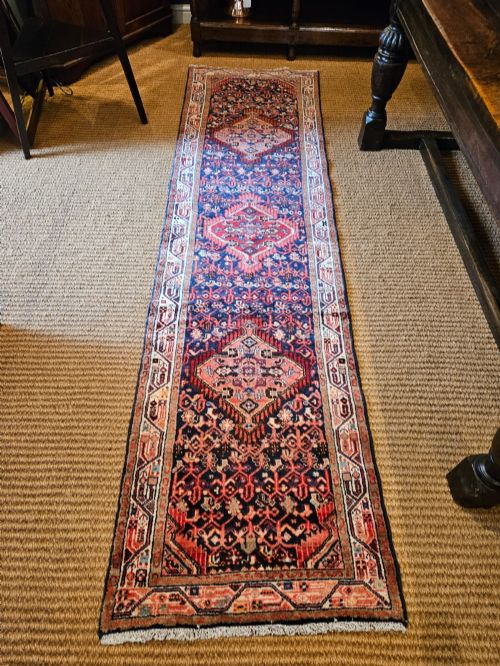

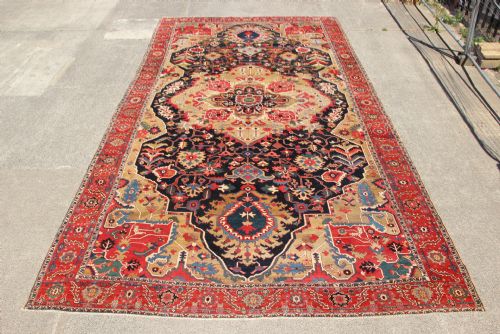
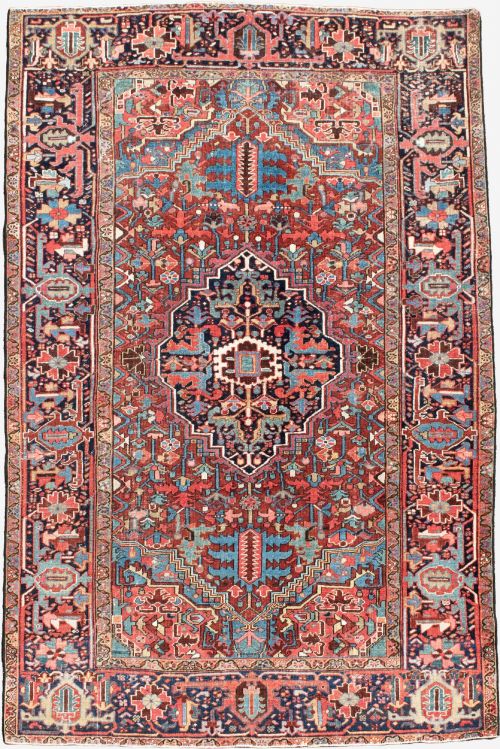
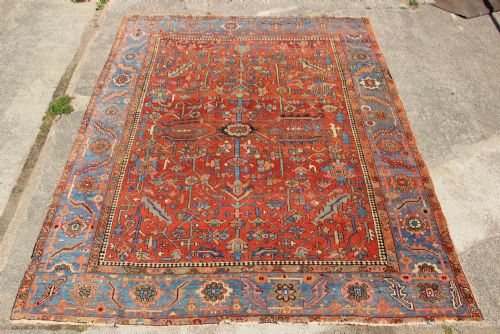
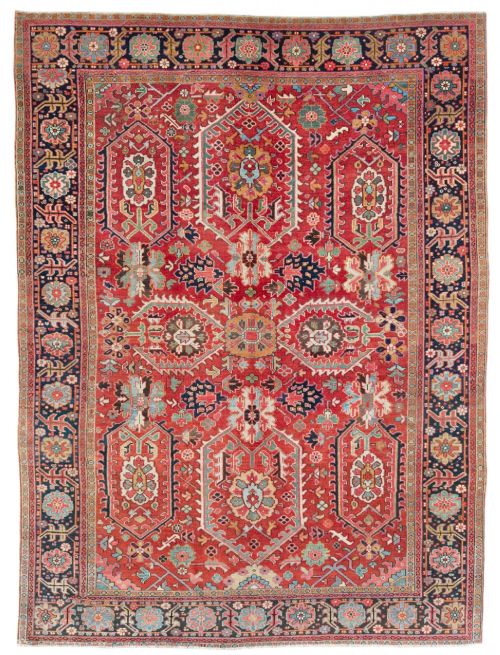
Red Heriz Rug
A red heriz rug brings robust Persian floor covering into a room, offering geometric designs and durable wool construction that anchors a traditional interior.
Red Heriz Rug
A red heriz rug is a floor covering originating from North-West Persia, encompassing related village and town types such as Karaja, Serapi, Bakshiash, and Ahar. These pieces date from the late nineteenth century through the early decades of the twentieth century, with examples spanning the eighteen-eighties to nineteen-thirty.
Buyers encounter various formats under this heading, ranging from small hearth rugs and bag faces to room-sized carpets and long hallway runners. The predominant style is traditional Persian tribal or geometric design, executed in wool on a cotton foundation.
How a red heriz rug was made
These floor coverings are constructed using wool pile knotted onto cotton warp and weft foundations. The materials provide both the soft surface texture and the structural stability required for heavy daily use.
Weavers in the North-West Persian region employed traditional techniques to build geometric patterns and robust pile carpets designed to endure decades of foot traffic.
Listings feature items dated from eighteen-eighty to nineteen-thirty, constructed in wool and cotton across formats ranging from small bag faces to large carpets.
What varies in quality in a red heriz rug
Quality differences lie in the fineness of the knotting and the precision of the geometric drawing across the field. Subtlety and depth in the colour palette separate standard village production from finer regional weaving.
The integrity of the cotton foundation and the uniformity of the wool pile determine how well an individual carpet maintains its structure over time.
The Red Heriz Rug Glossary
- Heriz
- A style of Persian carpet originating from the village and surrounding district in North-West Persia known for bold geometric medallions. These pieces typically combine sturdy wool construction with traditional village motifs.
- Serapi
- A sub-category of Heriz carpet from the nineteenth century characterised by spacious designs and a more open field. They often display softer colour palettes than later village productions.
- Karaja
- A style of rug from a town near Heriz featuring distinctive geometric village designs and small medallions. They frequently appear in smaller formats and runner dimensions.
- Bakshiash
- An older style of weaving from the Heriz region known for stylized, sprawling geometric patterns and earthy tones. These carpets often pre-date standard twentieth-century production.
- Warp
- The vertical foundation threads of a rug stretched tightly on the loom. Cotton is the standard material used for these structural elements in the region.
Red Heriz Rug: Frequently Asked Questions
Where were these rugs made?
These rugs were woven in the North-West Persian region, particularly in and around the town of Heriz and nearby weaving centres like Karaja and Bakshaish. Village weavers produced them using locally sourced materials and traditional geometric designs passed down through generations.
The regional style developed distinct characteristics that separate these floor coverings from city-made Persian carpets, relying on bold medallions and sturdy construction.
How do I care for an old rug?
Regular gentle vacuuming without a beater bar removes surface dirt and protects the wool pile from abrasive dust particles. Professional cleaning should be undertaken periodically by specialists familiar with antique Persian textiles.
Keeping the carpet out of direct, prolonged sunlight helps preserve the natural dyes and prevents uneven fading across the wool surface.
What is the difference between Heriz and Serapi?
Serapi rugs represent an earlier, typically finer nineteenth-century iteration of the Heriz style with more open, spacious compositions. They often feature muted tones and balanced geometric drawing.
Standard Heriz carpets from later periods generally display denser, more robust central medallions and busier field designs.
Are these rugs suitable for hallways?
Many examples from this group are woven as runners specifically intended for hallways and corridors. Their durable wool pile and cotton foundations provide the necessary strength for high-traffic areas.
Checking the precise length and width dimensions ensures the runner fits the specific architectural proportions of the corridor.