

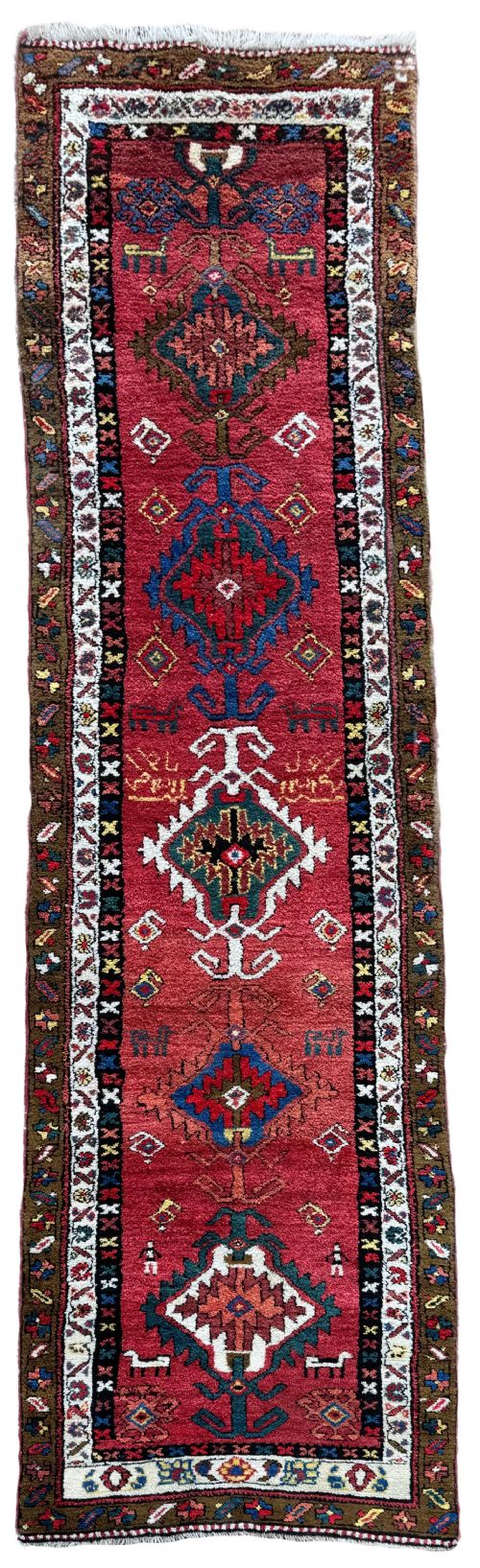
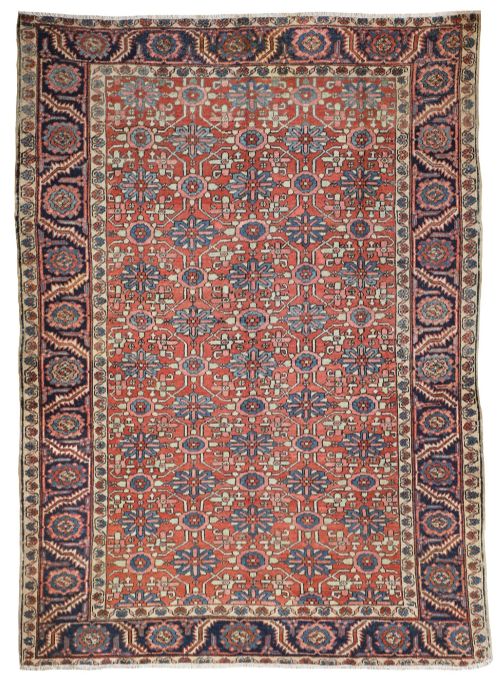

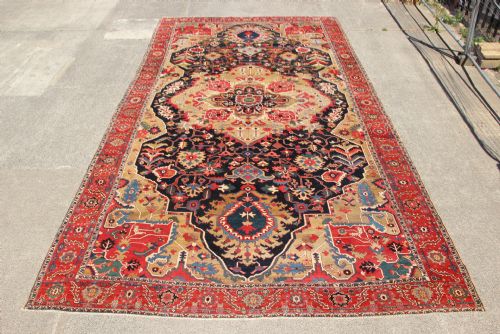
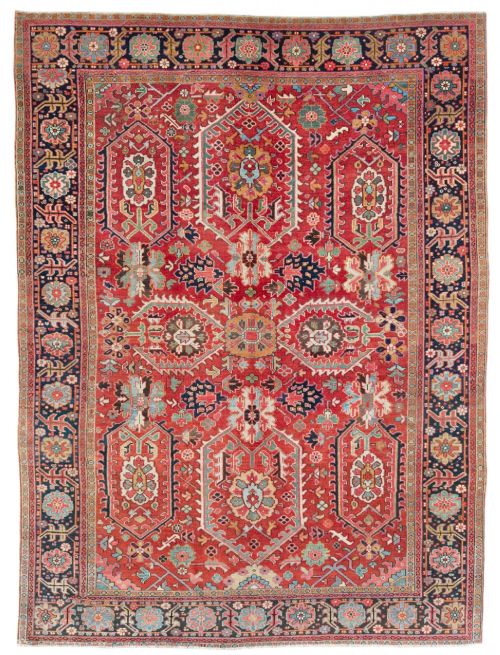






Antique Serapi Rug
An antique serapi rug brings bold geometric motifs and rich colour palettes into a room, offering durability and enduring design.

Antique Serapi Rug
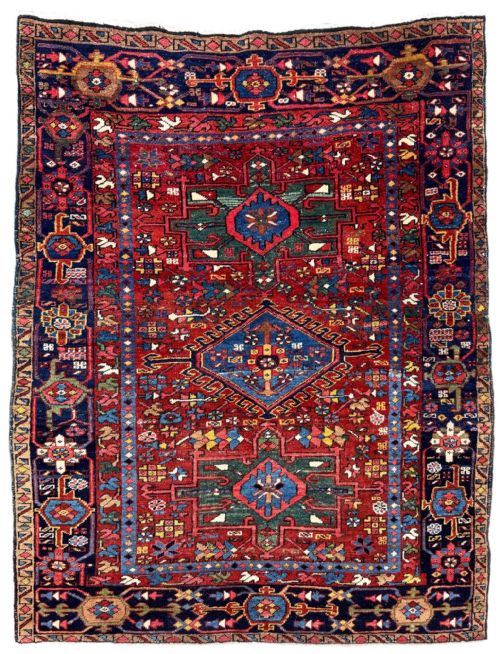
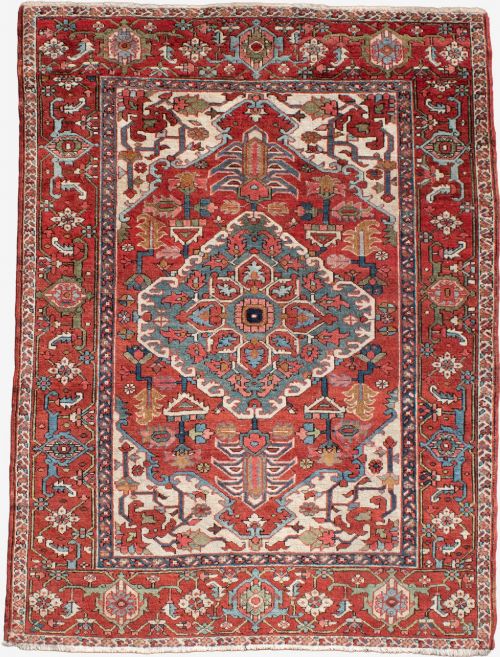
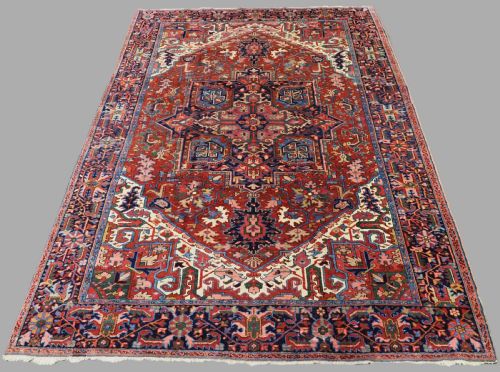
When searching for an antique serapi rug, buyers look at Northwest Persian hand-knotted textiles originating primarily from the Heriz region. These floor coverings date from the late nineteenth century into the early twentieth century, spanning decades from the eighteen-sixties through the nineteen-thirties.
Most examples encountered on this page appear as large carpets, gallery carpets, or room-sized rugs alongside occasional runners and smaller area rugs. They demonstrate distinct village workshop weaving traditions rather than city workshop precision.
The aesthetic centres on large-scale geometric medallions, angular corner spandrels, and all-over field patterns executed with characteristic tribal boldness. These pieces function historically and practically as heavy-duty floor coverings designed for high-traffic domestic spaces.

Materials and construction
The construction of an antique serapi rug relies entirely on natural materials, utilising sturdy wool for the pile and foundation yarns alongside cotton for the warps and wefts. This combination provides the structural stability and heavy weight required for large carpets and runners.
Weavers knotted the wool pile by hand onto cotton foundations using symmetrical knots, yielding a durable and resilient surface that withstands centuries of use. Natural dyes supplied the characteristic palette of terracotta, indigo, ivory, and soft madder tones.
Antique Serapi Rug Retail Price Guide 2026
Typical asking prices for serapi rug among the pieces listed under this phrase on Sellingantiques today, from the lower quarter to the upper quarter. They describe what is for sale here now, not the wider market.
Every large carpet required multiple weavers sitting side by side on wooden floor looms, arguing silently over colour placement.
Qualities that distinguish examples
The standard of an antique serapi rug rests on the clarity of its geometric design and the balance of the medallion within the field. Superior examples display crisp drawing, harmonious colour saturation, and precise proportioning across large surface areas.
Pile density and knot regularity also separate robust working carpets from finer decorative formats. Original edge finishes and well-preserved fringe terminations contribute substantially to the integrity of the piece.
The Antique Serapi Rug Glossary
- Serapi rug
- A subgroup of Persian carpets hailing from the Heriz district, known for bold geometric designs and spacious composition. They often feature large central medallions and open fields.
- Heriz
- A region in Northwest Persia renowned for robust village carpet weaving. Rugs from this area use durable cotton foundations and sturdy wool pile.
- Medallion
- The central ornamental motif dominating the field of the carpet. In these pieces, it usually takes an angular, geometric form.
- Spandrel
- The triangular corner pieces situated in the corners of the rug field, framing the central medallion. They often repeat motifs found in the main border.
- Warp
- The vertical foundational threads stretched taut on the loom before knotting begins. Cotton supplies the warp strength in these Persian carpets.
Antique Serapi Rug: Frequently Asked Questions
How do I clean an antique serapi rug?
Professional specialist cleaning is essential for wool and cotton pile carpets of this age. Vacuum gently without a beater bar to remove embedded grit.
Avoid saturation and harsh chemical detergents that strip natural lanolin from the wool fibres. Consult a textile conservator for proper maintenance advice.
Where were these rugs made?
These textiles originate from village workshops and domestic looms in the Heriz region of Northwest Persia. Local weavers produced them using regional wool and traditional dyeing methods.
Production spanned several decades from the mid-nineteenth century through the early twentieth century. Each valley and village contributed subtle variations to the established geometric vocabulary.
What materials make up the pile?
The pile consists of hand-spun sheep wool dyed with natural substances derived from plants and minerals. This material offers natural resilience against foot traffic.
Foundation threads beneath the wool pile use durable cotton to maintain structural tension. The combination ensures the heavy carpet lies flat upon the floor.
How do I identify a serapi from a Heriz?
Serapi rugs generally exhibit coarser knotting, larger geometric scales, and more open, spacious fields than standard Heriz carpets. Their colour palettes often favour softer, more muted terracotta and ice-blue tones.
They represent an earlier phase of regional production dating primarily to the nineteenth century. Standard Heriz pieces frequently show finer detail and denser overall patterns.