





Large Heriz Carpet
When you need a large heriz carpet, you are looking at substantial hand-knotted room-size floor coverings from North-West Persia designed to anchor formal spaces.
Large Heriz Carpet
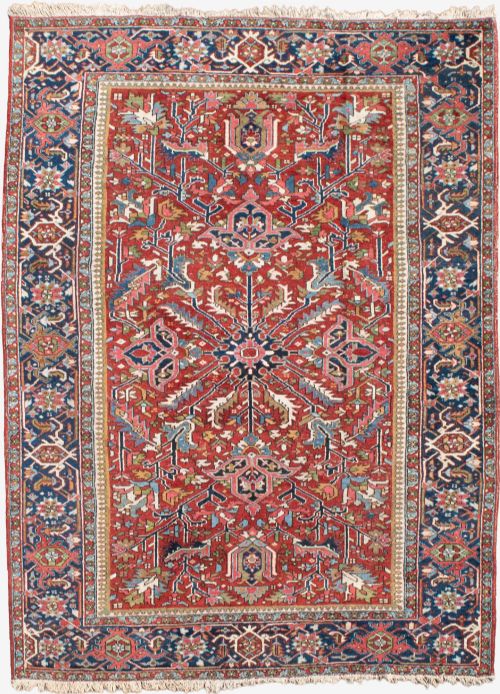
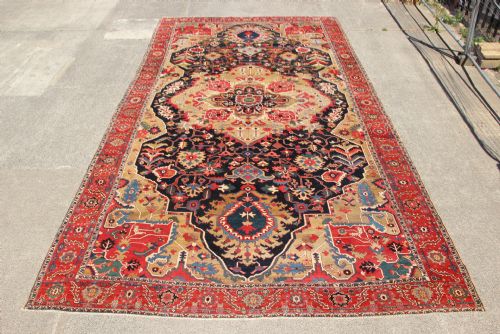
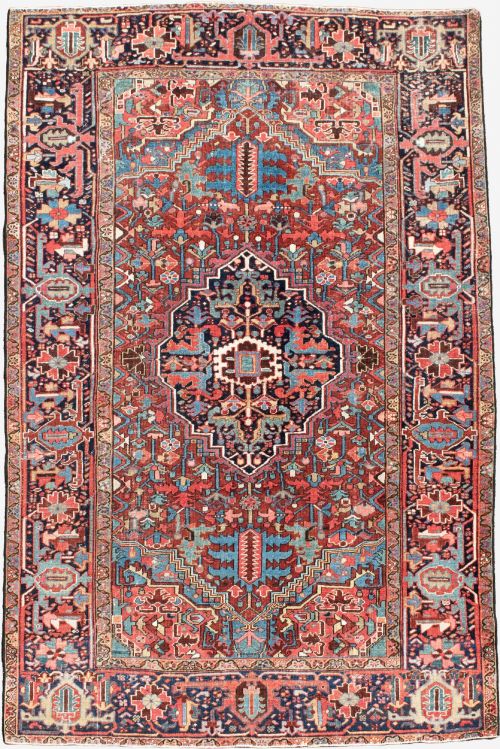
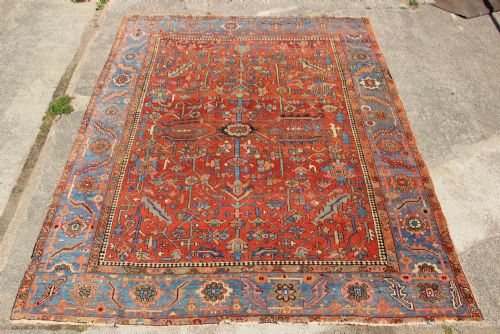
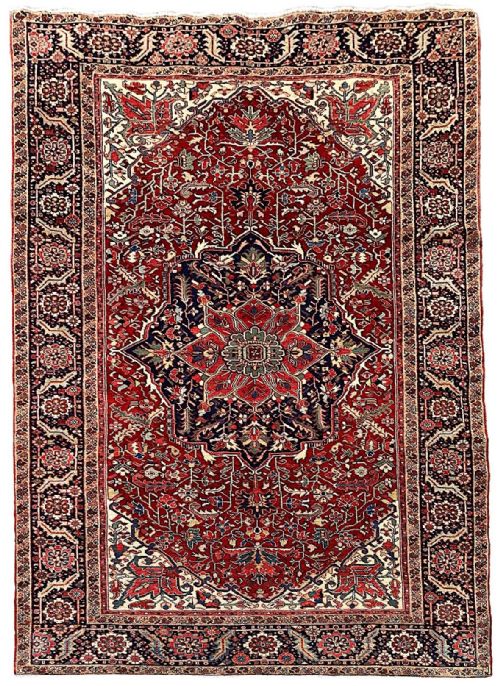
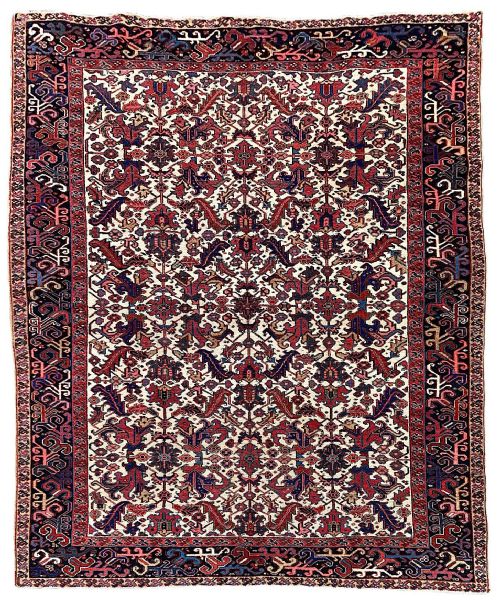
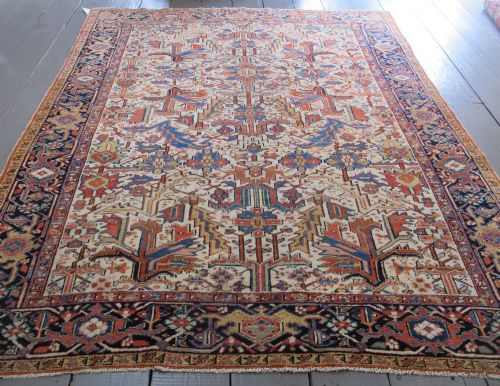
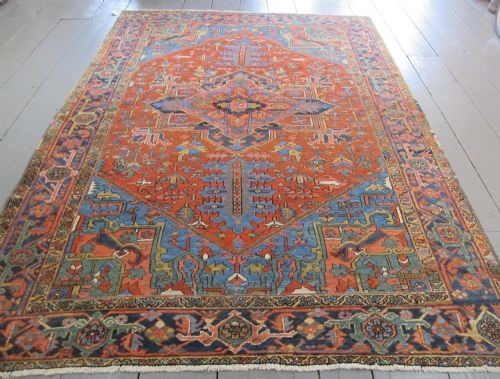
A large heriz carpet originates from the Heriz region and surrounding districts in North-West Persia, produced primarily across the late nineteenth and early twentieth centuries. These floor coverings were built for substantial country house rooms, utilising robust proportions and durable structures that survived generations of heavy use.
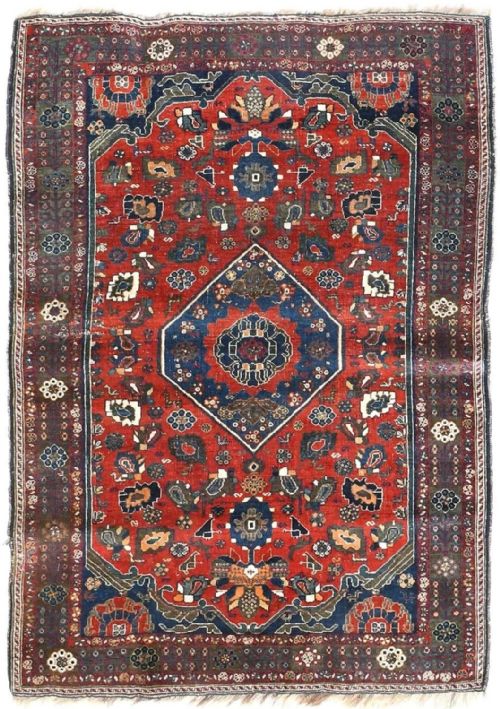
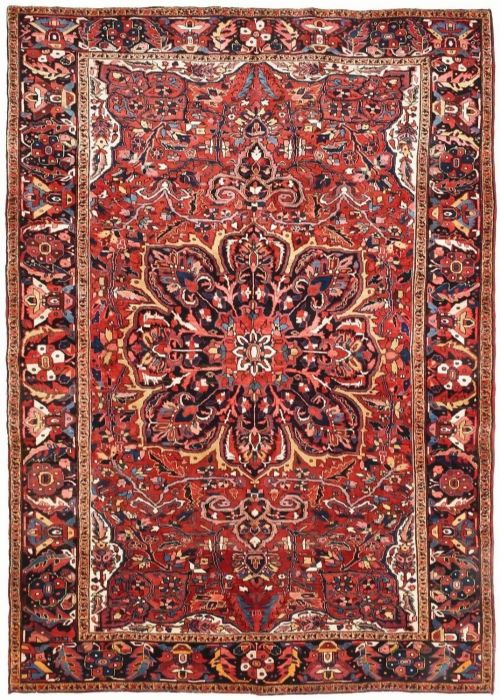
Buyers meet varied iterations on this page, including traditional geometric room-size carpets, lighter-toned Serapi types, and related village weaves from Bakshaish, Ahar, and Karaja. Their distinctive visual identity relies on bold central medallions, angular corner spandrels, and strong primary hues grounded in ivory, blue, or red fields.
How they were made
Weavers constructed these carpets using sturdy wool piles hand-knotted onto sturdy cotton foundations, providing the heavy handle and resilience characteristic of the region. The materials were sourced locally, with sheep's wool yielding a dense, hard-wearing surface capable of withstanding decades of foot traffic.
Dyes utilised in these pieces combined traditional natural colourants to produce the characteristic deep reds, soft blues, and ivory tones seen across the surviving examples. Knotting techniques remained traditional, anchoring heavy geometric patterns that differentiated village productions from city workshops.
Large Heriz Carpet Retail Price Guide 2026
Typical asking prices for large heriz carpet among the pieces listed under this phrase on Sellingantiques today, from the lower quarter to the upper quarter. They describe what is for sale here now, not the wider market.
Listings feature carpets spanning from eighteen-fifty through to nineteen-thirty, constructed entirely from wool and cotton.
What varies in quality
Quality in a large heriz carpet depends on the crispness of the geometric drawing and the balance achieved within the central medallion and border systems. Tighter knotting and finer wool selection allow for sharper delineation of motifs, elevating certain village weaves into exceptional decorative works.
Colour saturation and palette harmony separate standard room-size rugs from the most desirable examples, particularly those featuring pale ivory grounds or well-preserved soft blues. The integrity of the original wool pile and the symmetry of the tribal design dictate the overall presence of the piece.
The Large Heriz Carpet Glossary
- Heriz
- A region in North-West Persia known for durable, geometrically patterned carpets woven in villages and towns across Azerbaijan. These pieces often feature bold central medallions and sturdy cotton foundations.
- Serapi
- A sub-style associated with older Heriz carpets, typically characterised by more open designs, softer colour palettes, and finely balanced geometric compositions. They date frequently to the nineteenth century.
- Bakshaish
- An adjacent weaving district producing village carpets related to Heriz work, known for whimsical, spacious tribal patterns and muted earthy tones. They represent some of the earliest pieces found in this tradition.
- Medallion
- The central ornamental design element anchored in the middle of the carpet field, usually balanced by corresponding corner spandrels. In Heriz carpets, this feature dominates the visual structure.
- Spandrel
- The triangular corner motifs placed in the four angles of the main carpet border, framing the central field. They echo the geometric vocabulary of the primary medallion.
Large Heriz Carpet: Frequently Asked Questions
How do I care for an old carpet?
Protect the wool pile by vacuuming gently without a rotating brush bar and keeping the piece away from direct, harsh sunlight. Rotating the carpet periodically ensures even wear across high-traffic areas.
Professional cleaning should be undertaken by specialists experienced in antique Persian textiles rather than standard domestic methods. Proper padding underneath helps absorb impact and prevents slipping on hard floors.
Where were these carpets made?
These carpets were woven in the Heriz region and surrounding districts of North-West Persia, situated in the Azerbaijan province. Local villages and workshops produced them for both domestic use and export markets.
The regional access to durable wool and traditional dyestuffs shaped the distinct character of carpets originating from this specific mountainous terrain.
What is a Serapi carpet?
A Serapi is a finer, generally older sub-category of Heriz carpet featuring more spacious designs and muted, harmonious colour palettes. Collectors prize them for their artistic restraint and open geometric fields.
They represent the earlier nineteenth-century output of the region before commercial demands led to denser, more saturated patterns in later decades.
How do I determine the age?
Age is assessed through structural analysis, examining the weave, the materials of the foundation, and the chemical composition of the dyes. Stylistic evolution from nineteenth-century village aesthetics to twentieth-century production provides further chronological markers.
Comparative study of knot density and border motifs helps place a carpet within specific decades between eighteen-fifty and nineteen-thirty.