








Antique Serapi Carpet
When searching for an antique serapi carpet, buyers encounter large Northwest Persian floor coverings woven with wool and cotton.
Antique Serapi Carpet
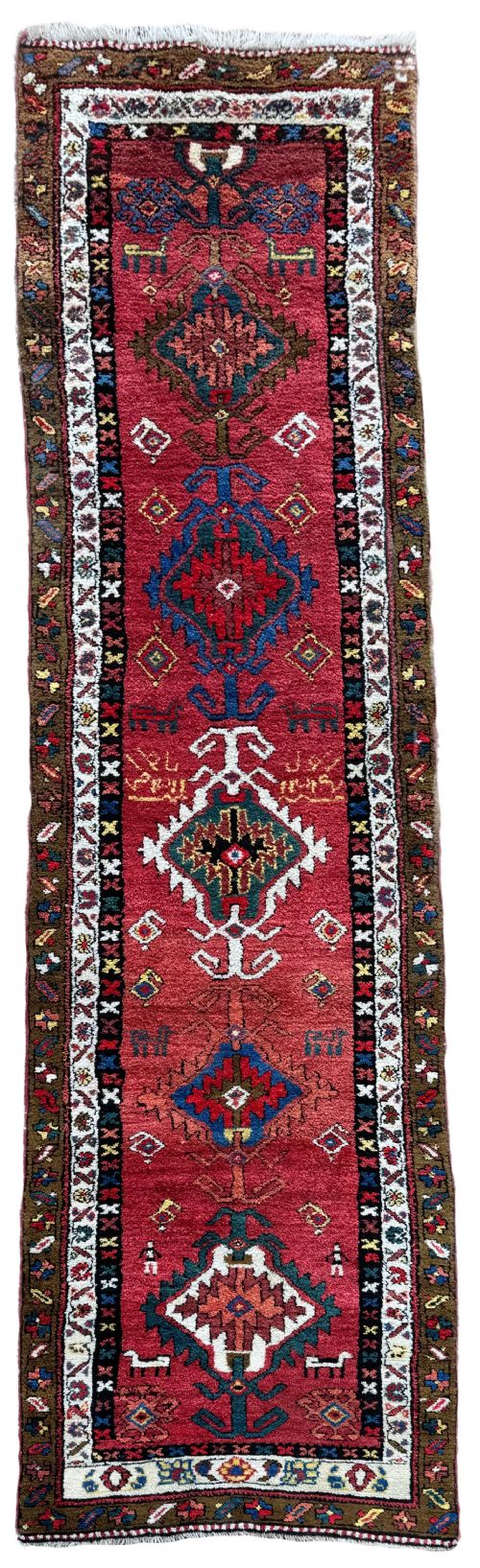
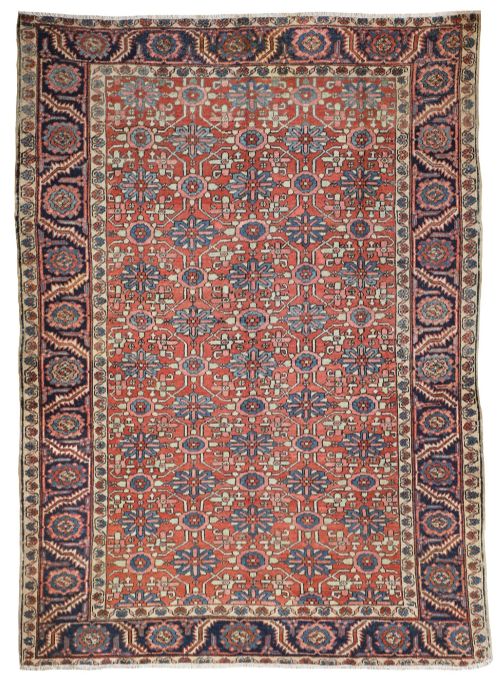
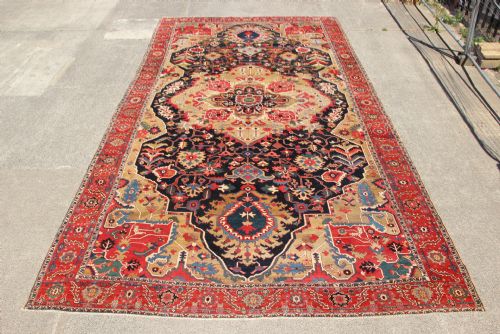
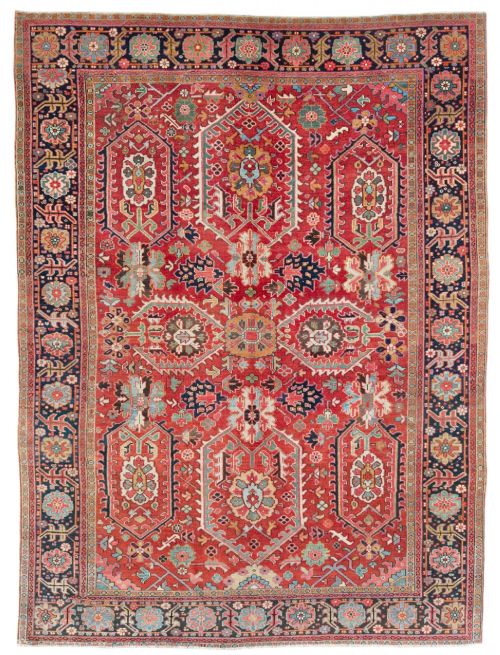
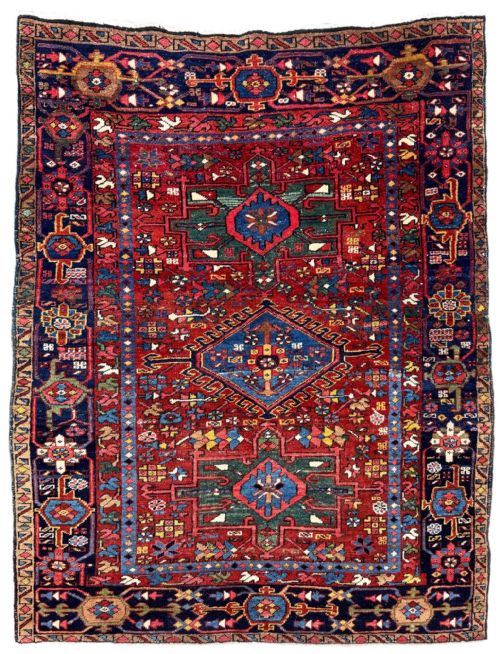
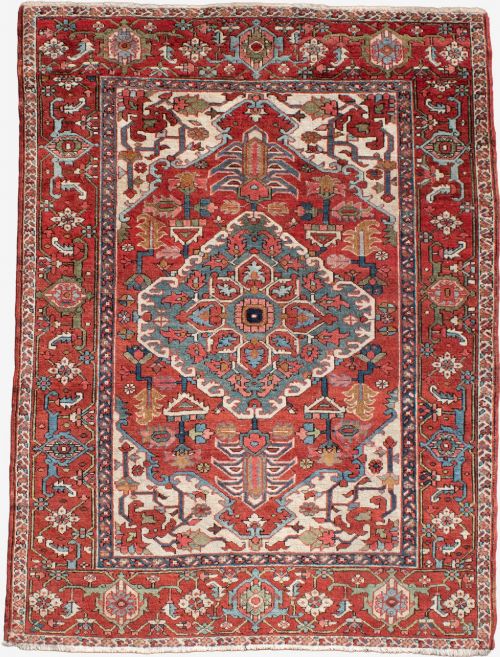
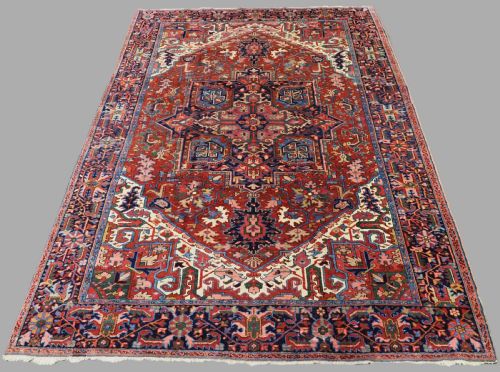
An antique serapi carpet represents a distinct regional weaving tradition from Northwest Persia, often linked closely with Heriz production. Buyers searching for an antique serapi carpet typically find grand room-size formats and gallery carpets alongside smaller scatter rugs. These textiles date primarily from the late nineteenth century into the early decades of the twentieth century.
The visual vocabulary relies on traditional Persian geometric layouts rather than purely curvilinear floral designs. Many pieces display bold central medallions offset against expansive coloured fields and structured corner spandrels. Such configurations give these carpets their characteristic architectural clarity and strong interior presence.

Materials and construction
The foundation structures depend on sturdy cotton warps and wefts to provide dimensional stability for large floor carpets. Thick hand-spun wool forms the pile, yielding a dense and resilient surface capable of withstanding heavy daily use. Knotting techniques follow traditional regional standards practiced across the Heriz district.
Natural dyestuffs impart the characteristic palette of terracotta, rich blues, and ivory tones seen across these rugs. The interaction of wool pile with traditional dye methods creates subtle tonal variations across the expanse of the carpet.
Antique Serapi Carpet Retail Price Guide 2026
Typical asking prices for serapi carpet among the pieces listed under this phrase on Sellingantiques today, from the lower quarter to the upper quarter. They describe what is for sale here now, not the wider market.
Listings feature pieces spanning the period from 1860 to 1930, utilising wool and cotton materials across runner and carpet formats.
Determining quality in weaving
Variations in quality stem from the crispness of the geometric drawing and the precision of the knotting. Superior examples display balanced proportions in the central medallion and well-defined secondary borders.
The clarity and saturation of the dye colours further separate standard production from finer workshop output. Intact original edge finishes and balanced proportions elevate the desirability of individual pieces.
The Antique Serapi Carpet Glossary
- Medallion
- The central ornamental motif dominating the field of the carpet. This focal design element often displays intricate geometric structuring.
- Spandrel
- The triangular corner ornaments situated in the angles between the main border and the central field. They anchor the composition of Northwest Persian carpets.
- Warp
- The vertical foundation threads stretched tightly on the loom before knotting begins. Cotton serves as the standard material for these structural elements.
- Weft
- The horizontal threads passed across the warps after each row of knots is secured. Together with the warp, they form the sturdy grid of the carpet.
Antique Serapi Carpet: Frequently Asked Questions
How do I date an antique serapi carpet?
Dating relies on stylistic markers, structural analysis, and comparative evidence from nineteenth and early twentieth century production. Examining the specific wool texture and palette provides further chronological clues.
Most surviving pieces date from the 1860s through to the 1930s. Records from both active listings and archive sales help narrow down the period.
Where were these carpets made?
These rugs originate from the Northwest region of Persia, specifically associated with the Heriz district and surrounding weaving villages. The geography dictated the distinct geometric aesthetic.
Local workshops utilised abundant regional materials like wool and cotton to produce these durable floor coverings.
How do I care for a large carpet?
Gentle regular vacuuming without a rotating power brush helps remove embedded dust from the wool pile. Professional rug cleaning is recommended for deep maintenance.
Positioning the carpet away from direct continuous sunlight preserves the natural dyes. Using an appropriate underlay prevents unnecessary friction against the floor.
What is the difference between Heriz and Serapi?
Serapi carpets generally exhibit a bolder, more open geometric design with coarser knotting compared to later standard Heriz production. The colour palettes often feature softer abrasheh and lighter fields.
Collectors often categorise earlier, more spacious nineteenth-century examples under the Serapi designation. Both share the same Northwest Persian geographical origins.