
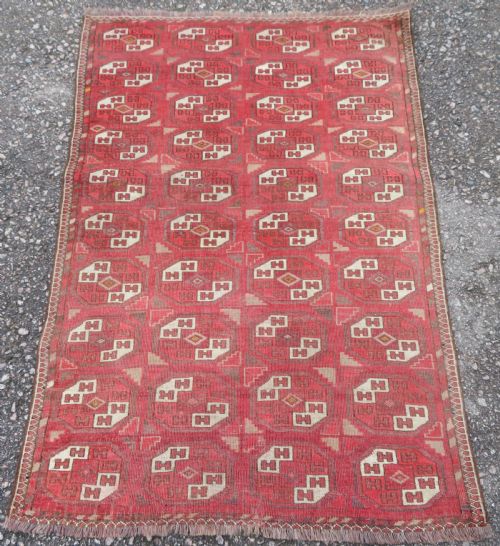
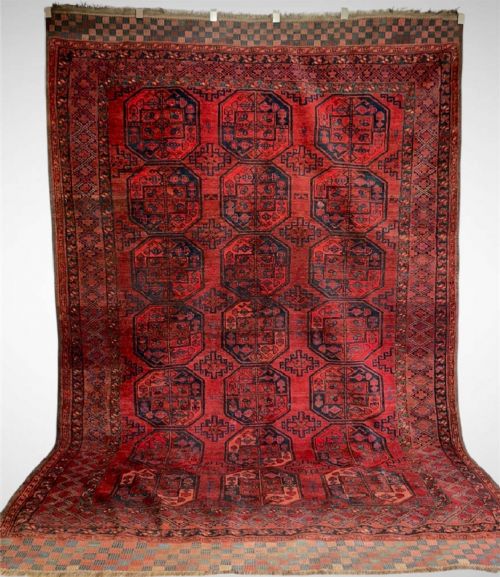


Red Ersari Rug
A red ersari rug brings deep madder tones and tribal geometry into a room, offering tactile warmth and centuries of Central Asian weaving heritage.
Red Ersari Rug
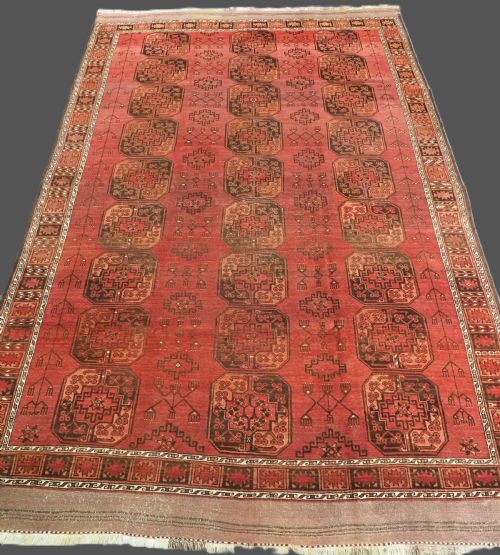
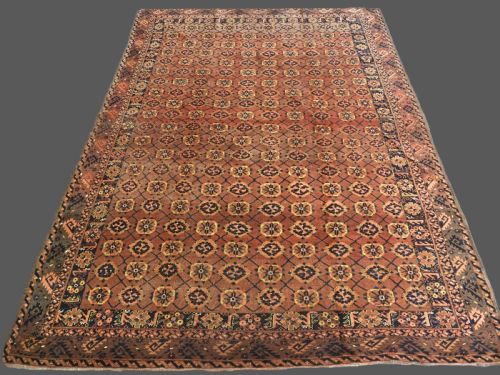
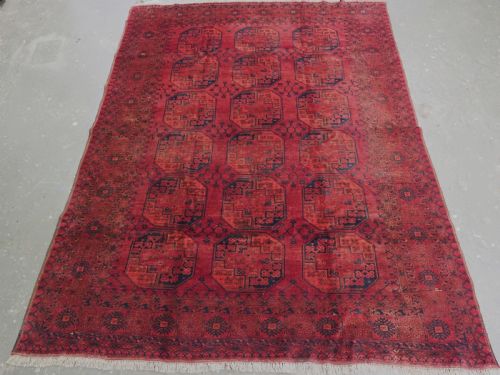
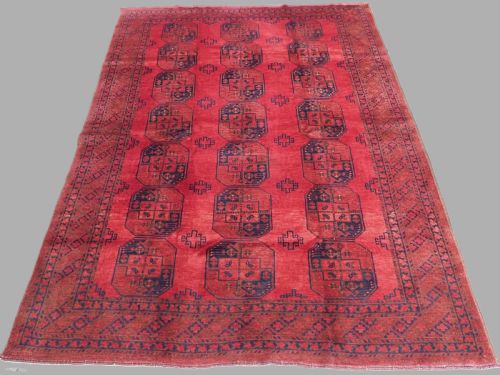
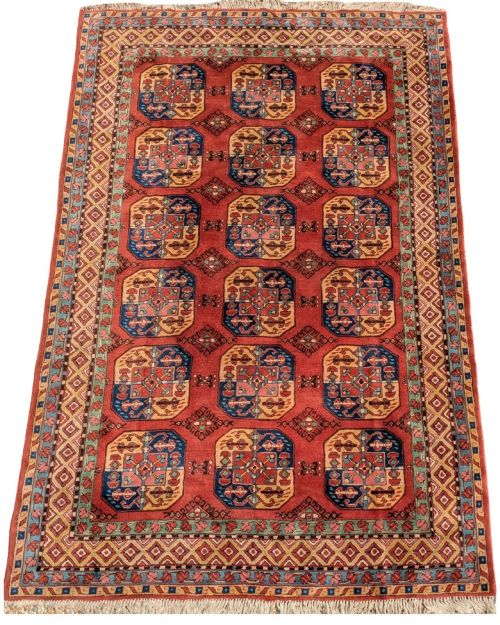
A red ersari rug represents the tribal weaving tradition of the Ersari Turkmen people of Central Asia and northern Afghanistan. These textiles span various utilitarian forms, from large main carpets intended for domestic living spaces to small storage bags and saddle covers.
The pieces on this page typically date from the mid-nineteenth century through the early twentieth century, showing a strong concentration around eighteen-hundred and ninety to nineteen-hundred and twenty. Buyers encounter everything from substantial country house carpets down to intimate tent door rugs and torba faces.
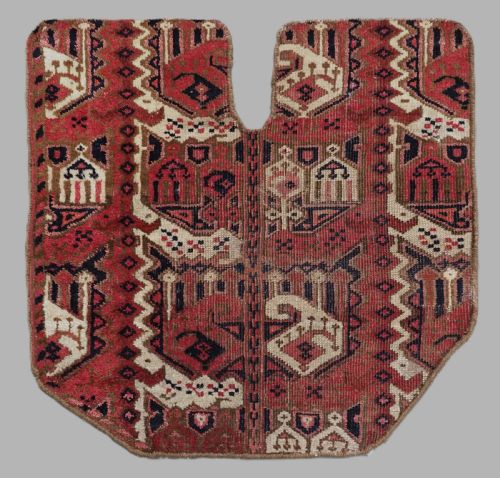
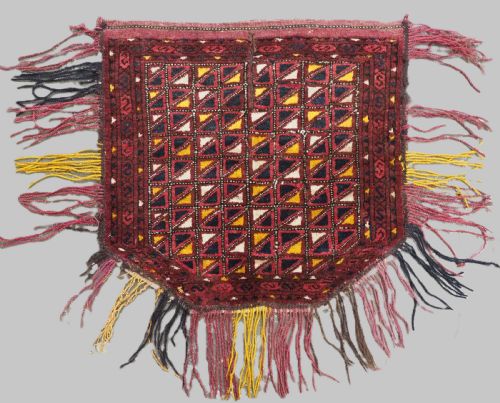
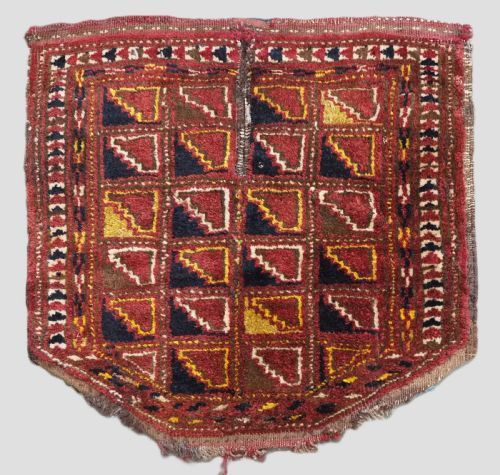
The palette relies heavily on warm reds, soft terracotta, and madder grounds offset by geometric guls, secondary motifs, and occasional ivory or dark accents. Formats range from expansive floor coverings to flat weave bags complete with original tassels and backings.
How a red ersari rug was made
Weavers constructed these textiles primarily using wool, often incorporating hand-spun wool for the pile to achieve a dense, resilient texture that withstands daily use. Natural dyes provide the characteristic red coloration, derived from local plant sources such as madder root.
Structural integrity often depended on durable foundation materials, with select pieces employing goat hair or horsehair alongside wool warp and weft threads. Silk highlights occasionally appear in specific storage pieces to add subtle contrast to the wool foundation.
Techniques varied from deep pile knots in main carpets to flat weave structures used for smaller torbas and utility bags. Many surviving examples retain original finishing details such as braided tassels and protective side cordings.
Red Ersari Rug Retail Price Guide 2026
Typical asking prices for red ersari rug among the pieces listed under this phrase on Sellingantiques today, from the lower quarter to the upper quarter. They describe what is for sale here now, not the wider market.
Listings feature pieces spanning from eighteen-fifty to nineteen-twenty, utilising wool, silk, goat hair, and natural dyes across tribal rug forms.
What varies in quality in a red ersari rug
The caliber of a red ersari rug rests on the fineness of the knotting and the handled crispness of the geometric design. Tightly packed pile and well-drawn guls indicate a more deliberate, skilled workshop or domestic production.
Material selection marks another distinction, where hand-spun wool with rich natural dyes yields a deeper patina than later or more utilitarian variants. The presence of secondary materials like silk highlights or intact original tassels elevates the textile's integrity.
Proportion and design complexity also divide standard village pieces from exceptional main carpets. Balanced layouts featuring distinct turreted guls or complex curled leaf motifs command greater visual depth.
The Red Ersari Rug Glossary
- Gul
- A repeating primary medallion or octagonal motif central to Turkmen and Ersari rug design. These tribal emblems often identify the specific sub-group or tribe that wove the textile.
- Torba
- A small utilitarian wall hanging or storage bag traditionally used inside a nomadic tent. They frequently feature elaborate faces with specialised tribal patterns.
- Beshir
- A regional style associated with the Ersari tribe known for looser geometric layouts, ikat influences, and broader colour palettes. These pieces often depart from strict repetitive guls.
- Chuval
- A large tent bag used for household storage by nomadic families. Surviving examples are usually collected as smaller face fragments.
- Kapunuk
- A specialised tent door rug designed to frame the entrance of a nomadic yurt. These architectural textiles possess distinctive multi-panel shapes.
Red Ersari Rug: Frequently Asked Questions
How do I care for a red ersari rug?
Vacuum gently without using a rotating beater brush to protect the vintage pile and foundation threads. Keep the textile out of direct sunlight to prevent the natural red madder dyes from fading over time.
Rotate the rug periodically to ensure even wear across high-traffic areas in your home. Professional cleaning by a specialist in antique textiles remains essential every few years.
Were these rugs used on the floor?
Main carpets and larger village formats served as heavy-duty floor coverings in nomadic dwellings and country houses. Their dense wool construction made them exceptionally hard-wearing for daily domestic life.
Smaller pieces like torbas and saddle covers functioned primarily as storage bags, tent furnishings, or animal trappings rather than walking surfaces. Their survival often depends on this protected, non-floor usage.
What does a gul design mean?
A gul represents a repeating octagonal medallion that acts as the primary visual anchor in Turkmen tribal weaving. Different tribes utilised distinct gul variations to signify lineage and cultural identity.
Over generations, these motifs evolved from symbolic tribal markers into sophisticated geometric art forms. Spotting specific guls helps collectors attribute pieces to groups like the Ersari or Kizil Ayak.
How do I date an antique ersari rug?
Examine the palette, wool quality, and structural wear to gauge the age of a nineteenth or early twentieth-century piece. Earlier examples from the mid-nineteenth century typically display deeper madder red tones and finer hand-spun wool.
Construction details such as goat hair foundations or native natural dyes also point toward earlier tribal production. Comparing the complexity of the secondary borders and guls clarifies the chronology.