


Rat Tail Silver Spoon
A rat tail silver spoon brings the solid weight and distinct spine of early dining tables straight to your hand.
Rat Tail Silver Spoon
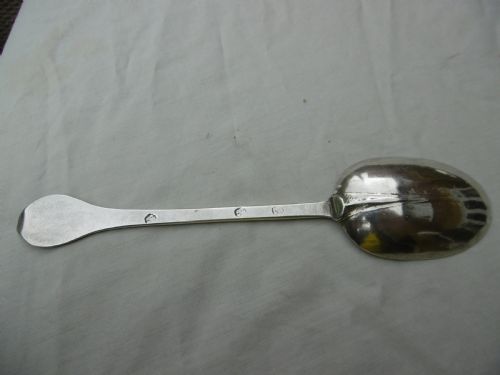
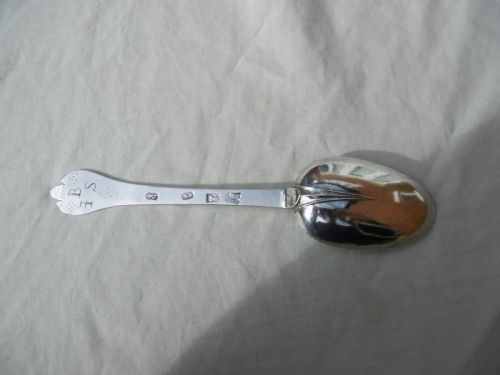
A rat tail silver spoon is defined by the distinct tapering tongue of metal running down the reverse of the bowl, providing structural reinforcement where the handle meets. When you search for this phrase, you encounter forms ranging from heavy seventeenth-century trefid spoons to eighteenth-century Dognose and Hanoverian tablespoons, alongside later revival pieces.
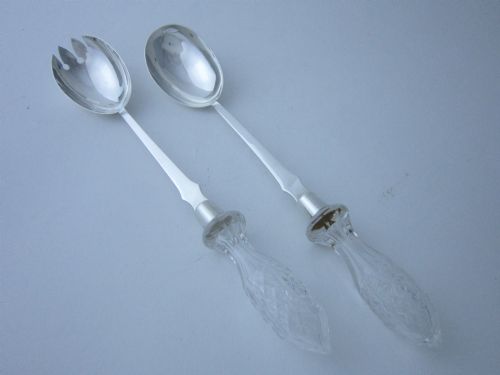
The majority of early examples on this page date from the seventeenth and eighteenth centuries, originating from London, provincial makers, and Scottish or Irish workshops. Alongside standard tablespoons and basting spoons, the selection includes specialised forms such as marrow spoons, salad servers with cut glass, and cased sets from later periods.
How They Were Made
Silversmiths forged these pieces from sterling silver, Britannia standard silver, or higher purity metal, hammering ingots down into flat sheets before cutting and shaping the bowl and handle. The characteristic rat tail spine was either formed integrally from the same piece of metal or separately applied and soldered down the back of the bowl to strengthen the joint.
Makers finished the surfaces by hand, leaving subtle hammer marks on early provincial work, and punched clear sets of hallmarks including maker's marks, date letters, and standard marks directly into the silver.
Materials span sterling silver, Britannia standard silver, wood, and cut glass components found in salad servers.
What Varies in Quality
Quality rests significantly on the preservation of the rat tail itself and the original crispness of the hallmarks stamped into the metal. Pieces that retain their full bowl depth and unpolished touchmarks command greater regard than those softened by centuries of vigorous cleaning.
The standing of the maker and the geographical origin also dictate desirability, with provincial English, Scottish, and Irish pieces often showing distinctive regional variations in weight and engraving that set them apart from standard London output.
William Penstone·William Scarlett·Isaac Davenport·Benjamin Watts·John Smith·James Tait·John Pike of Plymouth·Richard Rae·J Ladyman·Peter Webb·Edward Gibson·John Smyth·Cooper Brothers and Sons·Jackson and Fullerton
The Rat Tail Silver Spoon Glossary
- Rat tail
- The tapering dorsal ridge running down the back of a spoon bowl to strengthen the junction with the stem. This feature originated in the late seventeenth century and became a hallmark of early silver cutlery.
- Trefid
- An early form of spoon handle ending in a three-lobed, notched top. It dominated English silver flatware during the late seventeenth and early eighteenth centuries.
- Dognose
- A transitional spoon style featuring a widened, upturned handle terminal with a central notch, evolving directly from the trefid shape before the emergence of the Hanoverian pattern.
- Britannia standard
- A higher purity silver standard introduced by law in England in 1696 to prevent the melting of coinage for plate. It contains ninety-five point eight percent pure silver.
- Basting spoon
- A large serving implement used for spooning juices over roasting meat. These oversized spoons often mirror the rat tail and handle patterns of matching table spoons.
Rat Tail Silver Spoon: Frequently Asked Questions
What is a rat tail on a spoon?
The rat tail is a narrow tongue of metal extending down the reverse of a spoon bowl from the handle base. It acts as a structural reinforcement designed to prevent the bowl from bending away from the stem.
This feature appeared prominently on British silver flatware from the late seventeenth century through the middle of the eighteenth century.
How do I date an early silver spoon?
Dating relies heavily on the hallmarks stamped into the metal, which typically include a maker's mark, a purity mark, and a date letter specific to an assay office year cycle.
Handle shape, engraving styles, and the specific form of the rat tail also provide strong stylistic indicators for pieces lacking complete marks.
Why is Britannia silver different?
Britannia silver is a higher purity alloy containing ninety-five point eight percent pure silver, compared to the ninety-two point five percent standard of sterling silver. Parliament mandated this stricter standard for all wrought plate between 1697 and 1719 to protect circulating coinage.
Objects made during this era often display the figure of Britannia and a lion's head erased instead of the traditional leopard's head and walking lion.
How were these spoons used historically?
Table spoons and trefid spoons served diners at formal meals before modern place settings became standardised, often complemented by specialised vessels like marrow spoons for extracting bone marrow.
Larger basting spoons remained in the kitchen or at the carving board for managing meats, while later nineteenth and twentieth-century versions served tea, coffee, and desserts.
Can I use antique silver spoons daily?
Using antique silver requires careful hand washing with mild soap and immediate drying to protect the metal from harsh detergents and abrasive sponges.
Frequent use builds a gentle patina over the surface, though fragile seventeenth-century bowls benefit from occasional rather than heavy daily service.