





17th Century Silver
These pieces of 17th century silver bring the tactile weight of the Stuart and Restoration periods directly into your hands.
Identifying 17th century silver
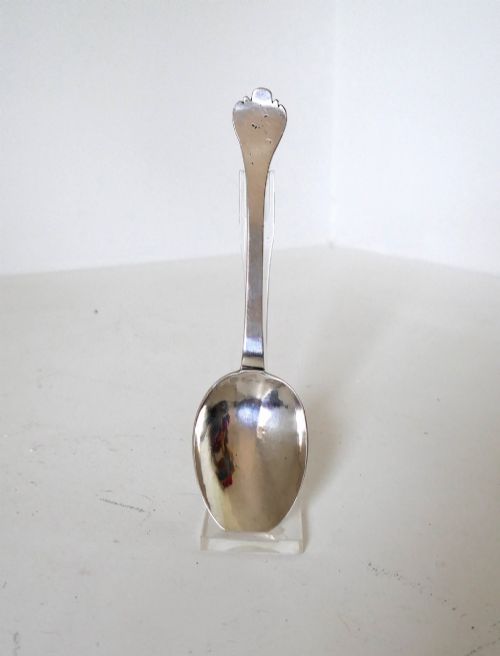
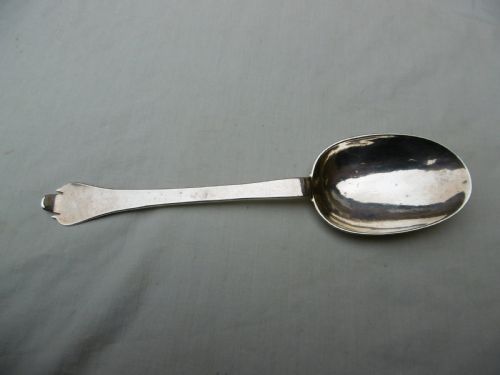
The most frequently encountered form among the current selection is the silver trefid spoon, alongside other flatware items such as forks and seal top spoons. These functional objects reflect the domestic habits of the seventeenth century in tangible form.
Beyond flatware, the broader record encompasses boxes, book bindings, desk blotters, chalice cups, snuffers, bodkins, and textile panels with silver mounts. The variety stretches from personal items to decorative desk accessories of the period.
Assessing quality and period integrity
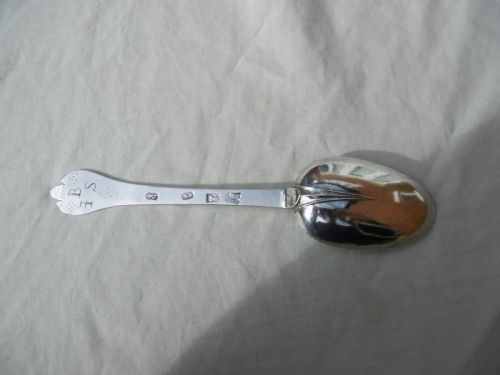
Quality in these items rests upon the clarity of contemporary maker marks, town marks, and date letters that anchor the piece in its original historical moment. Pieces produced by recorded makers carry greater documentary weight than unmarked or later nineteenth-century copies.
The crispness of hand-engraving and the structural integrity of thin silver elements dictate the overall standard of preservation. Items retaining their original accompanying elements, such as fitted shagreen cases, represent a more complete survival of the maker's intent.
Retail Price Guide 2026
Typical UK retail prices for 17th century silver, calculated from the Sellingantiques database of over a million retail prices indexed since 2003. This retail price guide relies exclusively on Sellingantiques data; no external sources or auction records are used, so the figures do not describe the wider market.
A seventeenth-century silver knife and fork set survives securely inside its original sharkskin shagreen case.
Thomas Issoa·Daniel Cary·John King·Peter Webb
The 17th Century Silver Glossary
- Trefid spoon
- An antique spoon featuring a tripartite shaped terminal at the top of the handle, popular during the late seventeenth century. This form typically displays flat-backed stems and rattail attachment beneath the bowl.
- Seal top spoon
- A flatware piece featuring a small solid seal or bust-like terminal at the end of the handle, common in the Tudor and early seventeenth-century periods. These spoons often doubled as personal signets.
- Bodkin
- A large, blunt needle utilised in the seventeenth century for threading ribbon or cord through garments. They are frequently fashioned from solid silver with specialised piercing.
- Porringer
- A small two-handled bowl used for broths and porridges during the seventeenth century. Surviving examples demonstrate early domestic holloware forms.
- Shagreen
- Undressed leather prepared from the skin of a shark or ray, presenting a characteristic granular texture. It was frequently utilised for protective knife and fork cases in the period.
Frequently Asked Questions
How do I identify a real seventeenth-century spoon?
Examine the piece for period hallmarks, including maker's marks, date letters, and town marks appropriate to the era. The form of the trefid terminal and the presence of a rattail stem further assist in period identification.
Compare the weight, hand-finished tool marks, and silver patination against documented examples from the same decade.
What is a trefid spoon used for?
A trefid spoon served as a dining implement during the latter half of the seventeenth century when personal flatware was carried by individuals. Its distinctive notched handle shape sits comfortably in the hand.
These pieces were standard dining table accessories before the evolution of modern flatware place settings.
How should I care for antique silver?
Protect antique silver by avoiding aggressive polishing that removes historical engraving and thin surface layers. Store items in stable environments away from excessive humidity to preserve both the silver and any associated organic materials.
Gentle cleaning with appropriate conservation methods maintains the natural patination built up over centuries.
Are nineteenth-century copies considered authentic antiques?
Nineteenth-century copies are period objects in their own right, dating to the Victorian era rather than the seventeenth century. They reflect the nineteenth-century revivalist interest in earlier Stuart and Restoration styles.
Check the hallmarks carefully to distinguish a seventeenth-century original from a later commemorative piece.