



Silver Trefid Spoon
These silver trefid spoon examples are early flatware pieces defined by their distinct trifid terminals, prized for Charles II and William and Mary origins.
What silver trefid spoon pieces are
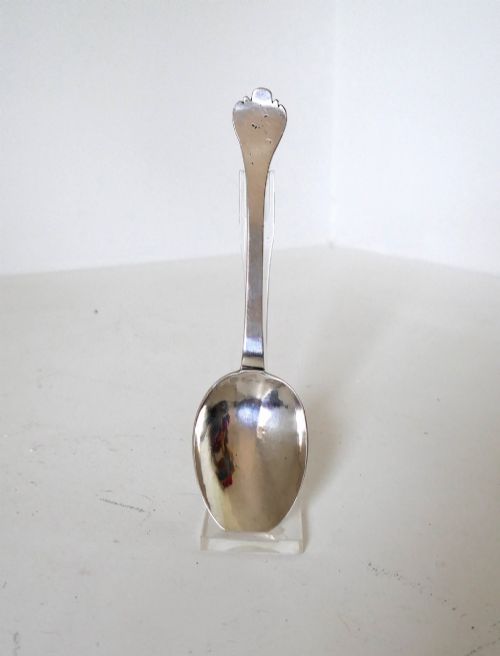
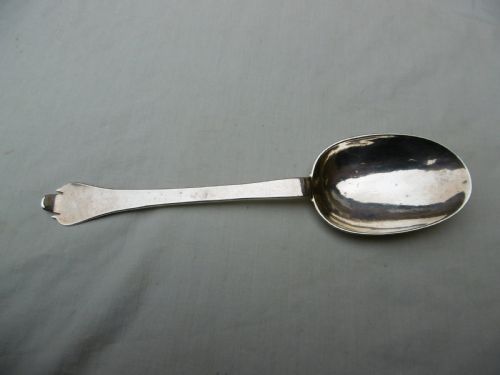
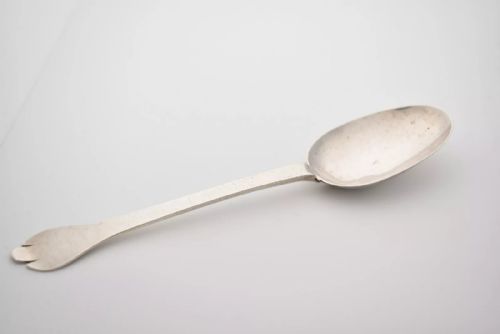
A silver trefid spoon represents a defining form of late seventeenth-century flatware, featuring a flat, notched terminal that evolved directly from the earlier slip-top and Puritan styles. The seventeenth-century examples form the core of historical interest, though later revivals from the Victorian, Edwardian, and twentieth-century periods also appear.
Most pieces encountered on this page belong to the seventeenth century, specifically associated with the Restoration, Charles II, and William and Mary eras. These early flatware and cutlery items often feature characteristic rat tail drops beneath the bowl, connecting the stem to the underside.
Regional English assay offices and London makers feature prominently across the available flatware items. Collectors also encounter matched pairs and cased serving sets from later decades alongside the authentic seventeenth-century artefacts.
How they were made
Makers shaped these items from sterling silver and Britannia silver, hammering and cutting the metal to form the distinct flat, three-lobed terminal. The handles frequently display hammered rat tail attachments reinforcing the bowl junction.
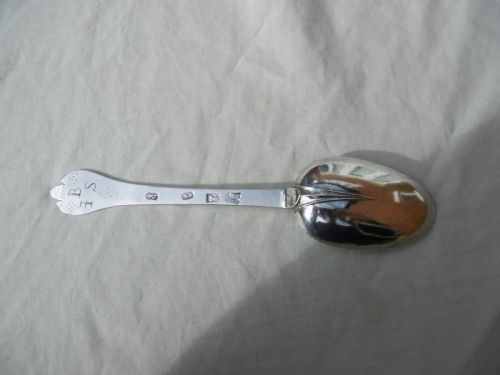
Early silversmiths punched maker marks and town marks directly onto the stem or reverse of the handle. Hand-engraved initials and dates sometimes appear on the terminal face, applied by contemporary owners.
Some seventeenth-century owners engraved their initials onto the flat terminal, inadvertently leaving a tiny family puzzle for modern collectors to solve.
What varies in quality
Quality rests in the crispness of the terminal lobes and the preservation of the original rat tail moulding on the bowl reverse. Heavy polishing over centuries can soften these defining junctions and thin the metal of the bowl.
The clarity of the maker marks and hallmarks dictates historical significance. Pieces retaining legible town marks and maker ciphers offer clearer provenance than those with worn stamps.
John King·Peter Webb·Eli Bilton·Robert Stebbings·Jackson and Fullerton
The Silver Trefid Spoon Glossary
- Trefid
- A flat, three-lobed terminal shape characteristic of late seventeenth-century spoon handles. This design directly preceded the later Hanoverian pattern.
- Rat tail
- A tapering ridge of metal extending down the back of the bowl to strengthen the handle junction. This feature appears commonly on seventeenth-century and revival serving spoons.
- Britannia silver
- A higher standard of silver alloy introduced by statute, containing a specific high proportion of pure silver. Items bearing this standard often date from the late seventeenth or early eighteenth centuries.
- Restoration
- The historical period following the return of the monarchy, spanning the reign of Charles II. Many early flatware items date from this stylistic era.
- Assay office
- An official body responsible for testing the purity of precious metals and stamping items with appropriate hallmarks. Regional offices included Exeter, Newcastle, and York alongside London.
Frequently Asked Questions
What is a silver trefid spoon?
A silver trefid spoon is a piece of historical flatware featuring a flattened, three-lobed terminal end. The form emerged in England during the reign of Charles II.
These utensils replaced earlier rounded stems and served fashionable dining tables before the introduction of the Hanoverian style. Surviving examples include both individual dining spoons and larger serving pieces.
How old are these spoons typically?
The earliest examples date from the seventeenth century, specifically the Restoration and William and Mary periods. These pieces often show maker marks and London or provincial hallmarks.
Later revival pieces also exist, originating from Victorian, Edwardian, and twentieth-century workshops. These later iterations emulate the seventeenth-century form for serving use or presentation.
What is a rat tail on a spoon?
A rat tail is a tapering ridge of silver extending from the stem down the back of the spoon bowl. It provides structural reinforcement to the joint.
This technique appears frequently on seventeenth-century trefid spoons and subsequent revival flatware. Its presence contributes to the traditional aesthetic of early dining silver.
How do I care for antique silver?
Antique silver requires gentle handling and minimal cleaning to preserve original surface characteristics and maker marks. Excessive polishing wears down engraved details and soft metal edges.
Store pieces in dry environments away from direct sulfur sources to prevent tarnishing. Cased sets should remain in their fitted boxes when not displayed.