




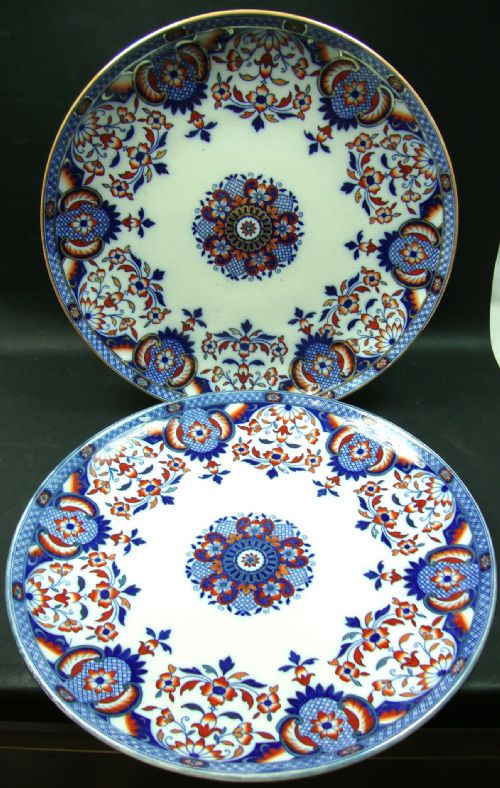


Porcelain Imari Serving Charger
These porcelain imari serving chargers bring bold palettes and intricate hand-painted detail to a table or wall.
Porcelain Imari Serving Charger
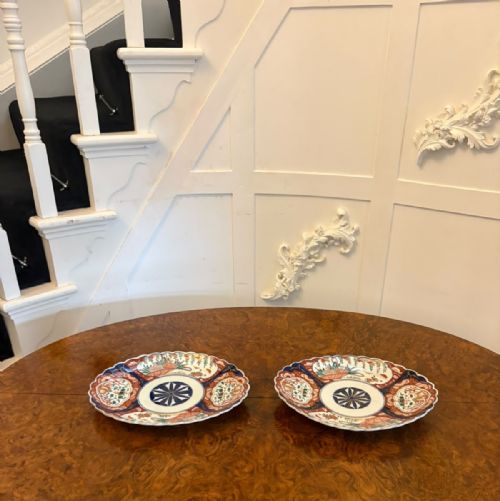
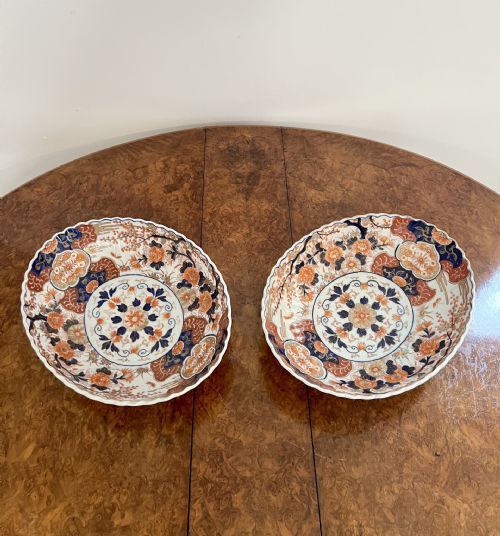
A porcelain imari serving charger is a wide plate or shallow bowl designed for display or presentation, characterised by distinct Japanese or Chinese export styles. When you search for a porcelain imari serving charger, you encounter pieces primarily from the nineteenth century and the Meiji period, alongside a Victorian ceramic interpretation.
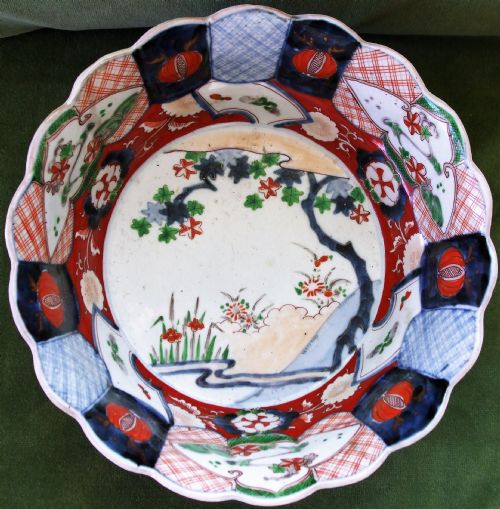
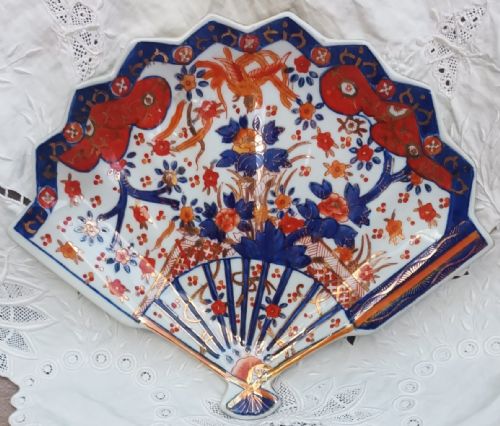
The forms span round chargers, oval dishes, square plates, and scalloped bowls. These items originate predominantly from Japanese Arita workshops and Meiji makers, with occasional Chinese export examples.
The dominant visual language relies on hand-painted floral and bird motifs executed in rich colours. Most examples on this page date from around nineteen hundred or the broader Victorian era.
Materials and construction
These pieces are formed from hard-paste porcelain or ceramic bodies, shaped into chargers, plates, and bowls. The makers apply underglaze cobalt blue before the initial firing to establish the deep blue foundation of the design.
Overglaze enamels in red, green, and other colours are then added by hand, frequently complemented by gold leaf or gilding. A final glaze seals the pigments, creating a glossy protective surface over the hand-painted floral and bird designs.
Several birds painted on these chargers have stared across dining rooms since the Victorian era without once updating their plumage.
Assessing quality
Quality rests in the precision and density of the hand-painted brushwork across the surface. Superior examples display crisp definition in the floral and bird motifs, with well-controlled cobalt underglaze and carefully applied gold leaf.
The crispness of the porcelain moulding, particularly on scalloped edges and square plates, dictates the refinement of the piece. Heavier, more deeply potted chargers demonstrate greater substance and durability.
The Porcelain Imari Serving Charger Glossary
- Imari
- A style of ceramic decoration originating in Japan, defined by a palette of cobalt blue and iron red, frequently accented with gold. This aesthetic was later emulated by Chinese export kilns and European factories.
- Arita
- The Japanese town and production centre renowned for creating the porcelain base wares used in Imari pieces. Arita ware forms the backbone of traditional Japanese export ceramics.
- Meiji Period
- The era in Japanese history spanning from eighteen sixty-eight to nineteen twelve, noted for prolific production of decorative arts for international markets. Meiji pieces often display high technical proficiency in hand painting.
- Cobalt Underglaze
- A blue pigment applied to the raw porcelain body before glazing and firing, capable of withstanding high kiln temperatures. It provides the deep, permanent blue foundation characteristic of imari decoration.
- Gilding
- The application of gold leaf or gold paint to highlight specific details of a design. On these chargers, gilding accents the enamelled patterns and borders.
Porcelain Imari Serving Charger: Frequently Asked Questions
What is an imari charger?
An imari charger is a large decorative plate featuring the traditional Japanese palette of cobalt blue, iron red, and gold. These pieces were made for presentation and display rather than daily dining.
They appear in round, square, and scalloped forms with hand-painted floral and bird designs.
How do I date a porcelain charger?
Dating relies on stylistic markers from the Meiji period, nineteenth-century production methods, and occasional factory marks. Japanese export pieces often align with late nineteenth or early twentieth-century manufacturing standards.
British ceramic interpretations carry specific date codes, such as nineteenth-century registry marks.
Were these chargers used for food?
Most chargers served primarily as decorative table centrepieces or wall displays due to their large size and delicate overglaze enamels. Some sturdy serving dishes handled food presentation in formal settings.
Hand-painted gold leaf and enamel details advise careful handling and gentle cleaning.
Can I hang a porcelain charger on the wall?
Chargers are frequently displayed on walls using appropriate wire plate hangers that distribute the weight evenly across the rim. Ensure the hanging hardware securely supports the substantial weight of nineteenth-century porcelain.
Placement should avoid areas of direct sunlight to preserve the vibrant overglaze enamels.