





Polychrome Satsuma Ware
Polychrome satsuma ware brings richly decorated Japanese ceramics into your home, prized for their intricate enamel and gold leaf detailing.
Polychrome Satsuma Ware
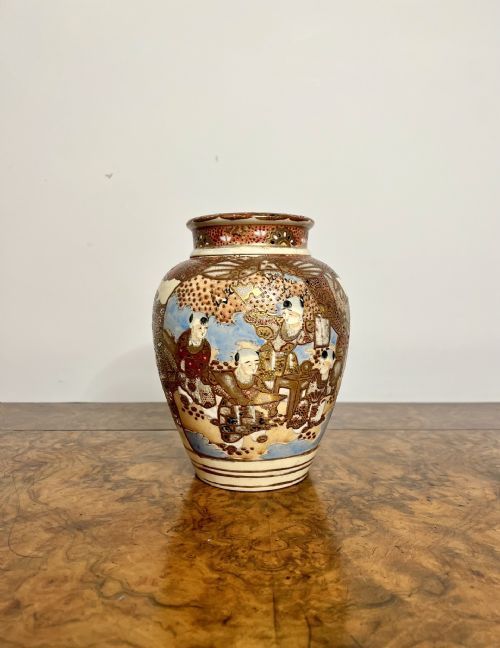
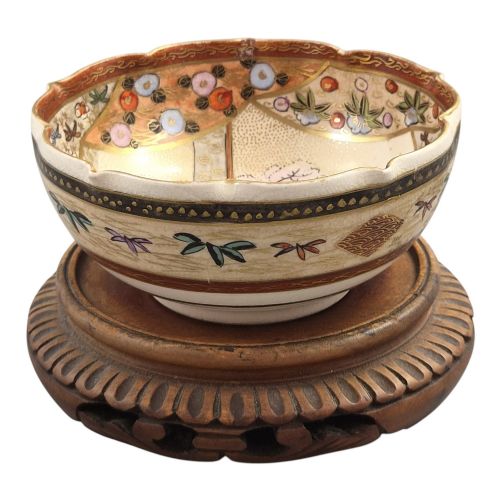
When you search for polychrome satsuma ware, you encounter finely decorated earthenware vessels and figures originating from Japan. The selection centres heavily on pieces from the Meiji period, alongside Victorian and Edwardian era examples.
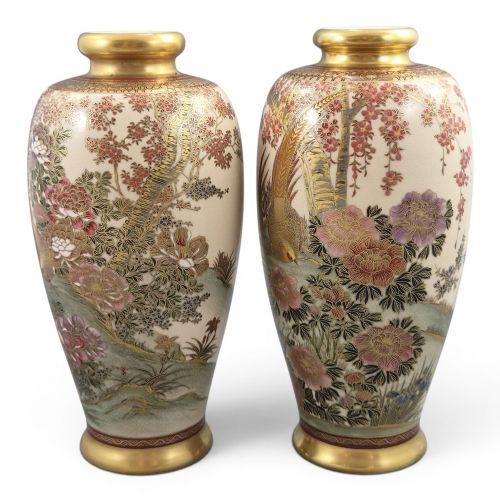
You will find forms ranging from vases and ginger jars to decorative plates, bowls, okimono figurines, and table lamps. These items showcase detailed hand-painted scenes featuring figures, flowers, and traditional motifs.
The objects stem from production centres such as Kyoto and Kobe, capturing the detailed craftsmanship of late nineteenth and early twentieth century Japanese ceramic artists.
How they were made
Makers utilised earthenware bodies covered in a characteristic creamy, crackle-glazed finish. This porous clay foundation served as the canvas for elaborate surface decoration.
Artisans applied dense polychrome enamel paints alongside generous amounts of gold leaf and gilt work. This combination created the heavily ornamented textures typical of these decorative pieces.
Polychrome Satsuma Ware Retail Price Guide 2026
Typical asking prices for polychrome satsuma ware among the pieces listed under this phrase on Sellingantiques today, from the lower quarter to the upper quarter. They describe what is for sale here now, not the wider market.
Listings feature earthenware vessels, enamel painting, and gold leaf from the nineteenth century through the early twentieth century.
What varies in quality
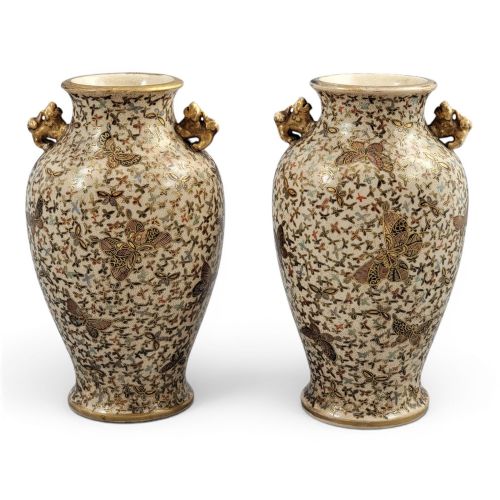
The distinction between standard items and the finest work lies in the precision and density of the brushwork. Superior examples display exceptionally fine facial expressions on figures and meticulous execution of repeating patterns like thousand butterflies or millefleur.
The application of gold gilt and enamel relief separates basic production from exhibition quality pieces. Master workshops employed skilled artists whose signed works demonstrate superior spatial composition and depth.
Manpei·Kinzan·Yamashu·Shuzan·Yasuda·Hododa·Shizan·Meizan·Kizan
The Polychrome Satsuma Ware Glossary
- Okimono
- A Japanese standalone decorative figurine designed for display in an interior setting.
- Koro
- A traditional Japanese incense burner, often featuring a pierced cover and standing on small feet.
- Mon
- A Japanese heraldic badge or crest used to identify families, clans, or imperial lineage.
- Millefleur
- A decorative pattern densely packed with a multitude of small painted flowers.
- Meiji Period
- The era in Japanese history spanning from 1868 to 1912, noted for a surge in export arts.
Polychrome Satsuma Ware: Frequently Asked Questions
What is satsuma ware?
Satsuma ware is a type of Japanese earthenware originating from Satsuma Province, though much of the finest export work was produced in Kyoto and other urban centres.
It is easily recognised by its ivory-coloured, crackled glaze and elaborate polychrome and gilt decoration.
How do I identify Meiji period pieces?
Meiji period items date from between 1868 and 1912, corresponding to the reign of the Meiji Emperor.
Many of these pieces bear artist signatures or workshop marks on the base and reflect the peak of intricate export craftsmanship.
Were these items meant for daily use?
Most surviving polychrome satsuma pieces were created primarily for export and decorative display in Western drawing rooms rather than practical dining use.
Vases, okimono figures, and cabinet plates served as ornamental statements of wealth and exotic taste.
Why does the glaze have fine cracks?
The crackled texture, known as kannyu, is an intentional characteristic of the soft earthenware glaze.
As the fired ceramic cools, the glaze contracts at a different rate from the clay body, creating this network of minute decorative lines.