



Vintage Japanese Earthenware
Vintage japanese earthenware brings rich hand-painted detail and storied ceramic traditions directly into your home.
Vintage Japanese Earthenware
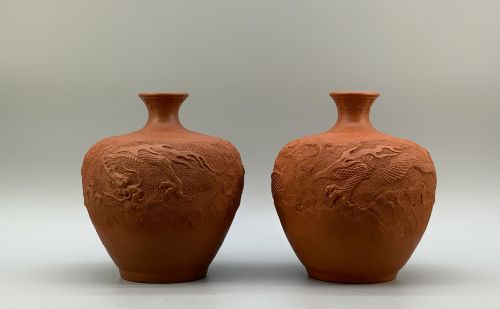
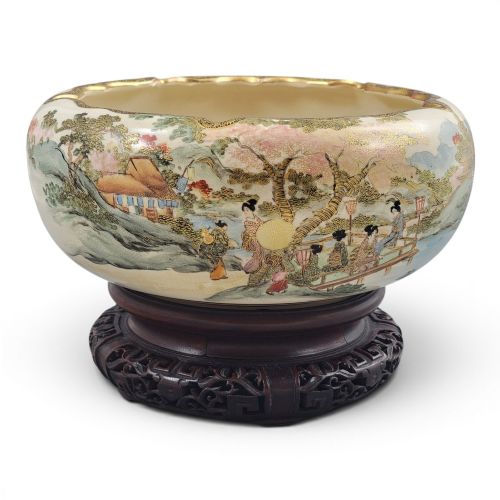
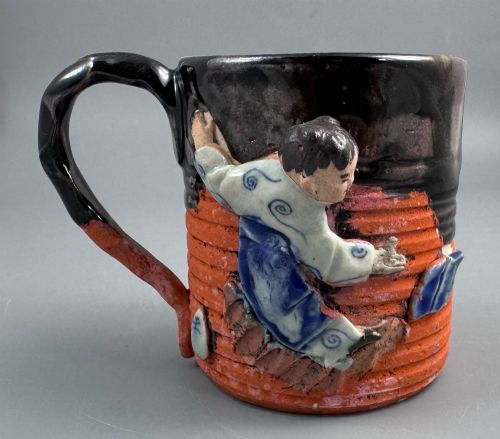
When you search for vintage japanese earthenware, you encounter a diverse array of decorative vessels spanning the late nineteenth century through the early showa period. These items encompass intricately painted Satsuma dishes, bowls, and vases alongside red clay Tokoname pieces and Sumida Gawa wares.
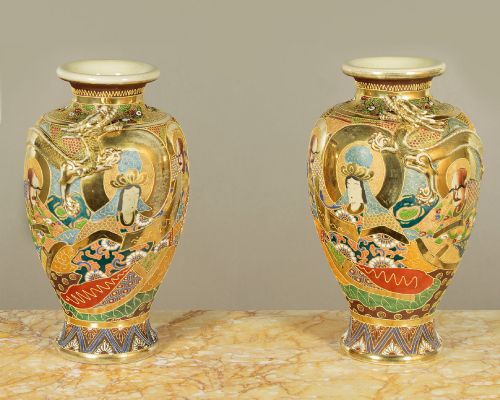
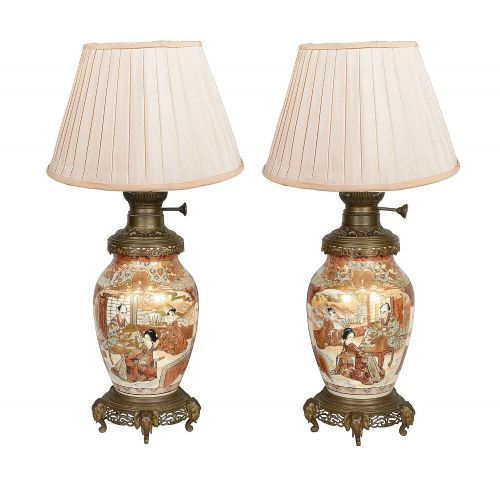
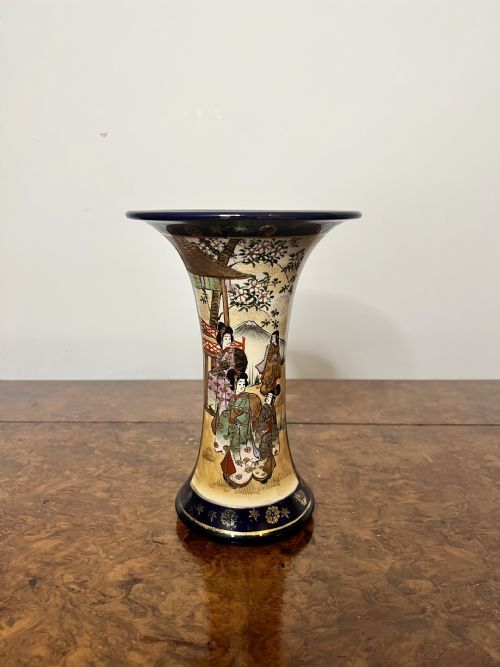
The objects on this page predominantly feature Satsuma ware from the Meiji and Taisho eras, characterised by finely crazed glaze and elaborate figural or landscape scenes. You will also find table lamps, tea caddies, decorative plates, and larger jardinieres made from terracotta, stoneware, and earthenware.
Originating from major ceramic centres like Kyoto and Tokyo, these pieces reflect distinct regional techniques and traditional Japanese artistic motifs. Makers such as Koshida, Shizan, Chosei, Hakusan, Tokyo Taizan, and Kinkozan frequently appear among the finer items.
What distinguishes finer examples
The precision and density of the hand-painted enamel work separate standard decorative items from master-level pieces. Superior objects display meticulous brushwork in gold leaf depicting complex figural processions, battle scenes, or detailed botanical gardens.
Signatures by renowned Meiji period masters and prestigious makers significantly elevate an item's standing. The clarity of the original ceramic form, whether a monumental bowl or a miniature vase, also dictates the overall calibre.
Object forms range from miniature vases and tea caddies to monumental bowls, table lamps, and architectural roof ornaments.
Koshida·Shizan·Kōko·Chosei·Hakusan·Tokyo Taizan·Kinkozan·Makuzu Kozan II
The Vintage Japanese Earthenware Glossary
- Satsuma
- A type of Japanese earthenware featuring a pale, ivory-coloured crackle glaze that serves as a canvas for elaborate enamel and gilt decoration.
- Meiji Period
- The era in Japanese history spanning from 1868 to 1912, noted for a flourishing of decorative arts destined for Western export markets.
- Moriage
- A decorative ceramic technique using slip to build up raised dots or lines on the surface before glazing and firing.
- Mon
- A traditional Japanese emblem or badge used to identify families, clans, or governmental organisations, often seen on high-end Satsuma pieces.
- Tokoname
- A regional Japanese ceramic tradition famous for unglazed or red clay utility wares and sculptural vessels.
Vintage Japanese Earthenware: Frequently Asked Questions
What is Satsuma ware?
Satsuma ware is a distinct style of Japanese earthenware characterised by a warm, ivory-coloured body covered in a finely crackled glaze. Artisans then decorate these surfaces by hand using colourful enamels and rich gold leaf.
Originally produced in Kagoshima prefecture, production later expanded to major artistic hubs like Kyoto and Tokyo. These pieces were heavily created for the export market during the late nineteenth and early twentieth centuries.
How do I identify Meiji period pieces?
Meiji period ceramics generally date between 1868 and 1912, a time when Japanese craftsmanship gained immense popularity in the West. Look for intricate figural processions, samurai battle scenes, and dense floral patterns.
Many finer items from this era feature artist signatures or workshop seals painted on the underside. The presence of delicate gold leaf work and refined miniature painting also points to this golden age of production.
Were these items meant for daily use?
Most of the decorative bowls, miniature vases, and large display vessels were created primarily for ornamental display rather than practical utility. Their delicate enamel surfaces and extensive gold leaf decoration meant they were treasured as art objects.
Items such as tea jars, ewers, and ceramic mugs had more functional origins but still carried high aesthetic value. Today, collectors typically display them away from heavy everyday handling to preserve their antique finishes.
How should I care for antique earthenware?
Keep your vintage Japanese ceramics out of direct sunlight to prevent the overglaze enamels and gold leaf from fading over time. Dust them gently with a soft, dry cloth rather than using liquid cleaners.
Because earthenware and terracotta are porous materials with crackled glazes, avoid submerging them in water. If a piece functions as a table lamp or vase, use a removable inner liner to protect the antique body from moisture.