








Gilt Japanese Pottery
When you handle gilt japanese pottery, you find dense networks of gold leaf and enamel resting on earthenware and porcelain.
Gilt Japanese Pottery
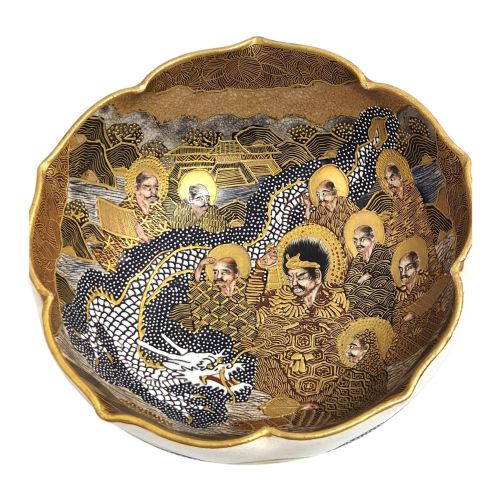
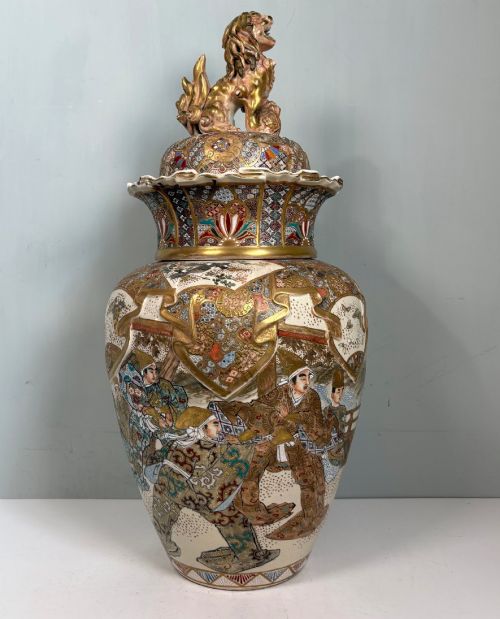
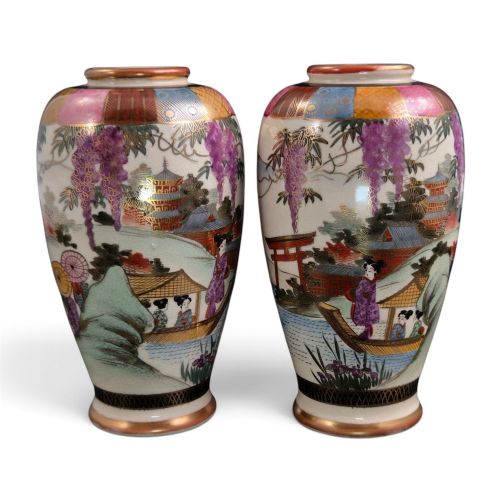
Gilt japanese pottery centres on Satsuma and Kutani wares produced during the nineteenth and early twentieth centuries, spanning the Meiji, Taisho, and early Showa periods. The forms on this page include vases, koro incense burners, okimono figurines, and decorative bowls.
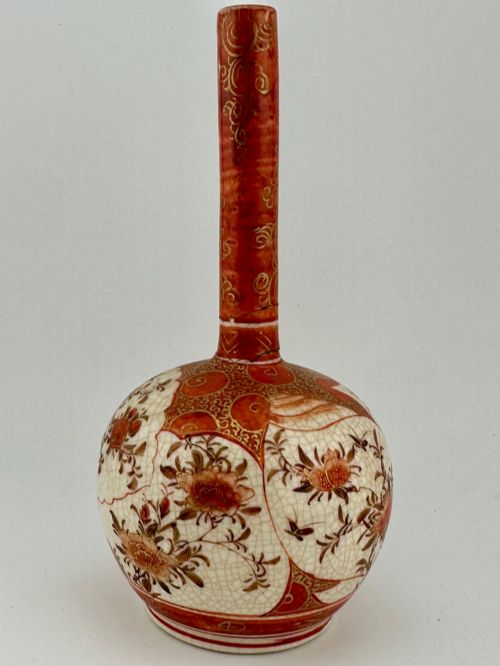
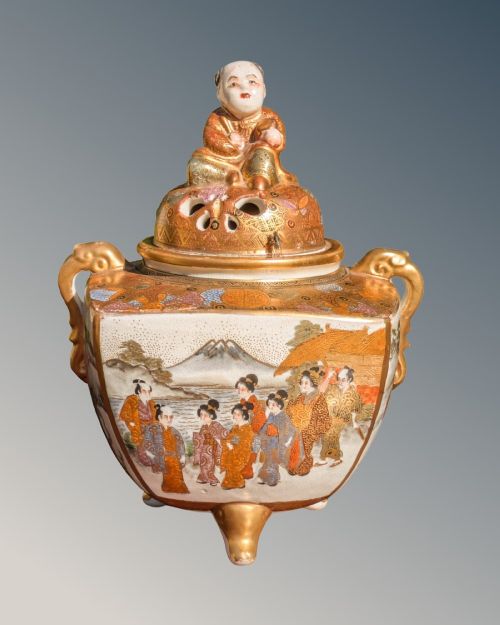
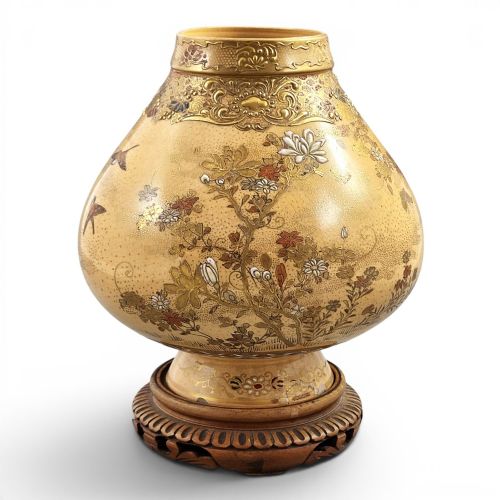
Satsuma earthenware forms the majority of the selection, carrying intricate painted scenes of court figures, flora, and fauna alongside raised enamel work known as moriage. You also encounter Kutani porcelain plates and vases decorated in the distinct Imari palette of iron red, cobalt blue, and gold.
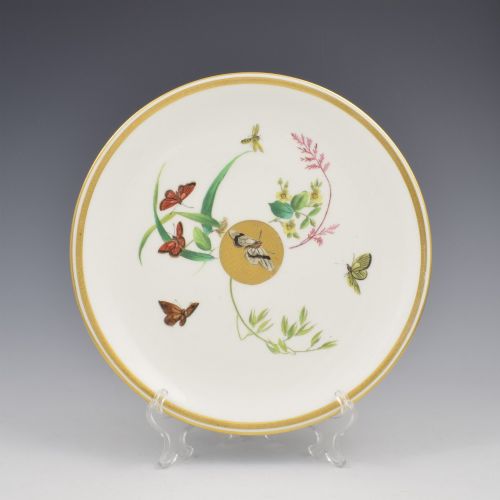
Makers and workshops such as Kinkozan, Chosei, and Makuzu Kozan signed many of these ceramic pieces, while European potteries like Minton produced parallel works in a Japanese aesthetic style.
Materials and techniques
Potters shaped the bodies from earthenware and porcelain, applying fine crackle glazes to Satsuma wares before painting them with mineral pigments. Artisans then added gold leaf, gilding, and thick enamel to highlight figures, garments, and natural motifs.
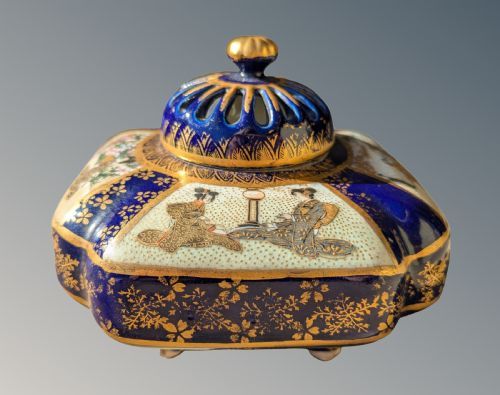
Workshops utilised specialised brushes to apply meticulous gold detailing over cobalt blue grounds, imperial crests, and dimensional moriage ornamentation. Wood elements occasionally appear as stands or storage boxes accompanying the ceramic vessels.
Gilt Japanese Pottery Retail Price Guide 2026
Typical asking prices for gilt japanese pottery among the pieces listed under this phrase on Sellingantiques today, from the lower quarter to the upper quarter. They describe what is for sale here now, not the wider market.
Makers represented include prominent Kyoto and Kobe workshops alongside European adaptations created during the Aesthetic movement.
What varies in quality
The precision of the brushwork and the density of the gilding dictate the standing of individual pieces, separating standard export wares from imperial exhibition items. Workshops like Kinkozan achieved a level of fineness in miniature detail that lesser kilns could not replicate.
The complexity of the subject matter, from simple floral arrangements to elaborate figural processions involving multiple arhats or court scenes, defines the ambition of the maker and the success of the finished ceramic.
Maruni Kobe·Kizan·Kinkozan·Manpei Kobe·Kinkozan Kyoto·Toshozan·Makuzu Kozan II·Chosei·Nanzan·Seiko-en Chokei·Nikko
The Gilt Japanese Pottery Glossary
- Satsuma
- A type of earthenware originating in Satsuma Province, traditionally characterised by a cream-coloured crackle glaze and elaborate polychrome and gilt decoration.
- Kutani
- Japanese porcelain and pottery associated with Kutani village, known for bold colour palettes including deep greens, blues, purples, and extensive gold.
- Koro
- A traditional Japanese incense burner, typically fitted with a pierced ceramic or metal lid and supported on three or more feet.
- Moriage
- A decorative ceramic technique using piped clay to create raised relief patterns beneath glazes and gilding.
- Okimono
- A small Japanese freestanding carved or modelled ornament intended for display in a household alcove or on a shelf.
Gilt Japanese Pottery: Frequently Asked Questions
What is Satsuma ware?
Satsuma ware is a distinct style of Japanese earthenware featuring a fine crackle glaze that receives hand-painted enamel and gold leaf decoration. Makers often depicted court figures, landscapes, and floral patterns across vessels like vases, bowls, and incense burners.
Most examples found today date from the Meiji period when these ceramics gained immense popularity in Western export markets. The combination of ivory-toned crackled surfaces and dense gilding remains the signature identifier of the type.
How do I identify Meiji period pieces?
Meiji period ceramics typically display detailed signatures or factory marks on the base, often naming specific Kyoto or Satsuma workshops like Kinkozan. The decoration during this era shifted towards highly intricate pictorial scenes executed with exceptional technical precision.
Examine the weight and the fineness of the enamel work, as late nineteenth-century makers pushed the limits of miniature painting and raised moriage relief. Many pieces also retain historical boxes or provenance tied to this specific imperial era.
What is the difference between Satsuma and Kutani?
Satsuma pieces are constructed from earthenware with a characteristic ivory crackle glaze and dense gold leaf ornamentation. Kutani pieces utilise porcelain bodies painted in vibrant mineral colours, frequently employing the Imari palette of iron red and dark blue.
Satsuma leans towards soft earth tones and detailed figural narratives, while Kutani focuses on bold graphic designs and rich geometric borders. Both traditions absorbed Western decorative tastes during the late nineteenth century.
How should I display these ceramics?
Place these vessels in stable indoor environments away from direct sunlight to protect the delicate gold leaf and enamel pigments. Vases, koro, and plates require secure surfaces where accidental bumps cannot dislodge them from display shelves.
Keep the ceramic surfaces clean by dusting them gently with a soft dry brush, avoiding liquid cleaners that might seep into the historical crackle glaze. Allowing adequate space around each piece highlights the intricate painting and gilding.