




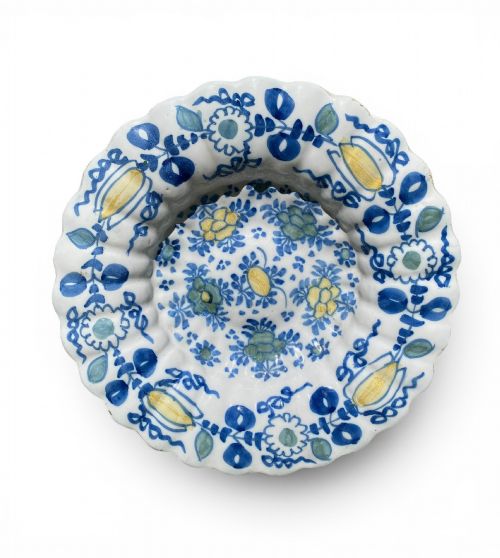
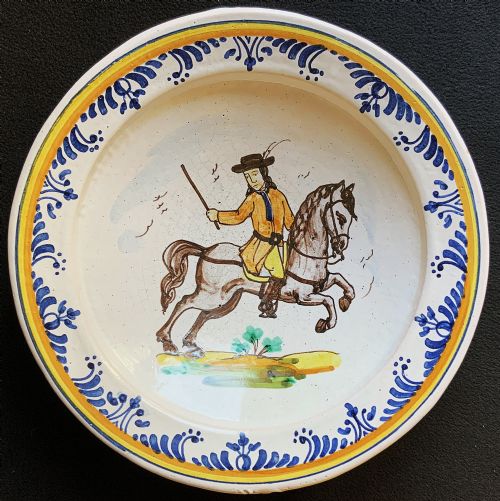


Polychrome Delftware Dishes
Polychrome delftware dishes are tin-glazed earthenware chargers and plates bringing bright hand-painted pigments to early ceramic interiors.
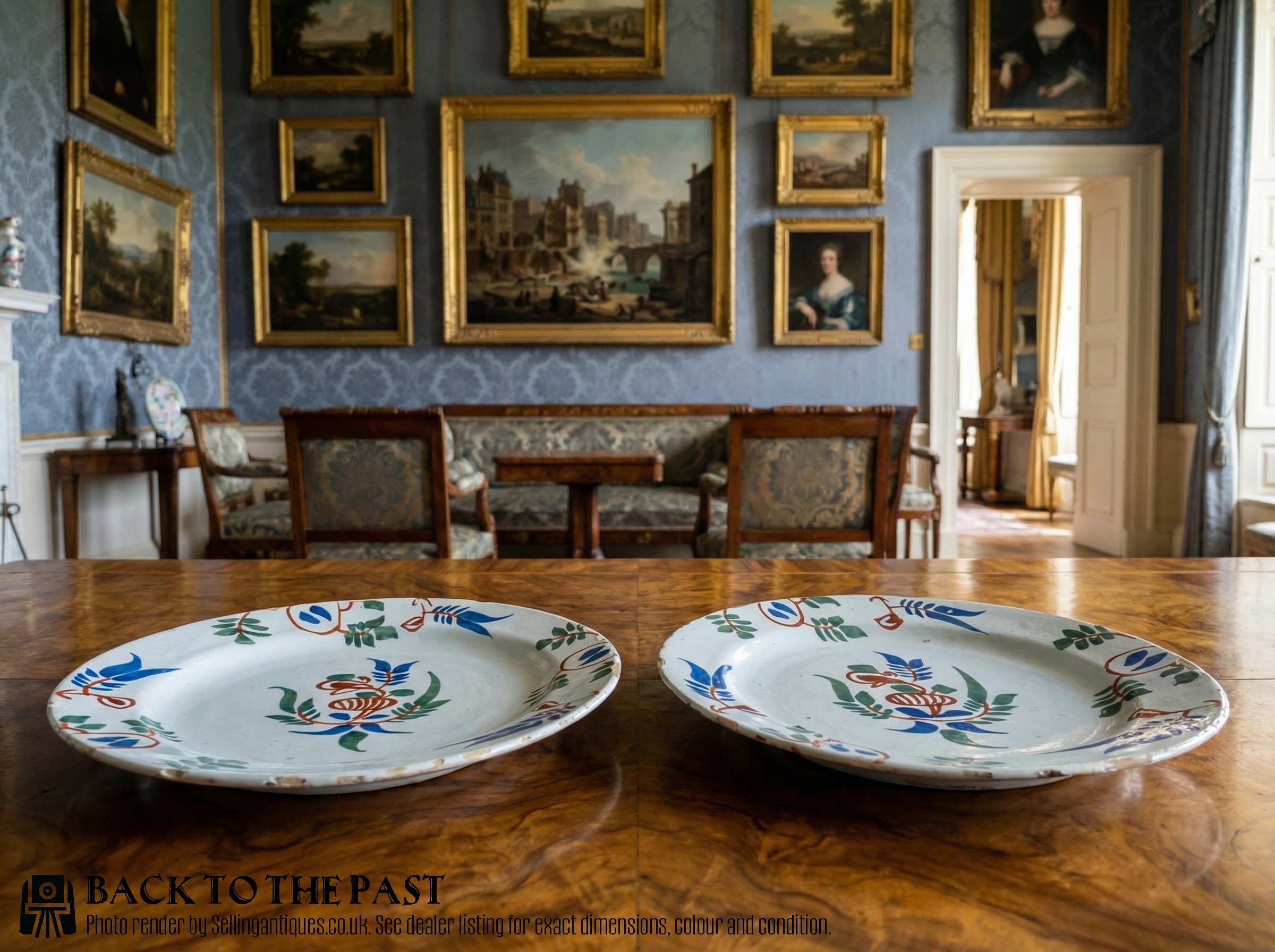
Polychrome Delftware Dishes
Polychrome delftware dishes encompass chargers, serveware and decorative plates produced across the seventeenth and eighteenth centuries in English, Dutch and Spanish workshops. Buyers searching this phrase meet broad decorative plates and chargers bearing hand-painted floral, geometric and Chinoiserie decoration.
The material takes the form of tin-glazed earthenware, ceramic and clay shaped into dishes and lobed chargers. English examples from centres such as Bristol and Lambeth appear alongside Dutch Golden Age and Spanish Catalan pieces.
Forms range from small plates to large chargers and sweetmeat presentiers. The nineteenth-century divide is absent here, keeping focus entirely on seventeenth-century and eighteenth-century production.
How they were made
Makers shaped clay into earthenware bodies before applying an opaque tin glaze that provided a smooth white ground for painting. Pigments were brushed directly onto the unfired tin surface, absorbing into the glaze during the firing process.
Artisans executed hand-painted floral, geometric and Chinoiserie motifs using metallic pigments that yielded varied colours under the final glaze. Potters in English, Dutch and Spanish traditions shaped dishes into round plates, lobed forms and wide chargers.
Polychrome Delftware Dishes Retail Price Guide 2026
Typical asking prices for polychrome delftware dishes among the pieces listed under this phrase on Sellingantiques today, from the lower quarter to the upper quarter. They describe what is for sale here now, not the wider market.
Listings feature tin-glazed earthenware and clay pieces spanning the seventeenth and eighteenth centuries, including Dutch Baroque and Georgian styles.
What varies in quality
The precision and detail of the hand-painted brushwork separate standard production from superior work. Crisp floral motifs, balanced geometric layouts and complex Chinoiserie scenes indicate higher artistic engagement by the painter.
The quality of the tin glaze and the brightness of the polychrome pigments define the visual impact of each dish. Smooth, even glazing and well-preserved pigment depth distinguish the finer chargers and plates.
The Polychrome Delftware Dishes Glossary
- Tin-Glazed Earthenware
- Pottery coated with a white glaze containing tin oxide to create an opaque surface for painting. This material forms the primary body of all listed dishes.
- Charger
- A large ornamental plate typically displayed on walls or sideboards rather than used for dining. These wide vessels often showcase the most elaborate polychrome painting.
- Chinoiserie
- European decorative motifs inspired by Chinese art and export porcelain. Artisans applied these imaginative scenes to English and continental delftware plates.
- Sweetmeat Presentier
- A specialised footed dish or server designed for confectionery and sweet morsels. These pieces combine tin-glazed earthenware construction with raised form.
- Lobed Dish
- A vessel featuring scalloped or indented curving edges along the rim. Dutch seventeenth-century pieces frequently employ this shaped outline.
Polychrome Delftware Dishes: Frequently Asked Questions
How were polychrome delftware dishes used?
Large chargers and decorative dishes served primarily as display items on walls, cabinets and sideboards in wealthy interiors. Smaller plates and sweetmeat presentiers saw occasional use for serving special foodstuffs during formal gatherings.
The tin-glazed surface functioned mainly to carry bright hand-painted pigments rather than to withstand heavy daily dining use. Their survival over centuries reflects their status as valued decorative objects.
How do I distinguish English from Dutch delftware?
English pieces, including those from Bristol and Lambeth, often display characteristic palette choices and floral or Chinoiserie painting styles associated with eighteenth-century workshops. Dutch examples frequently exhibit seventeenth-century forms such as lobed rims and distinct blue and polychrome geometric borders.
Clay bodies and glaze textures also offer clues to origin, though both traditions relied on tin-glazed earthenware. Examining the specific pigment shades and brushwork techniques helps clarify where a dish was made.
Can I hang delft chargers on the wall?
Many chargers possess historic hanging holes or rims suited to secure wire display fixings. Displaying them vertically allows the hand-painted polychrome decoration to be fully appreciated.
Care must be taken to use appropriate hardware that supports the weight of the earthenware body without stressing the tin glaze. Ensure wall fixings are secure before mounting any antique ceramic piece.
How do I care for tin-glazed earthenware?
Keep these dishes away from areas with high moisture and temperature fluctuations to protect the porous earthenware body and tin glaze. Dust gently with a dry, soft cloth rather than using liquid cleaners or immersion.
Display them on stable surfaces or use padded hangers designed for antique plates. Gentle handling preserves the delicate hand-painted pigments for the future.