

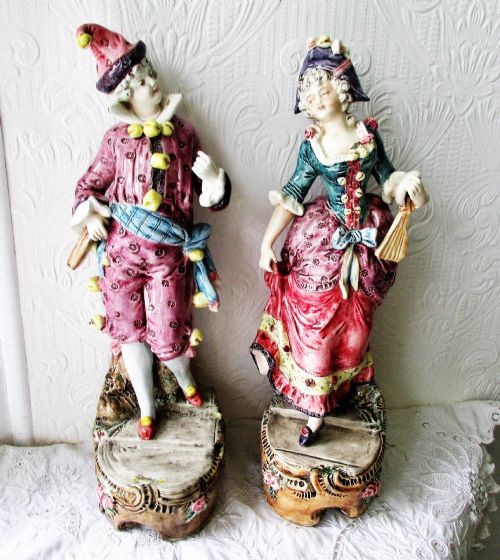
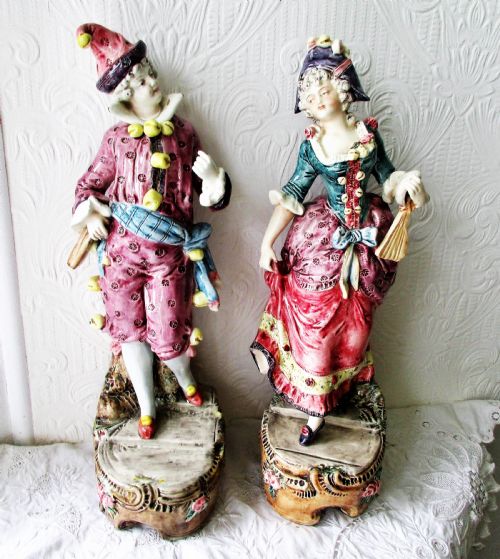
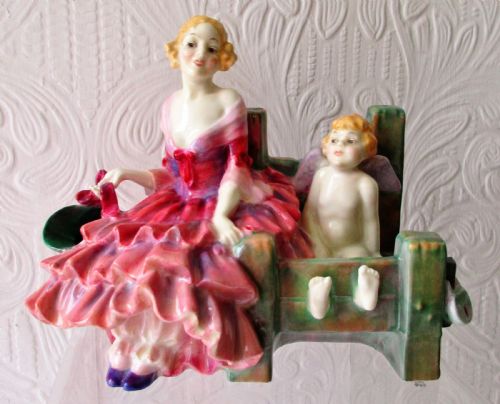
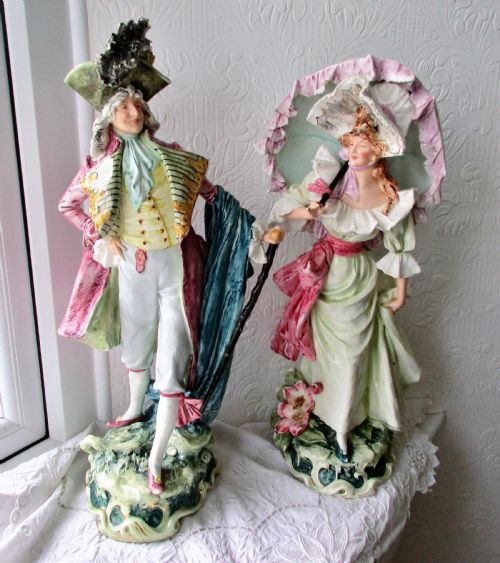


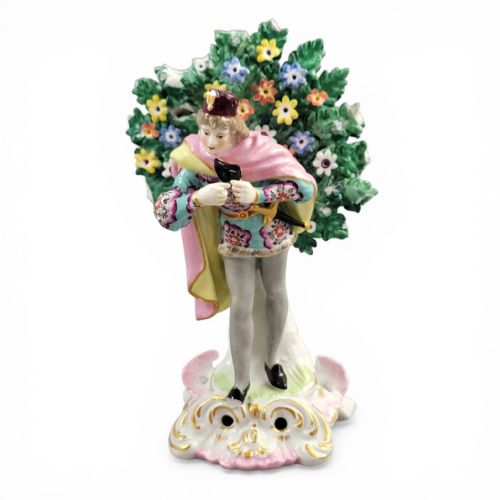


Pink Ceramic Figurines
Pink ceramic figurines span delicate eighteenth-century figures and bold twentieth-century earthenware, bringing character and colour to interiors.
Pink Ceramic Figurines
Pink ceramic figurines encompass porcelain, earthenware, and bone china pieces shaped into human, animal, and allegorical subjects. These items range from Georgian and Victorian figures to Art Nouveau and Art Deco designs.
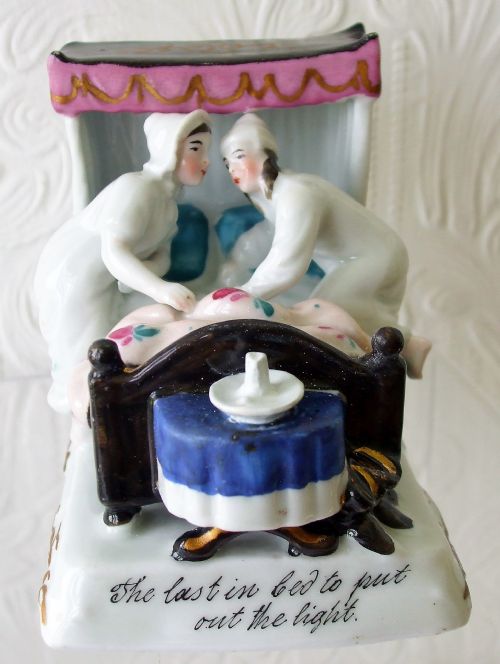
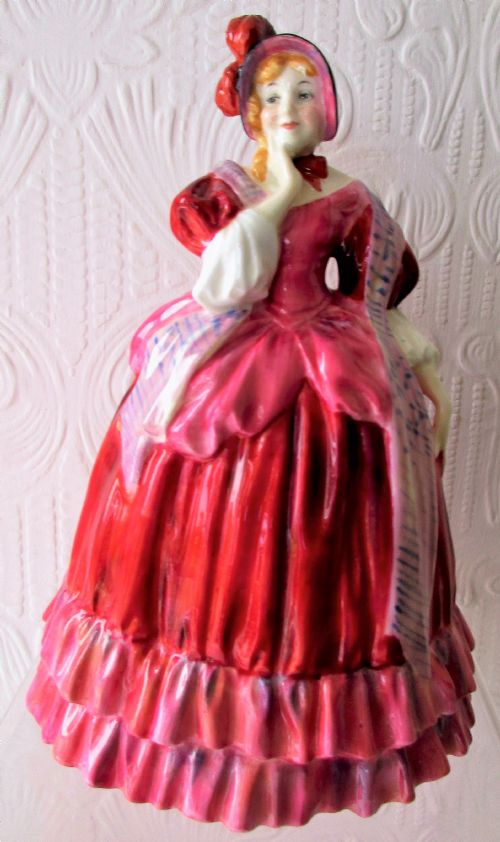
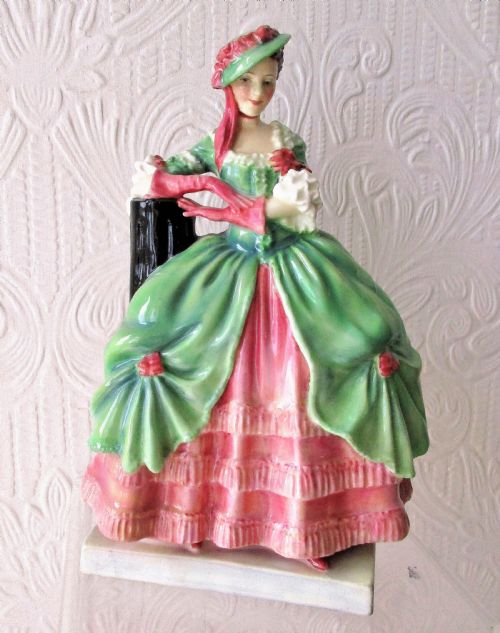
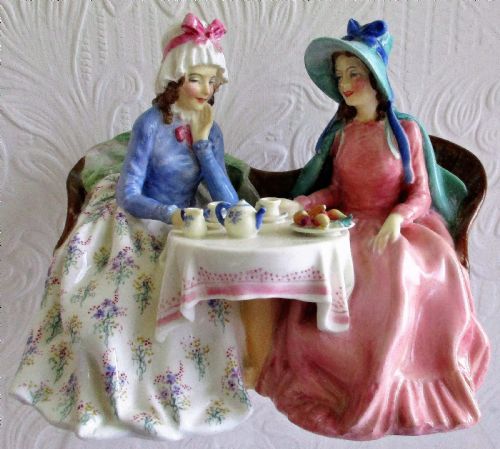
The selection on this page centres on porcelain and earthenware bodies, featuring works from English, French, and German factories. Buyers encounter decorative figures, posy holders, and half dolls produced across the eighteenth, nineteenth, and twentieth centuries.
Materials and Techniques
Maker workshops utilised soft-paste porcelain, bone china, and earthenware, shaping the clay by hand or moulding it in sections. Artisans applied coloured glazes and enamel painting to highlight garments and facial details.
Certain pieces incorporate gold leaf highlights or biscuit porcelain finishes, where the material remains unglazed to reveal the texture of the ceramic body.
Listings feature porcelain, earthenware, and bone china across the nineteenth and twentieth centuries, including works from French, German, and English makers.
Assessing Quality and Execution
Quality rests upon the crispness of the modelling and the precision of the hand-painted enamel work. Superior examples display fine detail in facial expressions, fingers, and drapery folds.
The sophistication of the glaze and the complexity of the figural grouping also distinguish finer output from standard commercial production.
Royal Dux Bohemia·Royal Doulton·Fasold And Stuach
The Pink Ceramic Figurines Glossary
- Biscuit porcelain
- Unfired or unglazed ceramic material fired once to produce a matte, porous finish resembling marble. This technique emphasises sculptural contours.
- Fairing
- Small nineteenth-century ceramic ornaments produced for sale at rural fairs. These domestic scenes often depict humorous everyday narratives.
- Half doll
- A ceramic torso without legs, manufactured during the early twentieth century. They served as decorative covers for tea cosies or powder brushes.
- Posy holder
- A ceramic vessel or figural accessory designed to display small bunches of fresh flowers. They combine sculptural form with a functional container.
- Faience
- Tin-glazed earthenware produced in France and continental Europe. The opaque white glaze accepts painted enamel colours directly.
Pink Ceramic Figurines: Frequently Asked Questions
What periods do these figurines date from?
The objects span from the mid-eighteenth century through the nineteenth century and into the 1930s and 1940s. Early pieces originate from English factories, while later examples include continental European production.
Stylistic shifts trace the transition from Rococo and Georgian forms to Victorian historicism, Art Nouveau, and Art Deco designs.
How were these ceramic figures used?
Historically, figures served as decorative centrepieces on dining tables, mantelpieces, and cabinets. Posy holders integrated floral display with ornamental sculpture.
Certain specialised forms like half dolls functioned as practical vanity covers in domestic settings.
How should I display them at home?
Place figurines on stable surfaces away from heavy foot traffic to protect delicate extremities and painted surfaces. Good lighting enhances the subtle tones of the enamel and glaze.
Keep them out of direct sunlight to preserve the stability of the ceramic body and surface colours over time.
How do I identify different manufacturing styles?
Examine the base for factory marks, impressed numbers, or painted signatures that indicate the origin and period. Stylistic cues such as flowing Art Nouveau hair or geometric Art Deco lines also signal the era.
Material composition, from soft-paste porcelain to heavy earthenware, provides further clues to age and workshop.