
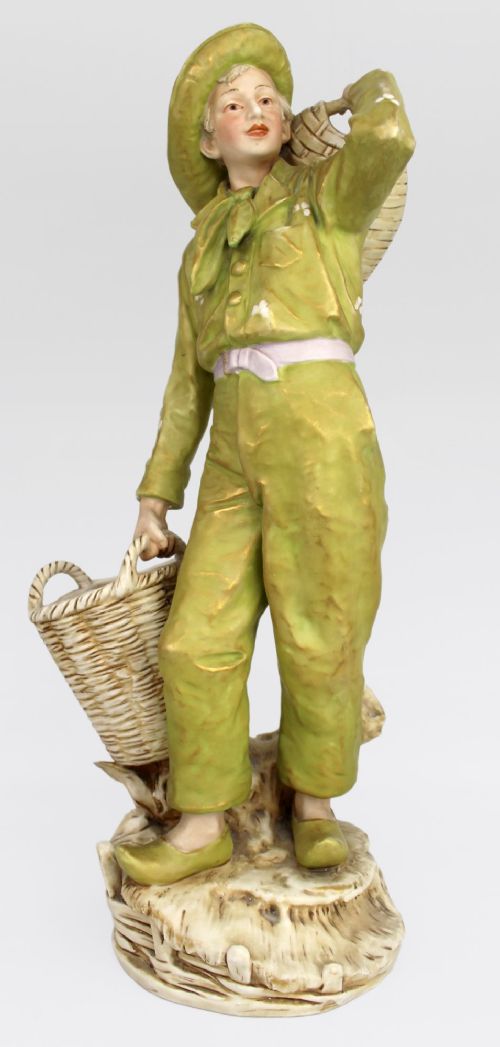


Royal Dux Porcelain Figures
Royal dux porcelain figures bring flamboyant nineteenth and twentieth-century European character to a room through expressive modelling and distinctive tinted glazes.
Royal Dux Porcelain Figures
Royal dux porcelain figures encompass sculptural works produced in Bohemia, ranging from single figures to monumental pairs and centrepieces. When looking for royal dux porcelain figures, a buyer encounters subjects spanning graceful maidens, water carriers, pastoral figures, and animals.
The pieces on this page emerge from periods including the nineteenth century, the Edwardian era, Art Nouveau, and Art Deco. Forms vary from towering figures over forty centimetres tall to intricate groups carrying puppies, kittens, or wicker baskets.
Makers and modellers represented include H. Schubert and Alois Hampel, alongside prototypes and numbered models originating from Bohemia. Collectors find both individual statuettes and matching pairs depicting orientalist themes, bathers, and everyday rural workers.
What varies in quality
Quality rests upon the ambition of the modelling and the crispness of the porcelain detail, particularly in facial expressions, drapery folds, and natural textures. Monumental pieces and early numbered models demonstrate greater sculptural complexity than standard productions.
The application of enamel, paint, and gilding determines visual depth, where precise hand-finishing elevates a piece above simpler tinted versions. Preservation of the fragile biscuit porcelain and delicate extremities also separates superior examples.
Dogs feature prominently in the porcelain menagerie, captured mid-hunt with game or simply sitting patiently beside their youthful companions.
H. Schubert·Alois Hampel·Eichwald
The Royal Dux Porcelain Figures Glossary
- Biscuit porcelain
- Unglazed ceramic material fired once to produce a matte, porous finish resembling marble. This texture highlights fine sculptural details on figures.
- Turn-teplitz
- The Bohemian region where numerous nineteenth-century ceramic and porcelain factories operated. It denotes the geographical and industrial hub of these wares.
- Art Nouveau
- A decorative style characterised by flowing, organic lines and floral motifs. Pieces from this period frequently depict graceful maidens and water nymphs.
- Figurine
- A small carved or moulded statuette representing a human or animal form. These objects serve decorative purposes on mantelpieces and tables.
- Gilt
- A thin layer of gold applied to the surface of porcelain to accent specific details. It adds warmth and contrast to painted glazes.
Royal Dux Porcelain Figures: Frequently Asked Questions
What periods do royal dux porcelain figures cover?
The pieces span from the late nineteenth century through the Edwardian era into the Art Deco period of the nineteen-thirties. Victorian orientalism and Art Nouveau styles heavily influence the earlier designs.
Dates on listings reflect the manufacturing era of the Bohemian factory, showing a transition from ornate nineteenth-century water carriers to stylised nineteen-twenties flapper figures.
How do I identify a royal dux figure?
Look for the distinct sculptural forms, specific numbering systems on the base, and the characteristic combination of tinted glazes and biscuit porcelain. Subjects often include maiden figures, water carriers, and animals.
Modelling quality and signature styles associated with designers like H. Schubert and Alois Hampel also help confirm the origin.
Were these figures made in pairs?
The factory frequently produced matching pairs representing complementary figures, such as fishermen and fisherwomen, gypsies, or eastern water bearers. These matched sets were designed for symmetrical placement.
Single figures also appear regularly, depicting isolated subjects like bather centerpieces or individual animal sculptures.
How should I display large royal dux figures?
Monumental figures and tall pieces exceeding forty centimetres require sturdy surfaces with adequate height clearance to showcase their sculptural detail. Placing them away from heavy traffic prevents accidental impact.
Pair them on sideboards or mantelpieces where the glazed porcelain and gilt highlights catch natural light.