


Antique Ceramic Musician Statues
These antique ceramic musician statues bring miniature orchestras and soloists into the room, modelled with detailed costumes and instruments.
Antique Ceramic Musician Statues
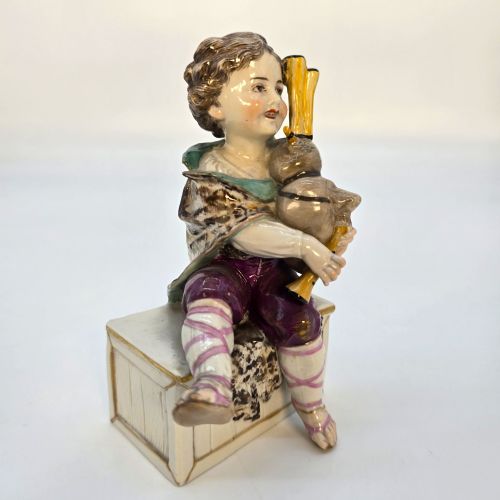
When you search for antique ceramic musician statues, you encounter figures formed as players of instruments, from hurdy-gurdies to drums. The pieces on this page span the nineteenth century, the Edwardian era, and the nineteen-thirties, reflecting diverse regional tastes.
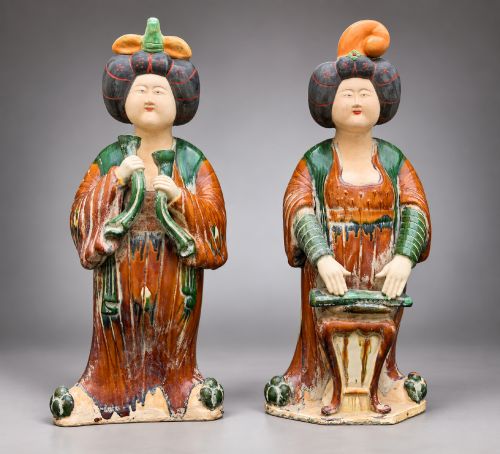
You are most likely to meet porcelain figures and earthenware groups styled after earlier periods like the eighteenth century or executed in the Tang Dynasty style. Makers ranged from major European factories such as Meissen, Royal Worcester, and Derby to continental workshops like Volkstedt and Samson of Paris.
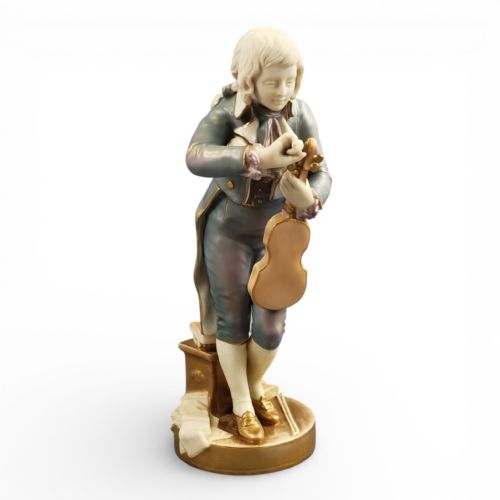
Forms vary from single decorative figurines to large pairs, depicting subjects like Egyptian musicians, gallant players, and Mozart. These sculptures capture performers caught in the act of playing, often finished with elaborate glazing or left as unglazed bisque.
Quality differences in the figures
The standard of modelling determines the distinction at the upper end of the range, where facial expressions and fingers remain sharp and expressive. Finer examples display meticulous hand-painting on the enamel and precise application of gold leaf.
Simpler pieces show softer moulding lines and less defined surface textures on the garments and instruments. The presence of factory marks and named model numbers or artist signatures separates mass output from superior studio work.
Listings feature periods spanning the nineteenth century, the Edwardian era, and the nineteen-thirties, using materials like terracotta and gold leaf.
Volkstedt Rudolstadt Factory·Royal Worcester·Volkstedt Richard Eckert·James Hadley·Derby porcelain·Meissen Porcelain·Samson Paris·Eichwald Royal Dux·Alois Hampel
The Antique Ceramic Musician Statues Glossary
- Lead glaze
- A glossy coating containing lead oxide applied to earthenware to create a smooth, waterproof surface. It enhances the depth of the underlying colours.
- Enamel
- Opaque glass-like paint applied over the fired glaze and refired to fuse it to the ceramic body. It provides the bright, varied colours on the musicians' garments.
- Gold leaf
- Extremely thin sheets of gold applied to the decorated porcelain for ornamental highlights. It adds a reflective sheen to borders and instrument details.
- Sancai
- A three-colour lead glaze tradition originating in China, often featuring amber, green, and cream tones. It is utilised here on earthenware figures in a Tang Dynasty style.
Antique Ceramic Musician Statues: Frequently Asked Questions
What instruments do the figures hold?
The statues depict musicians holding various instruments, most notably hurdy-gurdies and drums. Other pieces show players with wind or string instruments appropriate to the era of their design.
These depictions range from single soloists to pairs of performers, reflecting both European folk traditions and classical subjects like Mozart.
How were these figures displayed originally?
During the Victorian and Edwardian periods, these ceramic musicians served as decorative ornaments on mantelpieces and side tables. They were often arranged in pairs or as part of larger tabletop display groups.
Owners placed them in drawing rooms to demonstrate an appreciation for music and refined continental craftsmanship.
How do I tell nineteenth-century pieces apart from later ones?
Nineteenth-century figures often rely on hand-painted enamels, detailed modelling, and distinct factory marks pressed or painted into the base. Pieces from the Edwardian period or the nineteen-thirties may show different paste compositions and smoother, mass-produced glaze applications.
Examining the underside for impressed registration numbers or factory stamps helps confirm the specific production era.
Are bisque porcelain figures fragile?
Bisque porcelain has a matte, unglazed surface that lacks the protective glass layer of standard ceramics, making it susceptible to staining from oils and dirt. The delicate fingers, instruments, and protruding parts of the musician figures are also prone to chipping if handled roughly.
Displaying them away from high-traffic areas and dusting them gently with a soft brush preserves their condition.