


Art Nouveau Porcelain Figures
Art nouveau porcelain figures bring sinuous nineteenth and twentieth-century grace to a room through sculpted ceramic forms.
Art Nouveau Porcelain Figures
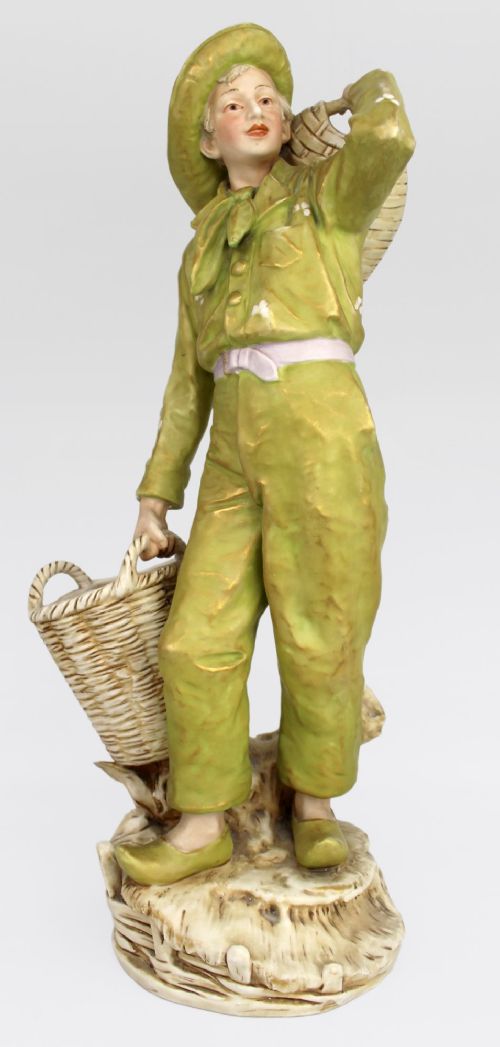
Art nouveau porcelain figures encompass decorative sculptures, figurines, and figural centrepieces shaped during the late nineteenth and early twentieth centuries. These pieces typically portray graceful maidens, water nymphs, balthers, and pastoral figures carrying puppies, kittens, jugs, or wicker baskets.
The version most commonly met on this page is the large-scale Royal Dux Bohemia creation from the Edwardian period or around nineteen ten. These examples often feature modelled women with flowing scarves, spill vases, or pairs of figures standing at ponds.
Alongside human subjects, the selection includes animal representations such as setters and specific figural groups designed in the distinctive flowing style. Origins span across nineteenth-century French studios and Bohemian potteries, capturing the fluid lines characteristic of the era.
How they were made
Makers utilised fine porcelain, ceramic, and biscuit porcelain as the primary foundational materials for shaping these sculptures. Artisans then applied intricate glazes and painted details to accentuate the natural contours of the figures.
Surface ornamentation frequently incorporated gilt, enamel, and delicate gilding to highlight drapery, hair, and accessories. These techniques worked together to achieve the characteristic glossy or matte finishes seen on the ceramics.
Listings feature porcelain, ceramic, and biscuit porcelain shaped into figures, busts, spill vases, and centrepieces from the nineteenth and twentieth centuries.
What varies in quality
Quality rests upon the crispness of the modelling and the sensitivity with which the human or animal form is rendered. Early numbered models and pieces bearing specific sculptor signatures demonstrate superior sculptural depth in the porcelain.
The application of glaze, paint, and gilding creates a distinction between standard production and exceptional examples. Monumental scale and complex figure groups require advanced firing and handling capabilities from the pottery.
Royal Dux Bohemia·Luca Madrassi·Alois Hampel·Ernst Wahliss·H Schubert
The Art Nouveau Porcelain Figures Glossary
- Biscuit porcelain
- Unglazed ceramic fired once to create a matte, porous finish resembling marble. This technique allows fine sculptural details to remain sharp and unmasked by glossy coatings.
- Spill vase
- A hollow vessel designed to hold thin wooden spills used for lighting fires or candles. These useful items were often integrated into larger figural porcelain compositions.
- Centrepiece
- A large decorative object placed at the middle of a dining table or console. In this medium, they take the form of elaborate figural groups or water nymphs.
- Gilding
- The application of gold leaf or powder to ceramic surfaces. It accentuates borders, garments, and decorative motifs with metallic lustre.
Art Nouveau Porcelain Figures: Frequently Asked Questions
How do I identify a Royal Dux figure?
Royal Dux pieces are typically identified by their characteristic pink triangle mark applied to the base alongside impressed model numbers. The modelling often displays distinct art nouveau styling depicting maidens, water nymphs, or animals.
Many examples also record specific sculptor attributions or early production numbers within their titles and base markings, confirming their Bohemian origin.
What size are these porcelain figures?
The sizes vary from cabinet figurines to monumental sculptures reaching over forty centimetres in height. Large figures and group pieces are designed to serve as prominent focal points within a room.
Dimensions often reflect the ambition of the studio, with water nymphs and female bathers frequently constructed on a grander scale.
Where should I display these sculptures?
These figures suit placement on sturdy console tables, mantelpieces, or dedicated display cabinets where their detailed modelling can be observed from multiple angles. Larger centrepieces work effectively on wide flat surfaces.
Positioning them away from high-traffic walkways protects delicate elements like outstretched hands, jugs, and spill vases from accidental impact.
What periods do these pieces date from?
The inventory spans the late nineteenth century through the Edwardian era up to the nineteen twenties. Most examples concentrate around the turn of the twentieth century and nineteen ten.
This timeframe captures the height of the art nouveau movement alongside nineteenth-century French and orientalist design influences.