
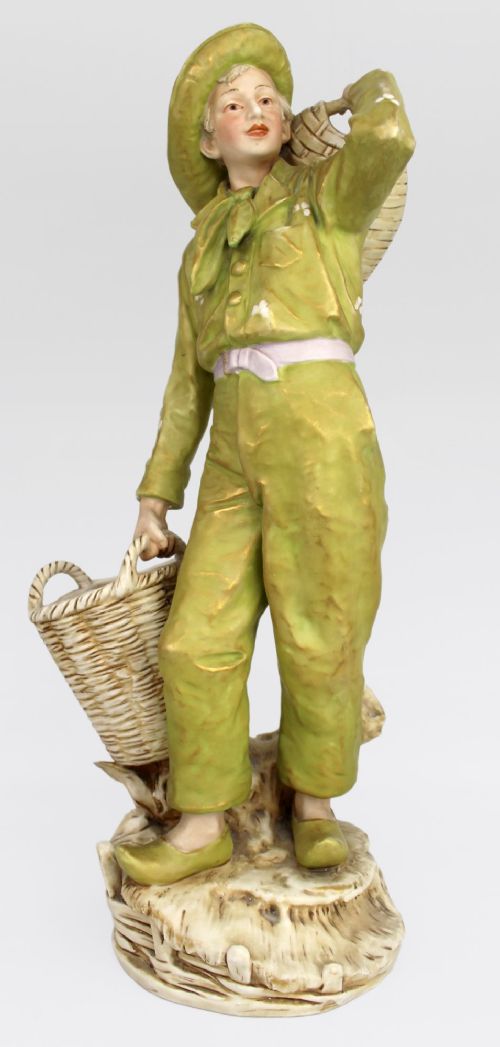


Vintage Royal Dux Porcelain
Vintage royal dux porcelain figures and sculptures bring expressive Edwardian and Art Nouveau character to a room.
What vintage royal dux porcelain pieces are
Vintage royal dux porcelain covers figurative sculptures and decorative figurines produced across the late nineteenth and early twentieth centuries. Pieces found here range from nineteenth-century figures and Edwardian maidens to Art Deco flapper girls.
The selection includes pairs of figures carrying puppies and kittens, monumental female figures, water carriers, and large figure groups. These sculptures span Victorian Orientalism, Art Nouveau, and Art Deco styles.
Makers and designers working in these periods produced both individual decorative figurines and substantial monumental sculptures. The output reflects shifting taste from nineteenth-century realism and orientalism through flowing art nouveau lines to geometric art deco forms.
How they were made
Makers utilised ceramic body materials including standard porcelain and biscuit porcelain. Artisans shaped these materials into complex figurative forms, capturing flowing drapery and realistic anatomy.
Surface decoration frequently combines enamel pigment and gold leaf or standard gilding with a protective glaze finish. These applied metallic and painted details accentuate the sculptural contours of the figures.
Retail Price Guide 2026
Typical UK retail prices for vintage royal dux porcelain, calculated from the Sellingantiques database of over a million retail prices indexed since 2003. This retail price guide relies exclusively on Sellingantiques data; no external sources or auction records are used, so the figures do not describe the wider market.
Materials recorded across the inventory include porcelain, biscuit porcelain, enamel, gold leaf, and glaze.
What varies in quality
Scale and ambition also divide the range, separating modest decorative figurines from monumental figure groups. The complexity of the underlying ceramic form dictates the relative success of the finished sculpture.
Royal Dux
The Vintage Royal Dux Porcelain Glossary
- Biscuit porcelain
- Unglazed ceramic material fired once to produce a matte, fine-grained surface with the appearance of marble. This finish highlights delicate facial modelling and subtle shifts in form.
- Enamel
- Vitreous coloured glass fused to the porcelain surface through high-temperature firing. It provides durable pigment for painted details and garments.
- Gilding
- The application of gold leaf or powdered gold paint to ceramic highlights. It creates metallic contrast against the white porcelain body.
- Art Nouveau
- A decorative style characterised by flowing, organic lines and stylised natural motifs. It heavily influences early twentieth-century figurative sculpture.
- Art Deco
- A geometric style emerging in the early twentieth century featuring streamlined forms and modern silhouettes. This aesthetic defines later figurine production.
Frequently Asked Questions
What periods do these pieces date from?
These pieces date from the nineteenth century through the Edwardian era and into the nineteen-twenties. The selection encompasses nineteenth century, nineteen hundred, nineteen ten, and nineteen twenty dates.
Production styles shift accordingly, moving from Victorian orientalist and nineteenth-century classical subjects to dynamic art nouveau and art deco designs.
Are these pieces glazed or unglazed?
The listings show both standard glazed porcelain and biscuit porcelain surfaces. Biscuit porcelain offers a matte, unglazed finish reminiscent of carved marble.
Glazed versions typically feature painted enamel decoration and gold leaf accents. Both finishes appear across different periods and sculptural forms.
What subjects do the figures depict?
The sculptures primarily represent human figures, including graceful maidens, water carriers, and flapper girls. Certain pieces also incorporate animals, such as pairs carrying puppies and kittens.
These subjects reflect the prevailing artistic concerns of the periods in which they were modelled. Figures range from single standing decorative objects to large monumental figure groups.
How do I identify Art Nouveau examples?
Art Nouveau examples display characteristic flowing lines and naturalistic drapery inspired by organic forms. Young women and maiden figures from this period often feature windswept hair and sinuous postures.
These pieces typically date around nineteen ten and utilise enamel colouring alongside porcelain bodies. The overall aesthetic prioritises movement and curve over strict geometric symmetry.