
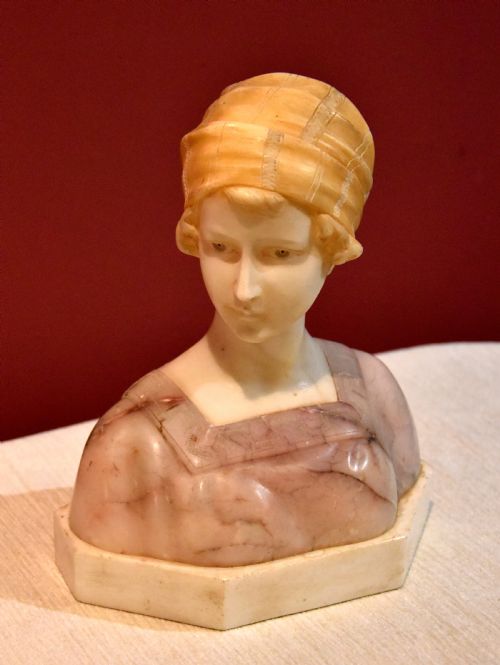

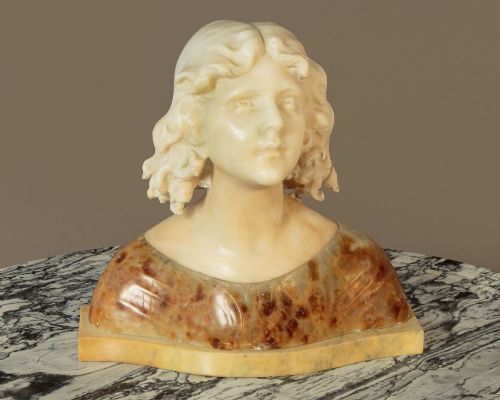


Art Nouveau Maiden Sculpture
Art nouveau maiden sculpture pieces capture the sinuous organic lines and ethereal female forms defining the turn of the twentieth century.
What these sculptures are
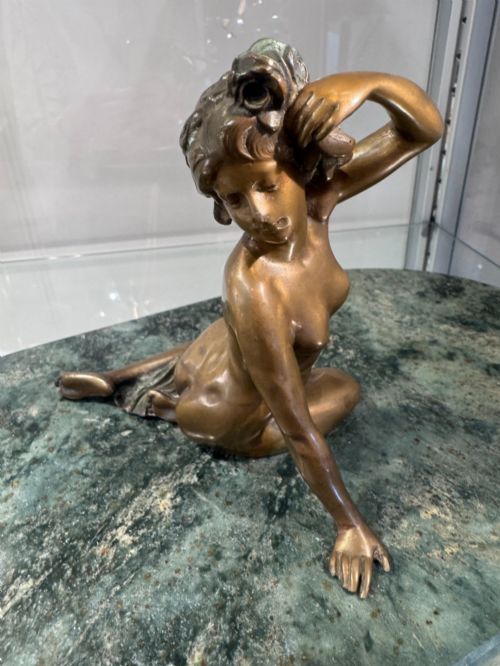
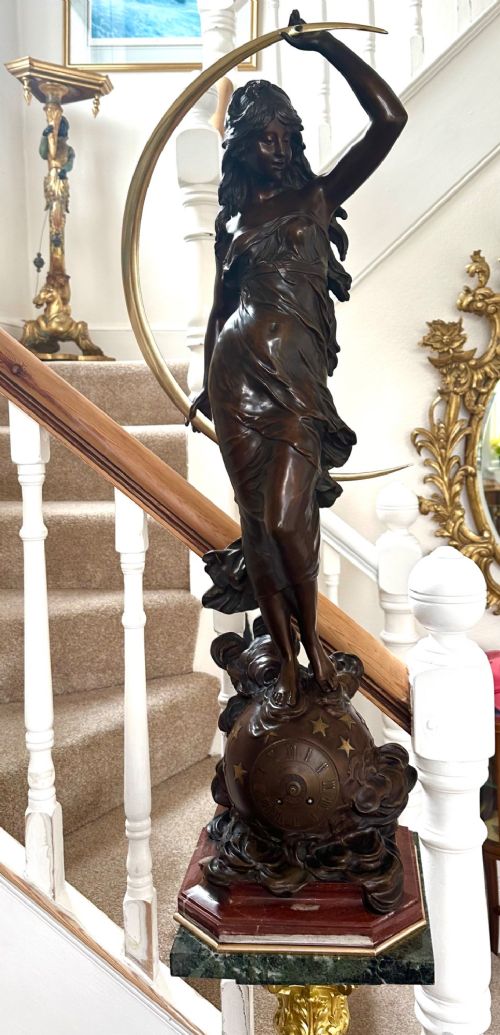
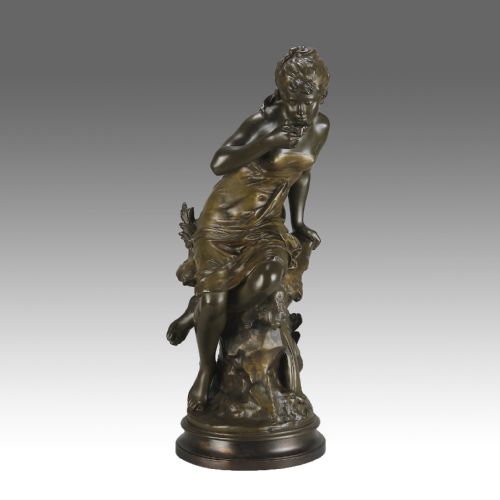
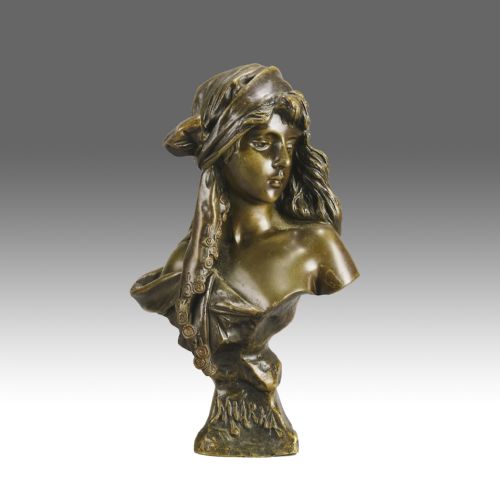
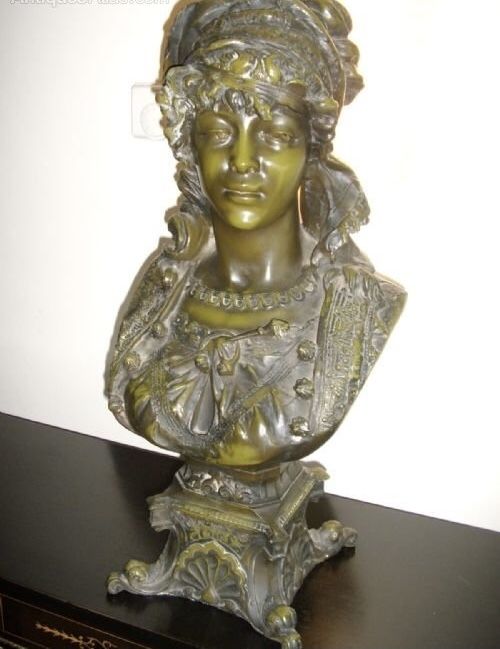
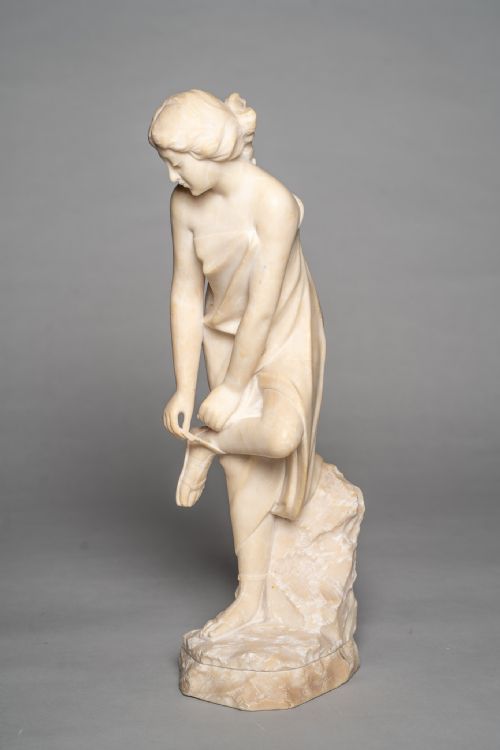
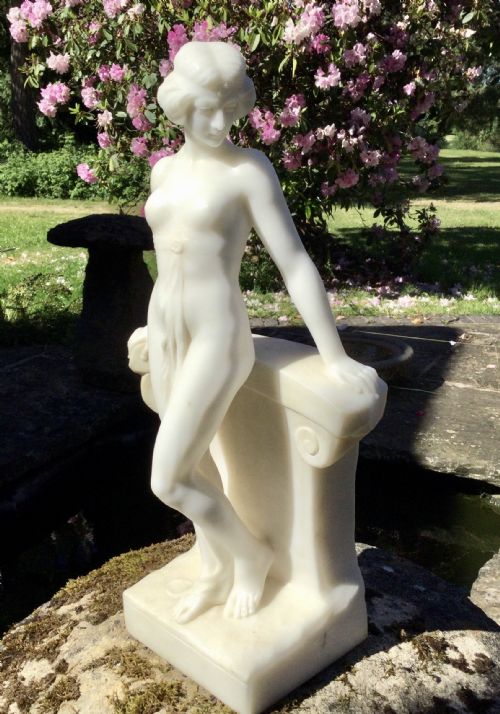
An art nouveau maiden sculpture represents the fluid, nature-inspired aesthetic of the late nineteenth and early twentieth centuries, depicting female figures intertwined with floral and aquatic motifs. These works appear across various forms, including cabinet figurines, monumental centrepieces, and busts.
The pieces on this page span the late Victorian period through the Edwardian era and into the nineteen-twenties, originating from French and Bohemian workshops. Subjects range from allegorical water nymphs and spring maidens to graceful female figures holding shells.
Buyers encounter both original period works by named sculptors and substantial factory productions from houses such as Royal Dux. Forms vary from patinated metal figures to large terracotta and porcelain sculptures.
How they were made
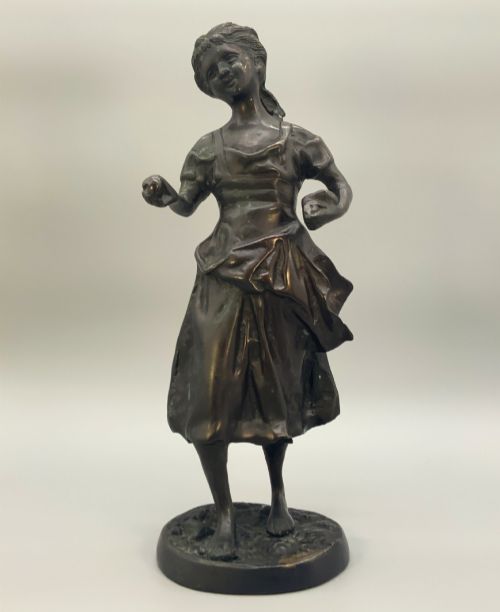
Cast metal pieces utilise bronze or patinated metal, often employing traditional foundry methods to achieve smooth contours and detailed drapery. Bronze versions display careful patination to enhance the depth of the metalwork.
Ceramic and porcelain works combine moulded bodies with hand-finished details, utilising coloured glazes and delicate gilding. Bisque porcelain provides an unglazed, matte surface finish popular for figurative work.
Retail Price Guide 2026
Typical UK retail prices for art nouveau maiden sculpture, calculated from the Sellingantiques database of over a million retail prices indexed since 2003. This retail price guide relies exclusively on Sellingantiques data; no external sources or auction records are used, so the figures do not describe the wider market.
Water nymphs and shell-bearing maidens dominate the aquatic themes of these turn-of-the-century interiors.
What varies in quality
Quality reveals itself in the crispness of the casting or moulding, where superior examples retain sharp definition in hair, fingers, and flowing drapery. Softer details indicate worn moulds or secondary casting generations.
The application of finish sets apart the finer pieces, whether through the subtle tonal variation of a bronze patination or the precise placement of glaze and gilding on porcelain. Hand-painted ceramic elements show varying degrees of artistic skill in facial expressions and colour blending.
Mathurin Moreau·Royal Dux·A. Gory
The Art Nouveau Maiden Sculpture Glossary
- Art Nouveau
- A decorative style characterised by flowing, asymmetrical lines inspired by natural forms. It dominated European design between eighteen-ninety and the First World War.
- Bisque Porcelain
- Unglaved ceramic fired once to produce a matte, porous surface resembling marble. It allows for fine sculptural detail.
- Patinated Metal
- Metal treated with chemicals or heat to produce a coloured surface film. This protects the metal and adds visual depth.
- Terracotta
- Baked red clay used for sculptural works. It ranges in finish from raw porous earth to painted surfaces.
Frequently Asked Questions
What materials are used?
These sculptures utilise materials such as bronze, terracotta, porcelain, and bisque porcelain. Additional decorative finishes include hand-applied glazes, metallic patination, and gilding.
The choice of material often reflects the origin of the piece, with metalwork frequently associated with French foundries and porcelain production centered on Bohemian factories.
How do I date them?
Dating relies on stylistic markers, materials, and workshop marks where present. Pieces range from late nineteenth-century bronze casts to Edwardian porcelain and nineteen-twenties reproductions.
Factory stamps and artist signatures provide precise chronological indicators, while material characteristics help distinguish Victorian examples from later twentieth-century items.
Where were they made?
Origin points recorded in the evidence point primarily to French and Bohemian workshops. French foundries and artists produced much of the metal and terracotta work.
Bohemian manufacturers like Royal Dux specialised in large-scale porcelain figures and decorative centrepieces featuring graceful female forms.
How should I display them?
These sculptures function well as focal points on sturdy tables, mantelpieces, or dedicated display pedestals. Their substantial forms require stable surfaces that can support heavier bronze or terracotta weights.
Positioning them away from direct sunlight preserves delicate porcelain glazes, painted details, and metal patinations over time.