




Continental Porcelain Sculpture
Continental porcelain sculpture brings character and colour to a room, ranging from playful Rococo figures to grand monumental groups.
Continental Porcelain Sculpture
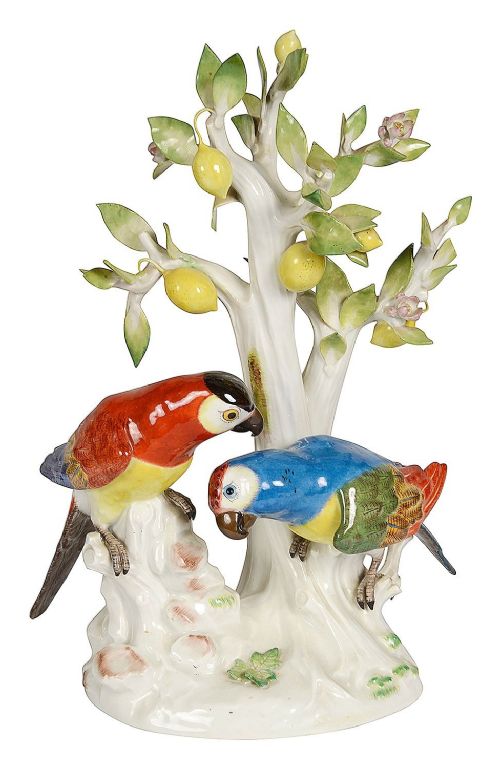
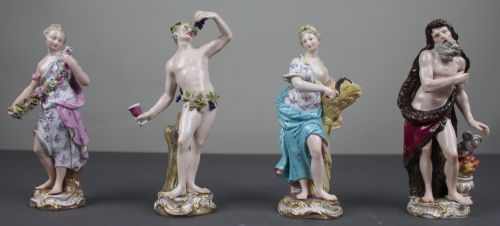
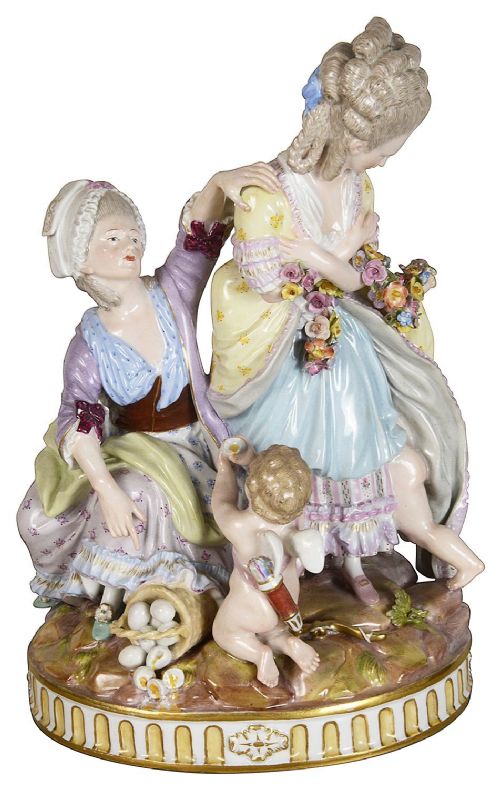
Continental porcelain sculpture encompasses figurative works, pairs and groups produced across European factories, with Meissen pieces prominent among nineteenth-century examples. Figures depict pastoral scenes, allegorical subjects, lovers and animals, shaped in hard-paste porcelain.
Buyers encounter eighteenth-century groups alongside nineteenth-century revivals and early twentieth-century models by makers such as Royal Dux and Volkstedt. The forms stretch from intimate tabletop figurines to substantial decorative groups exceeding forty centimetres in height.
The selection reflects diverse regional styles, moving from eighteenth-century Neoclassical and Rococo expressions to Victorian interpretations and Art Nouveau maidens. These items capture human and animal forms with detailed modelling.
Materials and production methods
Hard-paste porcelain serves as the primary body, fired at high temperatures to create a dense, durable ceramic base. Artisans model the figures in sections before assembly and glazing.
Continental Porcelain Sculpture Retail Price Guide 2026
Typical asking prices for continental porcelain sculpture among the pieces listed under this phrase on Sellingantiques today, from the lower quarter to the upper quarter. They describe what is for sale here now, not the wider market.
German workshops, notably Meissen and Volkstedt, provide the majority of figural groups and pastoral pairs in the current selection.
Factors of quality in modelling and finish
Quality rests upon the crispness of the mould and the hand-modelling of delicate elements such as foliage, lace and fingers. Superior works exhibit fluid movement and natural proportions rather than stiff postures.
The precision of hand-painted enamel work and the sparing application of gold leaf dictate visual depth. Softer factory painting lacks the fine detail seen in premier workshop productions.
Meissen·Royal Dux·C. G. Schierholz·Niderviller·Volkstedt·Eugene Clauss
The Continental Porcelain Sculpture Glossary
- Hard-paste porcelain
- A dense ceramic material composed of kaolin and petuntse fired at extreme heat. This body resists scratching and forms the basis of most European figures.
- Enamel
- Vitreous coloured paints fused to the porcelain surface during a secondary low-temperature kiln firing. These pigments provide the vibrant palette seen on garments and natural elements.
- Bisque
- Unvarnished porcelain left with a matte, biscuit-like texture after firing. This finish highlights sculptural contours without glossy reflection.
- Gilding
- The application of gold leaf or gold powder to accentuate decorative details and borders. It brings a metallic warmth to the fired ceramic.
- Rococo Revival
- A nineteenth-century artistic movement imitating the ornate, asymmetrical scrolls and natural motifs of the mid-eighteenth century. It frequently informs the bases and settings of figures.
Continental Porcelain Sculpture: Frequently Asked Questions
How do I date an unmarked piece?
Dating relies upon stylistic markers, paste characteristics and the complexity of the modelling rather than factory marks alone. Nineteenth-century revivals often adopt eighteenth-century forms with subtle differences in glaze consistency.
Examining the base and the manner of hand-painting helps distinguish original eighteenth-century production from later Victorian or Edwardian interpretations.
Where were these figures displayed historically?
Continental porcelain sculpture was designed primarily for interior display on mantelpieces, salon tables and cabinets. Wealthy households used figurative groups as decorative centerpieces during dining.
Pairs of figures often flanked clocks or candelabras on French and German mantle pieces, contributing to a balanced, ornate room scheme.
What is the difference between hard-paste and soft-paste?
Hard-paste porcelain utilises kaolin and quartz fired at high temperatures, resulting in a durable, vitrified body that resists chipping. Soft-paste employs a glass frit mixture fired at lower temperatures.
Continental factories generally specialised in hard-paste porcelain, which accepts enamel colours with distinct clarity.
How should I clean porcelain sculptures?
Dusting requires a soft, dry brush to prevent delicate elements like porcelain leaves or fingers from snapping off. Avoid harsh chemical cleaners or abrasive cloths that can damage painted enamel and gilding.
Water washing should be done cautiously without submerging pieces that feature exposed unglazed clay or fragile historic repairs.