

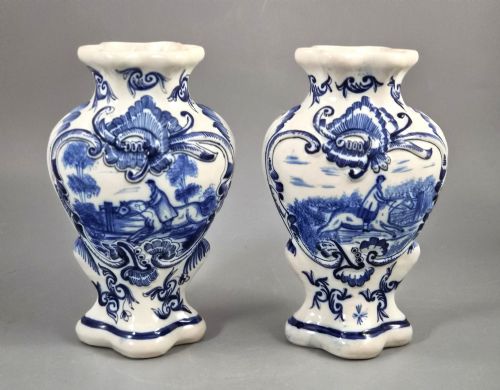
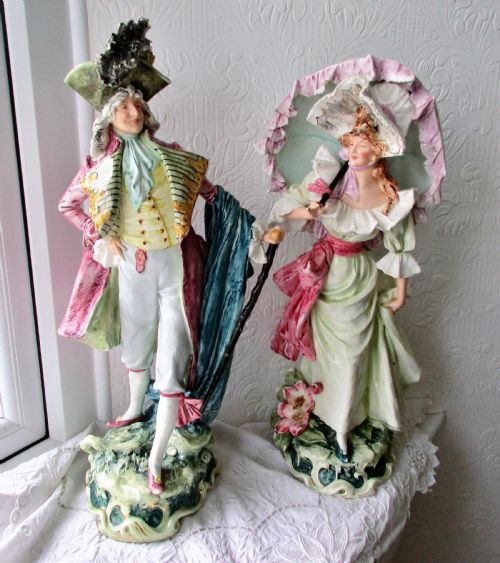


19th Century Faience Pair
These 19th century faience pair selections bring tin-glazed earthenware into interiors through matching mantle pieces, cabinet ornaments, and table displays.
19th Century Faience Pair
When you search for a 19th century faience pair, you encounter matched sets of tin-glazed earthenware objects created for symmetrical display in European domestic spaces. The selection includes decorative vases, figurative groups such as gallant couples and lions, lidded urns, jugs, and candlesticks.
French and Dutch workshops dominate the offerings, spanning regional styles like Rouen and Quimper alongside revivalist interpretations. Pairs range from small blue and white delft pottery cows and pin trays to large polychrome mantle ornaments and enamelled vases.
Most items reflect the nineteenth-century appetite for historical revivals, incorporating Rococo and Renaissance motifs on ceramic bodies. Buyers find these matched sets utilised for mantelpieces, sideboards, and occasional tables where symmetry governs interior arrangement.
How they were made
The foundation of each piece is ceramic earthenware, shaped into vessels or figures before receiving a characteristic tin glaze that provides an opaque white surface for painting. Artisans applied cobalt blue pigments or polychrome enamels directly onto the porous surface.
Firing techniques fused the metallic oxides with the glaze, fixing the intricate floral patterns, figures, and heraldic motifs recorded in the listings. Certain workshops combined the ceramic body with bronze mounts, uniting earthenware with cast metal elements.
Gentlemen and their ladies stand frozen in tin-glazed ceramic, forever posing beside miniature flora.
What varies in quality
Quality rests in the crispness of the hand-painted brushwork and the stability of the tin glaze across both matched items. Superior examples display controlled pigment application and balanced proportions that maintain symmetry within the pair.
Fourmaintraux-Courquin·Gien·HR Quimper·Jules Vieillard·Doulton Lambeth
The 19th Century Faience Pair Glossary
- Tin Glaze
- A glaze rendered white and opaque through the inclusion of tin oxide. This surface serves as a ground for cobalt blue and polychrome pigments.
- Polychrome
- Decoration employing multiple colours rather than a single hue. In these ceramics, it typically involves hand-painted floral or figural palettes.
- Delftware
- Tin-glazed earthenware originating in the Netherlands, traditionally associated with blue and white designs inspired by imported Chinese porcelain.
19th Century Faience Pair: Frequently Asked Questions
How were these pieces used?
Nineteenth-century households placed matching vases and figures on mantelpieces, console tables, and cabinets to create visual balance. Smaller items like pin trays and candlesticks served functional roles on desks and dressing tables.
Their decorative motifs reflected historical revivals popular in French and Dutch interiors of the period.
How do I care for antique faience?
Display these tin-glazed ceramics away from direct sunlight and areas subject to sudden temperature shifts. Dust them gently with a dry, soft cloth.
Avoid using water or liquid cleaners, as the porous earthenware body and historic glazes remain sensitive to moisture.
How do I distinguish French and Dutch pieces?
French pieces often incorporate Rococo revival or Renaissance motifs, utilising polychrome enamels and specific regional signatures like Quimper or Rouen. Dutch examples frequently lean towards traditional blue and white delftware aesthetics.
Examining the palette, potting style, and any workshop marks helps clarify the origin.