


Pierced Porcelain Vase
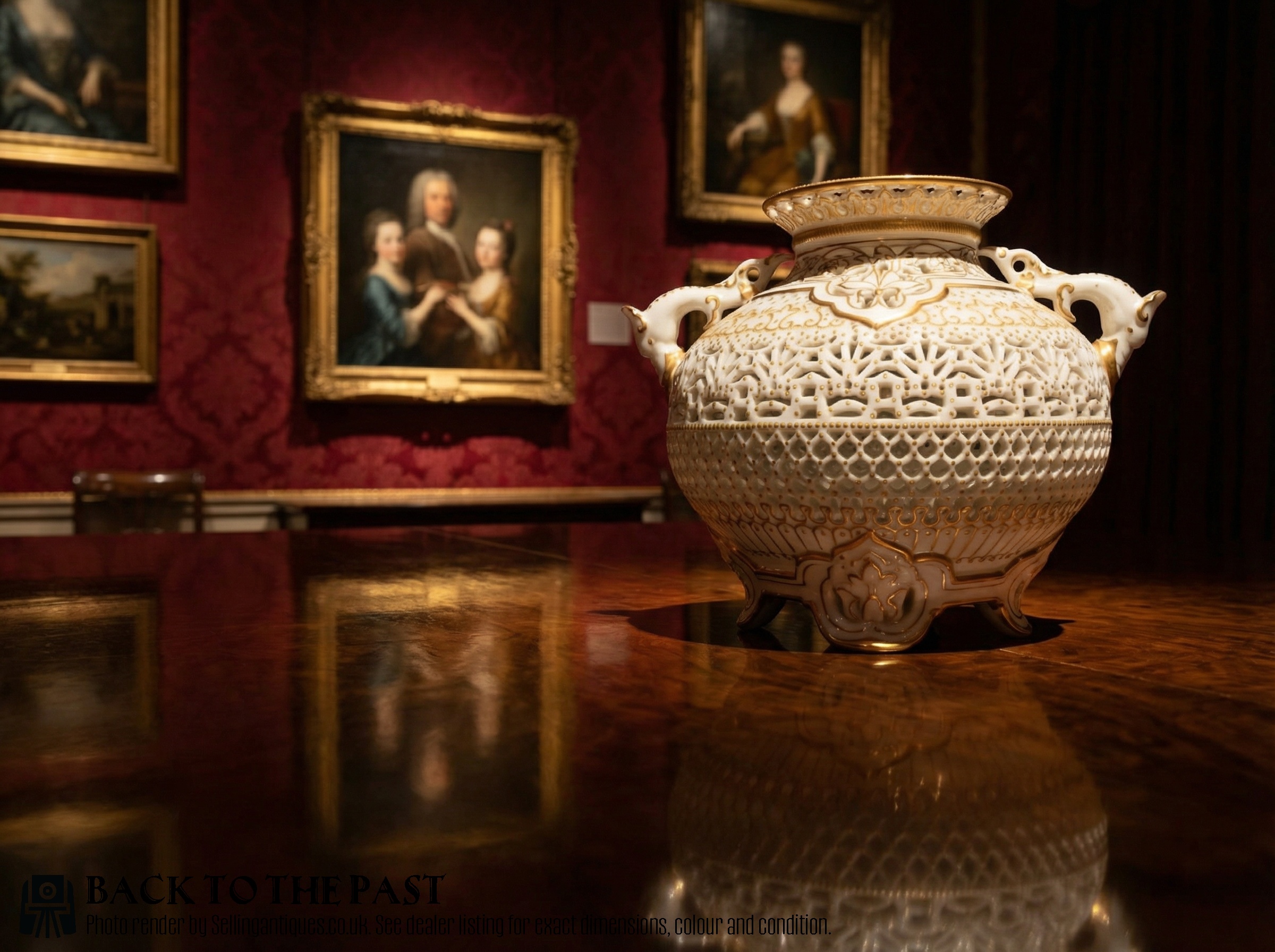
A pierced porcelain vase brings openwork ceramic skill to your room, offering intricate lattice patterns that catch the light.
Pierced Porcelain Vase
A pierced porcelain vase is a vessel formed from ceramic material featuring cut-out or reticulated sections across the body. These decorative pieces emerge frequently from English factories like Royal Worcester alongside continental works.
The selection on this page centres on pot pourri jars, ewers, and lidded urns originating across the eighteenth, nineteenth, and twentieth centuries. Makers applied openwork alongside painted floral motifs, gilt highlights, and blush ivory grounds.
Buyers will encounter Victorian examples alongside Georgian ironstone vessels and pieces bearing traditional Chinese styles. Many incorporate pierced gilt handles or reticulated collars designed to release fragrance or display intricate ceramic craftsmanship.
How they were made
Potters shaped porcelain, ironstone, and ceramic bodies before cutting through the clay while leather-hard to create openwork lattice designs. Artisans utilised sharp tools to pierce the damp material without collapsing the structural walls of the vessel.
Makers applied enamel paints, gold leaf, and gilding to highlight the surfaces before firing the ceramics in kilns. Certain pieces feature detailed hand-painted scenes of fruit or flowers set against blush ivory glazes.
George Owen spent hours piercing damp porcelain until his eyes ached, creating lace-like patterns so fragile a single slip ruined days of work.
What varies in quality
Quality rests in the precision of the piercing and the fineness of the ceramic body. Skilled hands executed complex reticulation without distortion, creating crisp apertures that maintain the structural integrity of the vase.
Painting execution separates standard production from exceptional work. Pieces featuring hand-painted naturalism by named decorators display superior brushwork compared to simpler transfer-printed or plain gilt decoration.
Royal Worcester·Samuel Alcock·Mason's Ironstone·Meissen·Sitzendorf·Herend·George Owen
The Pierced Porcelain Vase Glossary
- Reticulated
- Pierced or net-like openwork decoration formed in ceramic bodies. This technique requires patient cutting of the clay before firing.
- Pot Pourri
- A vessel designed to hold dried scented plant material. These jars typically feature pierced covers to allow fragrance to diffuse into a room.
- Blush Ivory
- A matt cream porcelain ground developed by English potteries. This finish provides a soft background for delicate floral hand-painting.
- Ewer
- A large jug with a shaped spout and handle used for decorative display. Some examples incorporate pierced porcelain collars or gilt mounts.
- Ironstone
- A durable type of heavy ceramic developed in the nineteenth century. It offers a robust body suited to rich imari patterns and enamelling.
Pierced Porcelain Vase: Frequently Asked Questions
What is a pierced porcelain vase?
A pierced porcelain vase is a ceramic vessel featuring intricate cut-out openwork patterns across its body or cover. These decorative pieces range from nineteenth-century English pot pourri jars to continental porcelain urns.
Artisans carved the lattice designs by hand while the clay remained damp before firing the pieces in kilns. Many examples combine this openwork with hand-painted floral motifs and gilding.
How were these vases used?
Many pierced vessels served as pot pourri containers designed to hold dried scented botanicals. The cut-out patterns on the covers allowed fragrance to drift gently into sitting rooms.
Other examples functioned purely as decorative ornaments, urns, or ewers displayed on mantelpieces and tables. Some nineteenth-century pieces were later adapted into table lamps.
How do I date a pierced porcelain vase?
Dating relies on maker marks, ceramic bodies, and stylistic periods such as the Georgian, Victorian, or Edwardian eras. Factory stamps and painter signatures help pinpoint the exact decade of production.
The style of decoration also provides clues, as blush ivory grounds and specific hand-painted fruit subjects point towards the late nineteenth and early twentieth centuries.
How do I care for antique porcelain?
Keep antique porcelain out of direct sunlight to protect hand-painted enamel colours and gilding from fading. Dust the intricate pierced sections gently with a soft dry brush to prevent dirt accumulation.
Avoid using water or cleaning solutions on pieces with delicate gilt highlights or unglazed ceramic surfaces. Handle the vessels by their main body rather than vulnerable pierced handles or covers.