


Persian Saddlebag Cushion
These Persian saddlebag cushions are genuine woven fragments and complete nomadic bags that bring rich tribal geometry and texture to interior spaces.
Persian Saddlebag Cushion
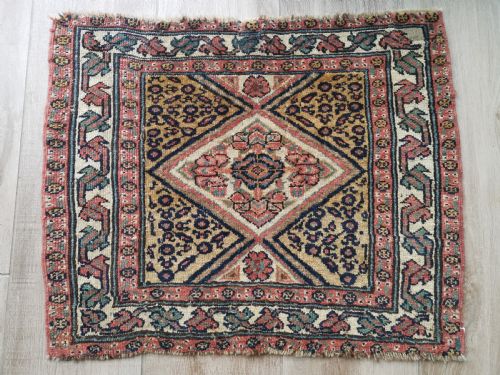
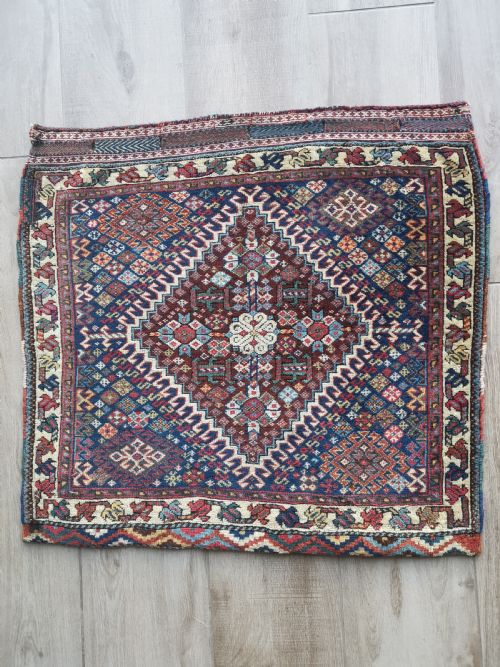
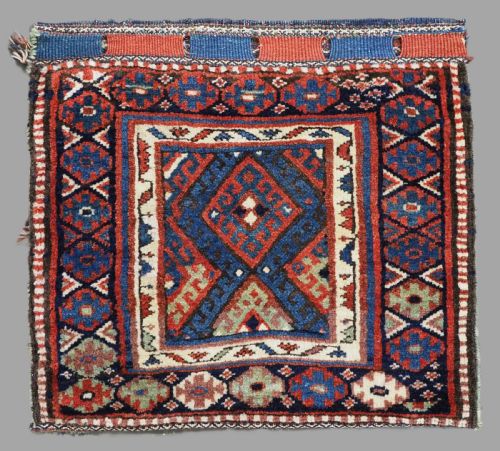
When you search for persian saddlebag cushion, you encounter utilitarian textiles originally woven by nomadic and village tribes across nineteenth and early twentieth century Persia. These pieces include complete double saddlebags, half faces, and bagfaces adapted into decorative cushions for modern interiors.
The objects derive from specific tribal confederations such as the Qashqai, Afshar, Shahsavan, Kurdish, and Khamseh groups, each carrying distinct regional patterns. Examples range from structured Soumac weave bags to supple pile-woven bagfaces and utilitarian plain-weave backs.
Most items on this page date from the late nineteenth century up to around nineteen-ten, reflecting the output of weavers working within traditional nomadic cultures before the widespread adoption of synthetic colouring materials.
Materials and Construction
The structural integrity and surface texture of these cushions rely entirely on hand-spun wool and cotton foundations. Weavers utilised durable wool for the pile and flatweave surfaces, ensuring the textiles could withstand the rigours of transport on pack animals.
Colour is achieved through natural dyes derived from plants and minerals, which impart a characteristic depth and subtle tonal variation across the surface of the wool. Artisans employed varied techniques including soumac wrapping, pile knotting, and slit-tapestry kilim weave depending on the tribal tradition.
Nomads wove these heavy-duty bags to carry everything from salt to sleeping mats, meaning your cushion once doubled as a camel's luggage.
Judging Quality and Execution
Quality in these tribal textiles rests on the fineness of the knotting or weaving and the clarity of the design structure. Pieces with tightly packed foundations and high knot counts demonstrate superior technical execution by the weaver.
The vibrancy and condition of the natural dyes greatly influence the visual impact of the piece. Luminous, lustrous wool combined with balanced, uncrowded tribal motifs separates exceptional examples from ordinary utility pieces.
The Persian Saddlebag Cushion Glossary
- Bagface
- The decorative front panel of a storage bag, which is often separated from the back and mounted as a cushion or wall hanging.
- Soumac
- A flat-weave technique where pattern threads are wrapped over the warp threads in a herringbone-like pattern, creating a thick and durable surface.
- Khorjin
- The Persian term for a traditional double saddlebag used by nomads for carrying personal possessions during seasonal migrations.
- Kilim
- A flat-woven textile produced without a pile, created by tightly interweaving warp and weft strands.
- Boteh
- A traditional teardrop or almond-shaped motif representing a floral spray or cypress tree, frequently seen in Persian tribal weaving.
Persian Saddlebag Cushion: Frequently Asked Questions
What is a saddlebag cushion?
A saddlebag cushion is a repurposed nomadic storage bag or woven bagface, originally designed for transport on animals and now adapted for interior display or seating.
These items preserve the authentic tribal patterns and structures created by Persian nomads during the nineteenth and early twentieth centuries.
How do I identify tribal styles?
Tribal styles are identified by specific geometric motifs, colour palettes, and weaving structures associated with particular regional groups like the Qashqai or Afshar.
Examining the border designs, wool quality, and secondary colours helps attribute the piece to its specific geographic origin in Persia.
Are these cushions antique?
The pieces listed originate from the late nineteenth century up to the early twentieth century, making them authentic antiques produced prior to modern commercial standardisation.
They reflect traditional hand-spinning and natural dyeing methods that predate synthetic materials in Persian nomadic weaving.
How do I care for a wool cushion?
Care for these antique wool textiles requires gentle handling, regular light vacuuming without a rotating brush, and protection from direct sunlight to preserve the natural dyes.
Professional textile conservation cleaning should be sought if deep cleaning becomes necessary, as household washing methods can damage the fragile historic foundations.