
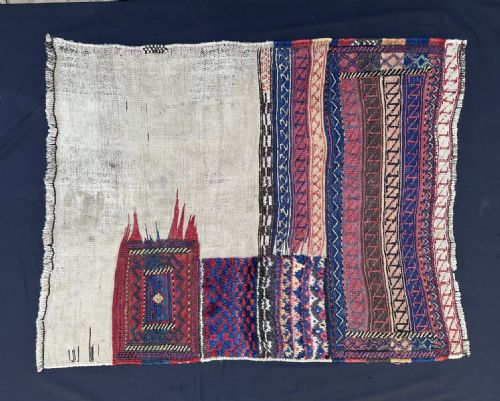
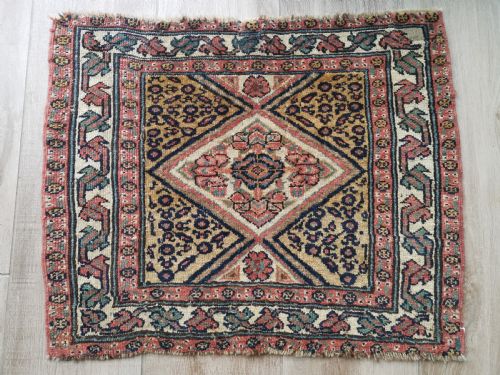
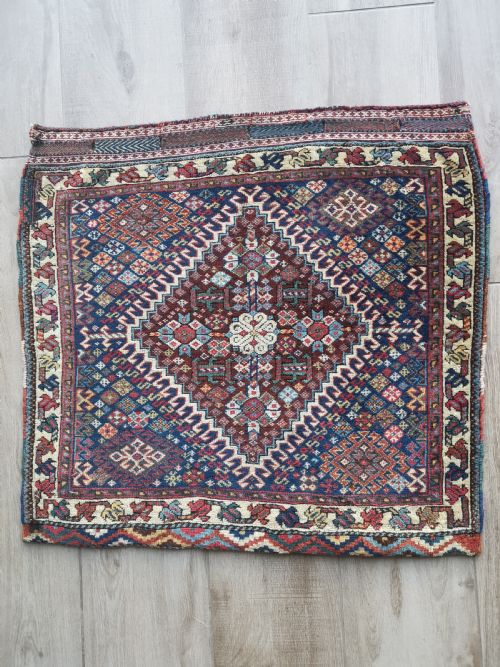

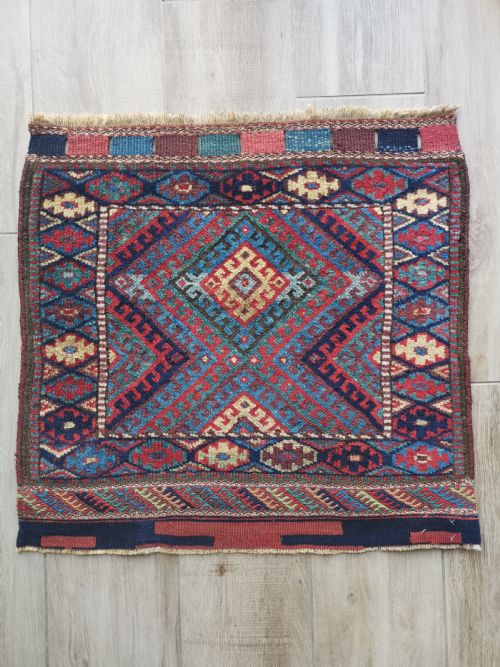

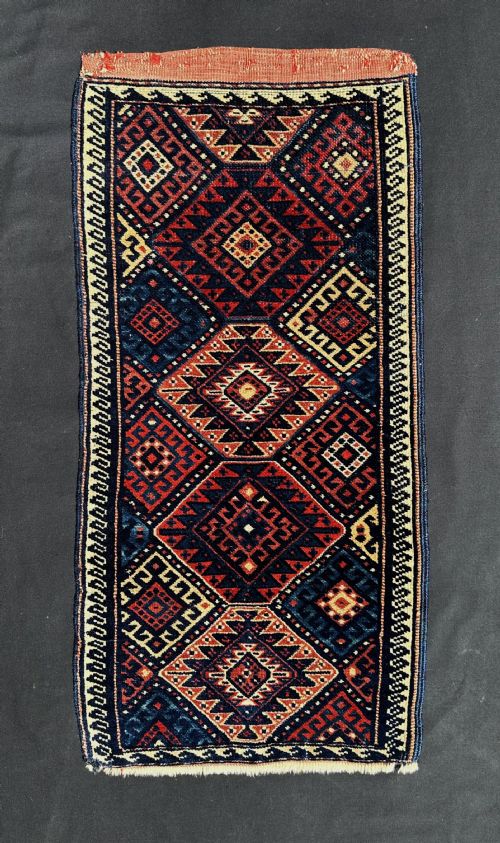
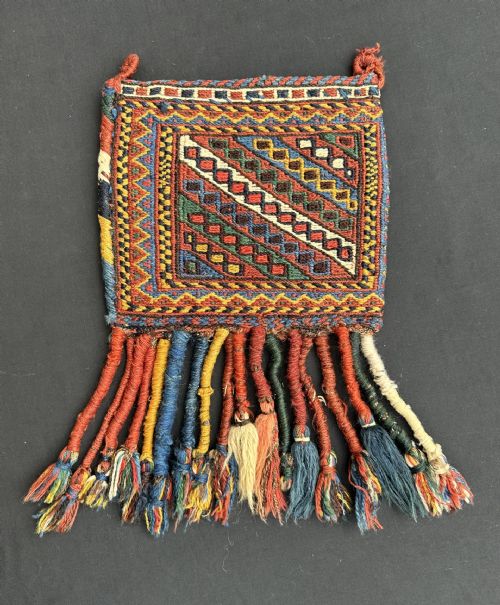


Nomadic Rug Fragment
When examining a nomadic rug fragment, you encounter surviving pieces of tribal weaving from nineteenth-century Persia, Central Asia, and beyond.
Nomadic Rug Fragment
A nomadic rug fragment represents the portable art of tribal groups, including Lori-Bakhtiari, Qashqai, Turkmen, Baluch, Afshar, and Kurdish weavers. These pieces originate from utilitarian items such as saddlebags, grain sacks, pillow bags, and tent trappings rather than large floor carpets.
Most examples found on this page date from the nineteenth century, spanning from the eighteen-fifties through to nineteen-ten. They survive as remnants of larger household textiles created for daily nomadic life across Persia, Anatolia, and the Central Asian steppes.
Buyers look for these textile remnants to study traditional tribal iconography, geometric drawing, and structural techniques. The material available ranges from complete bag faces to smaller sections of larger domestic weavings.
How They Were Made
Weavers relied principally on hand-spun wool for the pile and structure, often combining cotton for foundations and occasionally incorporating silk or linen details. Natural dyes provided the palette, creating deep tones across tribal designs.
The construction typically involved hand-knotting or flat-weaving techniques suited to portable looms used during seasonal migrations. Artisans utilised durable wool to withstand the rigorous demands of nomadic transport and daily utility.
The listings span the nineteenth century, featuring wool, cotton, silk, and natural dyes across Persian and Turkmen tribal forms.
What Varies in Quality
Quality rests upon the handle of the wool, the clarity of the drawing, and the vibrancy of the natural dyes. Superior examples display lustrous, luminous wool alongside precise tribal motifs that reflect skilled execution.
The integrity of the remaining structure and the balance of the composition distinguish finer tribal weavings from simpler utility items. Well-drawn gul patterns and harmonious colour palettes elevate individual pieces within their respective tribal groups.
The Nomadic Rug Fragment Glossary
- Bagface
- The decorative front panel of a utilitarian nomadic container, usually a saddlebag or storage pouch, preserved after the back has worn away.
- Torba
- A small horizontal Turkmen storage bag traditionally used inside the yurt for household possessions.
- Chuval
- A large Turkmen tent bag utilised for storing blankets and heavy bedding during migrations.
- Gul
- A repeating medallion or principal motif characteristic of Turkmen and Central Asian tribal weaving.
- Sumac
- A flat-weaving technique involving coloured weft threads wrapped around warp threads to create a textured, durable surface.
Nomadic Rug Fragment: Frequently Asked Questions
What is a nomadic rug fragment?
A nomadic rug fragment is a surviving section of a nineteenth-century tribal textile, such as a bag face or trapping.
These pieces were created by nomadic groups for practical storage and domestic use during seasonal migrations.
How were these fragments used originally?
Tribal weavers utilised these textiles as saddlebags, grain sacks, vanity pouches, and tent decorations.
They served essential functions in daily nomadic life before surviving as collectible fragments of textile art.
Where do these pieces originate?
The listings include pieces from nineteenth-century Persia, Anatolia, and the Central Asian steppes.
Specific origins range from Fars and Khorassan to Turkmenistan, reflecting diverse tribal traditions.
How do you identify different tribal styles?
Tribal attribution relies on specific structural characteristics, geometric motifs, and regional colour palettes.
Characteristics such as Turkmen guls or Afshar boteh designs help distinguish one group from another.
How should I care for a textile fragment?
Display fragments away from direct sunlight to protect natural dyes from fading over time.
Mounting or framing provides physical support for delicate wool structures without causing damage.