
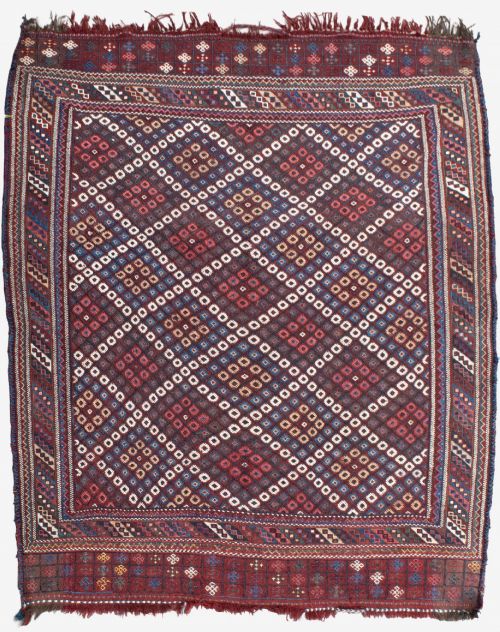


Vintage Persian Kilim
These vintage persian kilim pieces are flat-woven tribal textiles brought home for floors, walls and soft furnishings.
Vintage Persian Kilim
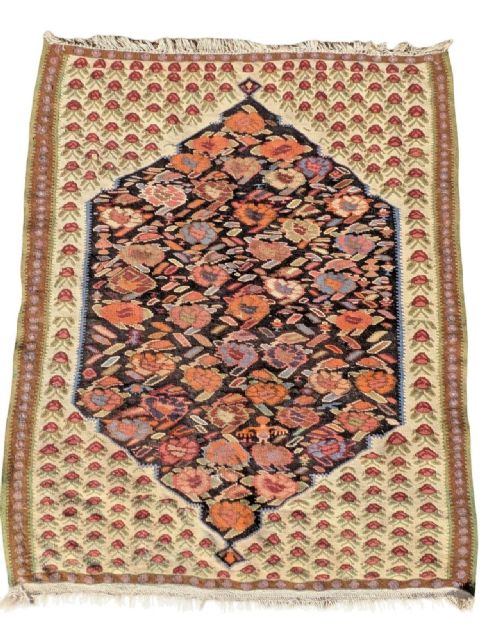
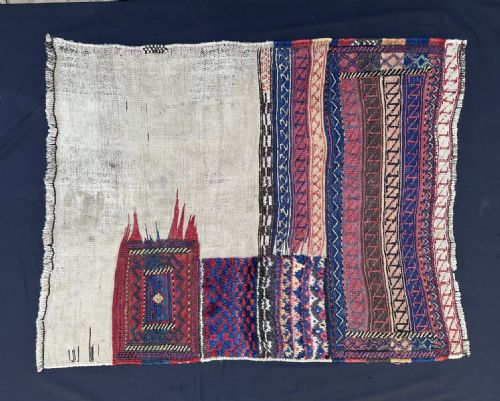
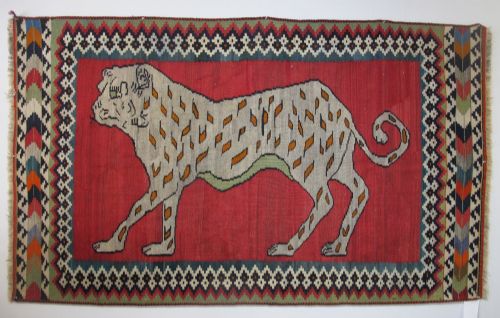
When you search for vintage persian kilim, you encounter flat-woven carpets, rugs, runners and cushions made by nomadic and village groups across the region. The selection includes items such as bread sofreh, grain sacks, bag faces and saddle-bags alongside larger floor coverings.
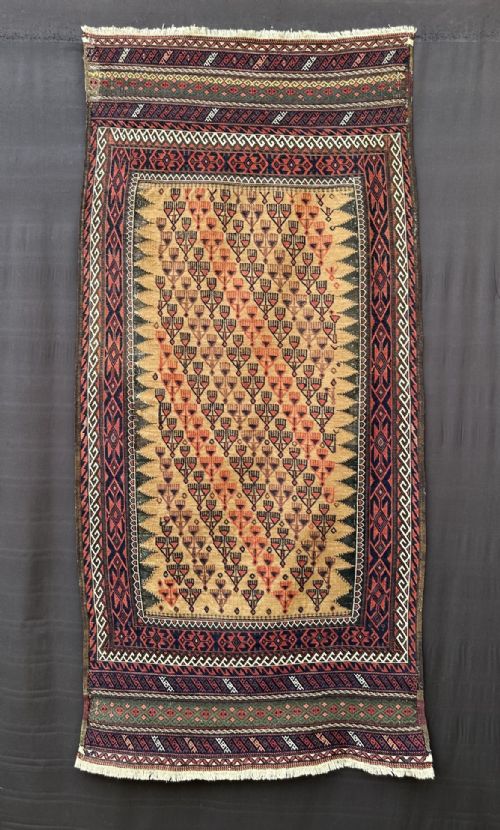
Tribal groupings such as the Qashqai, Afshar, Bakhtiari, Shahsavan and Baluch generate distinct regional geometries and palettes. Pieces range in date from the nineteenth century into the early decades of the twentieth century, reflecting traditional domestic and utilitarian production.
Materials and flat-weave technique
Weavers construct these textiles primarily using wool, hand-spun wool and cotton, occasionally incorporating goat hair and timber elements or velvet on related furnishings. Natural dyes impart the characteristic coloration across the geometric fields and banded motifs.
The technique relies on slit-tapestry weaving or banded weftwork without a pile, creating a flat, durable surface that served both daily nomadic utility and decorative interior use.
The listings span wool, hand-spun wool, cotton, goat hair, velvet and timber, anchored by nineteenth and early twentieth century dates.
Structure and handling
Quality rests on the tightness of the weave, the clarity of the geometric drawing and the integrity of the original structure, whether dealing with a room-size carpet or a small bag face cushion. Early examples display complex dye work and fine hand-spun wool that retain resilience over generations.
State of preservation and the completeness of original borders or backs influence how a piece reads visually and how firmly it sits within its tribal tradition.
The Vintage Persian Kilim Glossary
- Kilim
- A flat-woven carpet or rug produced without a pile using interlocked weft threads. This technique creates crisp geometric patterns visible from both sides.
- Sofreh
- A spreading cloth used for kneading bread, sharing meals or storing provisions within nomadic households. These textiles often feature striking central medallions and banded borders.
- Tacheh
- A grain sack or storage container woven by tribal groups to hold harvest goods. They employ durable wool and dense weft-faced structures.
- Soumak
- A brocade-like weaving technique where pattern wefts wrap around the warp threads before continuing across the textile. This method adds texture and thickness to the flat surface.
- Baluch
- A designation for nomadic and semi-nomadic groups inhabiting the borderlands of Persia and Afghanistan. Their weaving incorporates deep indigo, brown and camel tones with geometric motifs.
Vintage Persian Kilim: Frequently Asked Questions
What is a persian kilim?
A persian kilim is a flat-woven textile created by nomadic and village tribes across Persia without the knotted pile of a traditional carpet. These pieces served practical domestic functions such as floor covering, storage and dining.
Today, they function as decorative rugs, wall hangings and cushion covers that bring geometric pattern and texture into modern interiors.
How were sofreh used?
Sofreh were utilitarian cloths spread on the ground for preparing bread dough, sharing meals or gathering grain. Different tribal groups wove specific types for dining or agricultural storage.
Their designs typically feature central fields and protective border symbols suited to domestic rituals.
How do I care for a kilim rug?
Flat-woven kilims require gentle vacuuming without a rotating brush to protect the wool fibres and flat structure. Professional cleaning tailored to antique textiles preserves the natural dyes.
Using an appropriate underlay helps prevent slipping and reduces friction against hard flooring.
How can I tell tribal styles apart?
Tribal attribution relies on specific colour palettes, wool qualities and geometric vocabulary associated with regions like Fars, Kerman or the Chahar Mahal valley. Qashqai work often employs warm reds and deep indigos, while Baluch pieces lean towards dark earthy tones.
Examining the structure and edge finishes provides further clues to the specific group of origin.