
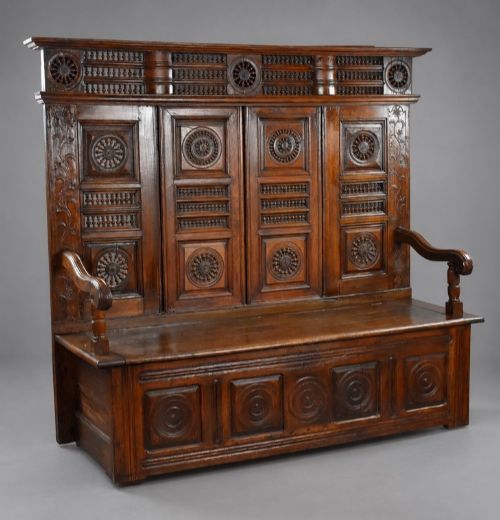
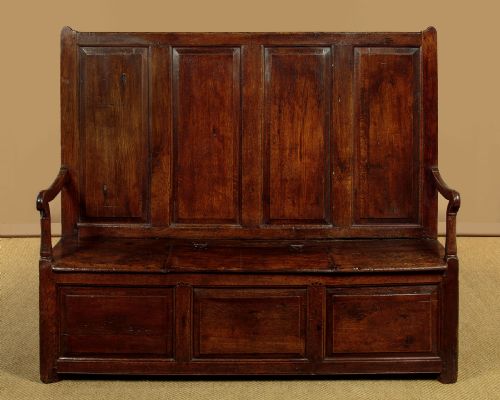
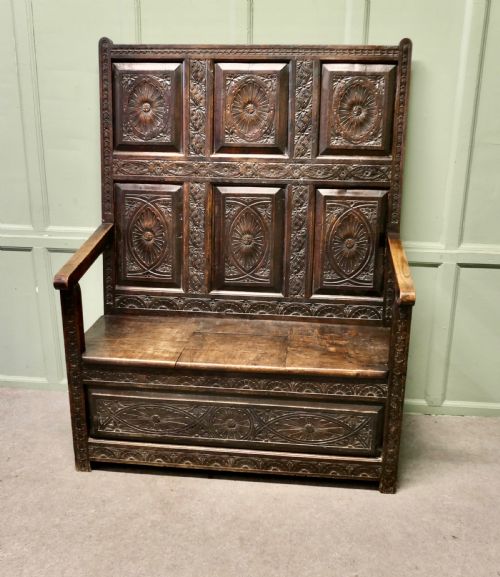
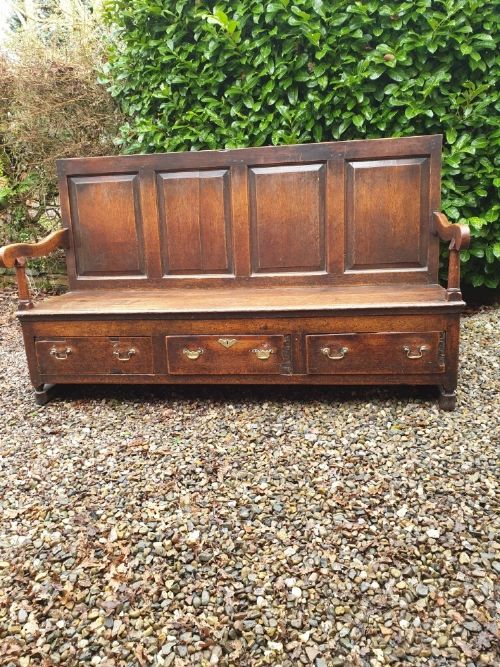
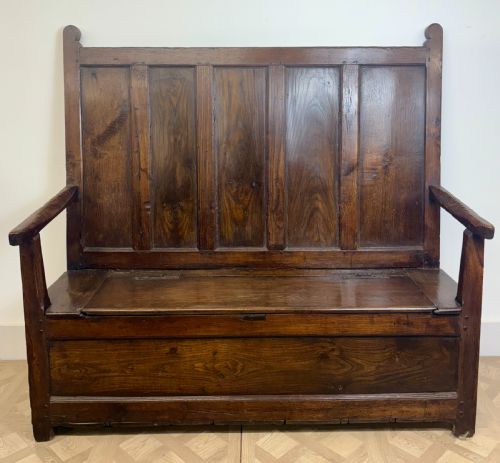
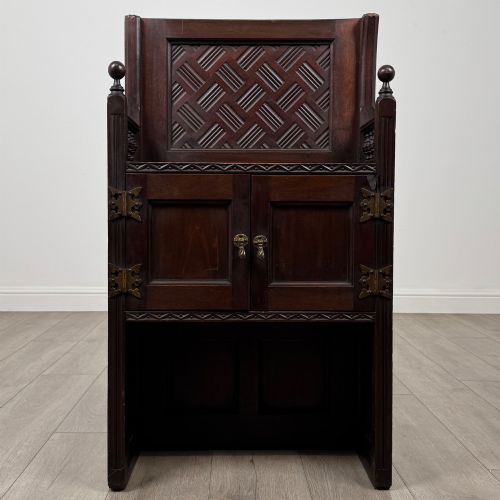
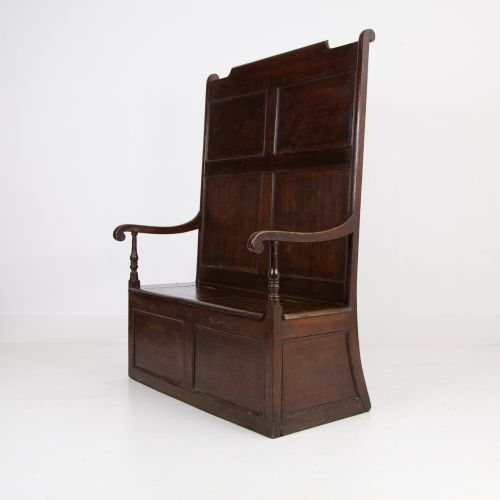
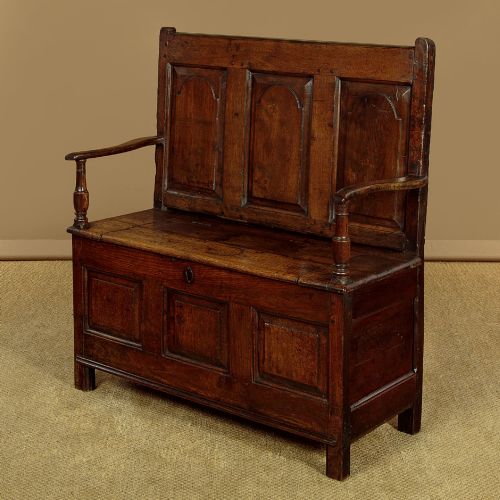
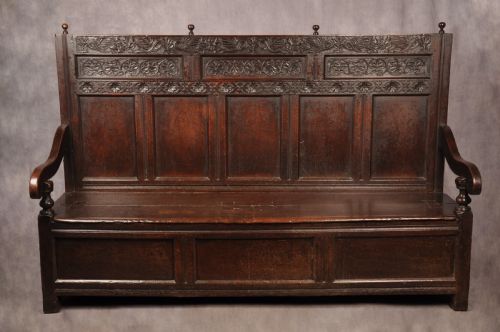


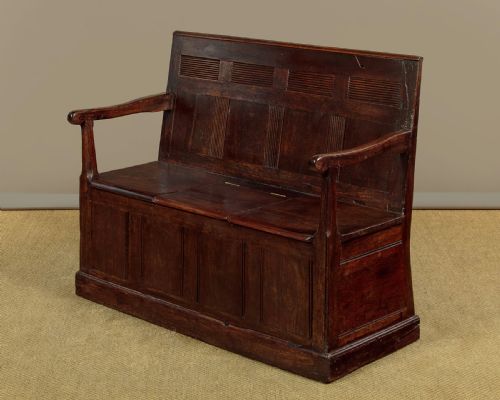


Panelled Back Storage Bench
A panelled back storage bench is a robust timber seat with a built-in compartment underneath, offering traditional utility and robust construction for any hallway.
Panelled Back Storage Bench
A panelled back storage bench, often termed a settle or hall bench, combines a high timber back with a concealed box base for household storage. Buyers searching for a panelled back storage bench encounter sturdy seating rooted in centuries of domestic utility.
The prevailing form on this page spans the seventeenth, eighteenth, and nineteenth centuries, featuring regional British styles such as Welsh, Georgian, and North Country variants. These pieces frequently utilise solid oak, pine, and elm, reflecting provincial craftsmanship and vernacular design.
Makers constructed these benches to withstand heavy daily use, incorporating high panelled backs to block cold draughts in older homes. The storage compartment beneath the seat typically lifts via a hinged lid, serving practical domestic needs since the medieval period.
Assessing Quality and Character
Quality in a panelled back storage bench rests upon the integrity of the timber, the depth of the regional carving, and the preservation of original structural elements. Examples retaining their initial hinges, floor boards, and unaltered box bases command greater attention from traditionalists.
Proportion and scale distinguish finer vernacular pieces from standard utilitarian seating. Well-balanced wingback or concave barrel designs demonstrate superior spatial planning by the original builder compared to plain, slab-built alternatives.
Some provincial benches feature barrel backs built specifically to trap hearth heat around a single lucky sitter.
The Panelled Back Storage Bench Glossary
- Settle
- A wooden bench with a high back, solid arms, and a box seat for storage. It was designed to keep out household draughts.
- Wainscot
- A type of oak panelling characterised by wooden sheets fitted within a frame of stiles and rails. It frequently forms the solid back of early seating.
- Box settle
- A variation featuring a hinged seat opening to a deep receptacle underneath. This design doubled as a chest and a seat.
- Vernacular
- Regional architecture or furniture built by local craftsmen using native materials for practical everyday use. It often lacks metropolitan stylistic refinements.
- Wingback
- A seating design featuring lateral extensions or wings attached to the upper back. These projections deflected cold air away from the occupant.
Panelled Back Storage Bench: Frequently Asked Questions
What is a panelled back storage bench used for?
These benches served historically as communal seating near hearths to shield occupants from draughts while providing secure storage for blankets and provisions.
Today, they function well in hallways and boot rooms to seat guests and store shoes or outdoor apparel out of sight.
How do I date an antique wooden bench?
Dating relies on examining tool marks, timber species, joinery methods, and hardware such as hand-forged iron hinges. Seventeenth and eighteenth-century examples typically show peg construction and regional carving styles.
Later Victorian and Edwardian pieces often incorporate softer machine-sawn pine or mahogany with more standardised assembly techniques.
Are these benches comfortable to sit on?
Early wooden benches feature upright panelled backs and hard timber seats designed for posture rather than lounging. Adding a loose cushion or squab pad easily softens the seat for modern use.
The high back provides excellent lumbar support and creates a cosy, enclosed seating area.
How do I care for old oak and pine?
Maintain the wood by applying traditional beeswax periodically to nourish the dry timber and preserve the natural patina. Avoid placing antique benches near direct heat sources or radiators to prevent the wood from splitting.
Dust regularly with a soft, dry cloth rather than using silicone-based polishes that can damage historic finishes.