


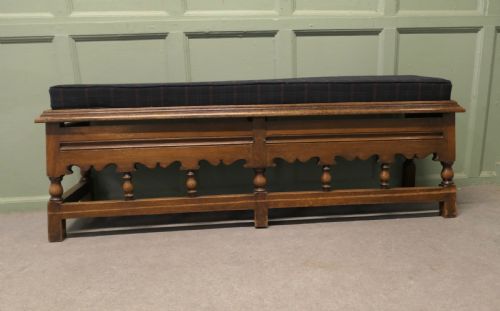


English Settle Bench
An english settle bench is a high-backed wooden seat designed to keep out draughts, and you want one for its rugged presence and deep storage.
English Settle Bench
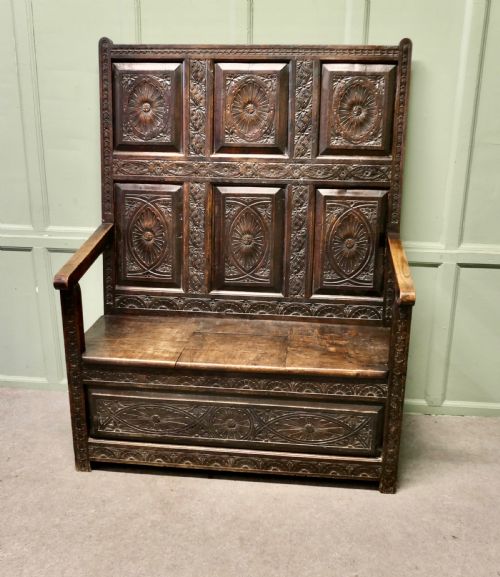
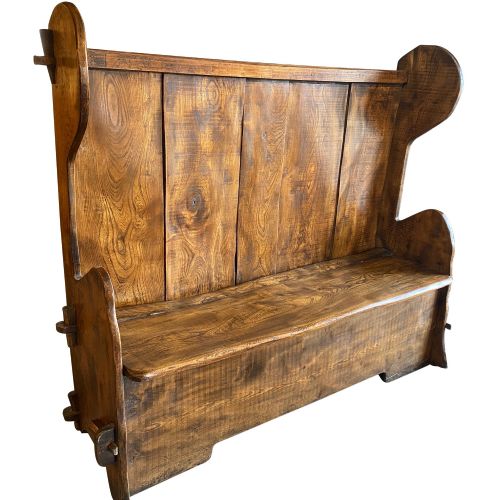
An english settle bench is a traditional wooden seating form built to block cold draughts in old hallways, kitchens and taverns. These pieces combine a high panelled back with solid armrests and often include a box base for storing household goods. You will frequently encounter 18th-century and 19th-century examples shaped from sturdy timbers like oak and elm.
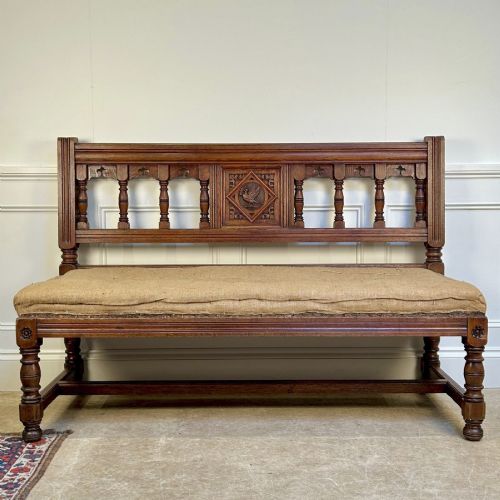
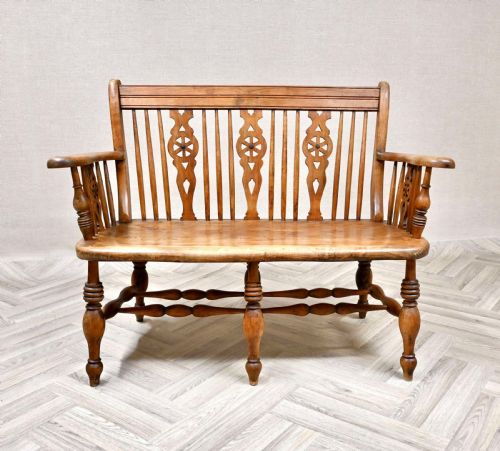
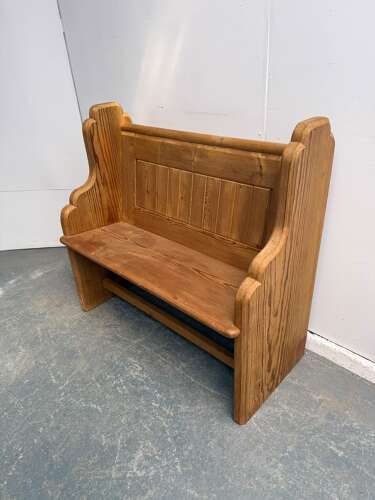
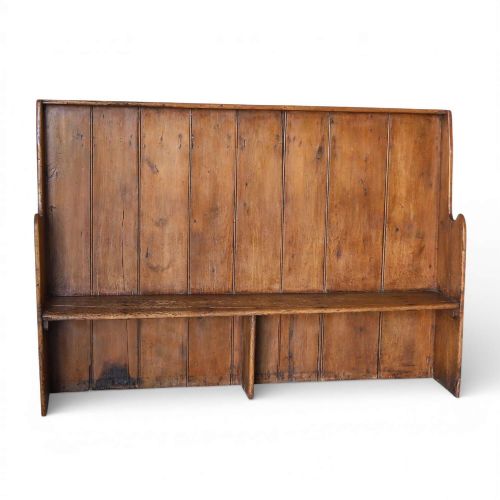
The selections available here range from austere 17th-century wainscot pieces to later Victorian carved variants and rustic country pine forms. Many feature panelled backs, while others adopt the Windsor spindle format or incorporate storage lockers beneath the seat. These benches function as practical hallway furniture or focal points in larger living spaces.
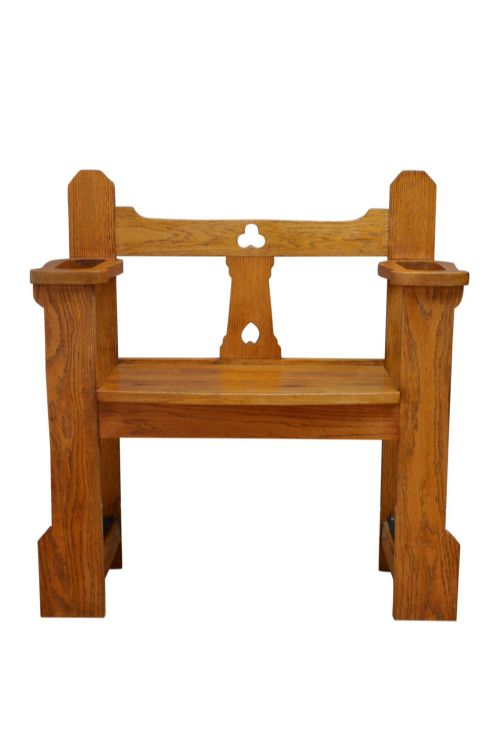
Makers produced these seats across England in diverse regional styles, spanning plain utilitarian tavern benches to elaborate Gothic Revival and Arts and Crafts creations. The survival of elm bacon settles and painted pine examples demonstrates the practical utility these forms provided to past households. Each piece carries the marks of domestic use and regional joinery traditions.
How they were made
Joiners relied heavily on native hardwoods, primarily oak, elm and pine, constructing frames with mortise and tenon joints secured by wooden pegs. Early examples utilise wide oak planks for the panelled backs, whilst provincial pieces often employ solid elm for seats and boards. Carpenters shaped box settles with hinged lids, integrating storage compartments directly into the base.
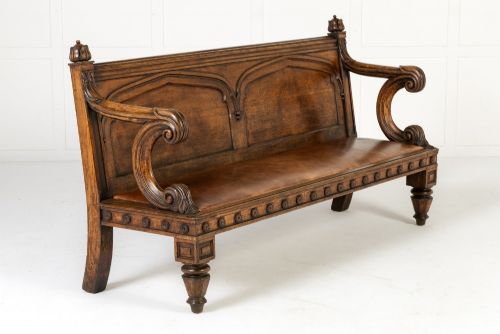
Surface treatments developed naturally through decades of wax polishing, revealing rich patinas on the timber grain. Painted finishes appear on tavern and country pieces, applied originally to protect softer woods like pine. Carvers embellished later Victorian and Jacobean-style backs with relief panels, scrolling foliage and green man motifs.
Listings feature oak, elm, and pine construction spanning the 17th century through the Victorian era and Arts and Crafts movement.
What varies in quality
Quality rests in the integrity of the timber and the original state of the construction, distinguishing unaltered country pieces from heavily restored examples. The thickness of the seat boards and the tightness of the panel joints dictate the structural durability of the bench. Pieces retain higher value when they preserve their original board backs, untouched hinges and honest patina.
The refinement of the carving and the harmony of proportions separate standard utilitarian seating from finer workshops. Sophisticated joinery, such as panelled construction with pegged tenons, marks superior craftsmanship compared to basic nailed assembly. Patina depth and timber selection further separate provincial utility work from ambitious cabinetmaker output.
GIllows
The English Settle Bench Glossary
- Settle
- A wooden bench featuring a high back and solid arms designed to shield occupants from room draughts. Many incorporate enclosed box bases beneath the seat for storage.
- Wainscot
- A style of wooden panelling utilising pegged frame and panel construction. It frequently defines the sturdy backrests of 17th-century oak seating.
- Box settle
- A form where the seat lifts on hinges to reveal a deep storage chest below. This design maximised utility in smaller historic dwellings.
- Patina
- The surface sheen and colour developed on wood over centuries through handling, wax application and light exposure. It indicates age and honest preservation.
English Settle Bench: Frequently Asked Questions
What is an english settle bench?
An english settle bench is a traditional wooden seat featuring a high panelled back, solid armrests, and frequently a box storage base beneath the cushion.
These pieces were historically placed near hearths and in hallways to block cold draughts and store household items.
How were settle benches used?
Households utilised these benches as primary seating around kitchen fires and in tavern common rooms for warmth and comfort.
The enclosed high backs and solid sides kept occupants shielded from floor-level cold air in draughty historic buildings.
How do I live with one?
Position your settle against a solid wall in a hallway, kitchen or spacious living area where the high back can provide a striking architectural backdrop.
Keep the timber nourished with quality wax and avoid placing the bench near direct heat sources that could dry out the historic wood.
How do I date an antique settle?
Examine the construction methods, tool marks, and wood species, comparing pegged joinery and panel thickness against known period examples.
Early pieces from the 17th century typically show heavy oak framing and wainscot carving, whilst 19th-century versions often display softer pine, elm, or revival motifs.